
Citrus diseases are among the most important factors affecting tree health, fruit quality, orchard productivity, and marketable yield. Fungal and bacterial pathogens may infect citrus roots, trunks, branches, leaves, flowers, and fruits, and disease severity is often influenced by environmental conditions, irrigation practices, drainage, orchard sanitation, tree nutrition, and cultivar susceptibility.
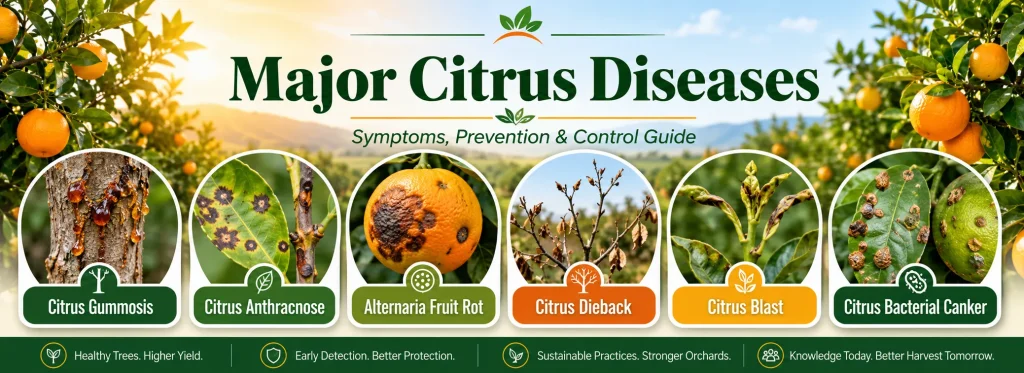
Some of the most important citrus diseases include Phytophthora gummosis, citrus anthracnose, Alternaria fruit rot, citrus dieback, citrus blast, and citrus bacterial canker.
Early identification of citrus disease symptoms, combined with integrated orchard management, is essential for limiting disease development. Proper irrigation, good drainage, balanced fertilization, pruning, sanitation, removal of infected plant material, and appropriate crop-protection programs can significantly reduce disease pressure.
This guide introduces several major citrus tree diseases, their characteristic symptoms, causal agents, and practical approaches to citrus disease management.
What Are the Most Common Citrus Diseases?
Citrus trees can be affected by a wide range of fungal, oomycete, and bacterial diseases. The importance of each disease depends on citrus species and cultivar, orchard location, climate, soil conditions, irrigation method, and the presence of susceptible plant material.
The major diseases discussed in this guide include:
- Phytophthora gummosis
- Citrus anthracnose
- Alternaria fruit rot or black rot
- Citrus dieback
- Citrus blast
- Citrus bacterial canker
Some mainly attack the root or trunk system, while others damage leaves, shoots, flowers, or fruits.
Recognizing where symptoms begin is therefore an important first step in diagnosing common citrus diseases.
Citrus Gummosis
What Causes Citrus Gummosis?
Citrus gummosis, particularly Phytophthora gummosis, is one of the most important diseases affecting citrus trunks, collars, and roots.
It is associated with several species of Phytophthora, soilborne pathogens that become particularly problematic where moisture remains around the root and collar zone.
Poor drainage, excessive irrigation, waterlogging, and conditions that keep the lower trunk persistently wet can increase disease risk.
Phytophthora gummosis commonly begins as bark lesions near the soil line. Gum or sap may ooze through cracks in infected bark, and lesions can gradually expand around the trunk.
Conditions Favoring Phytophthora in Citrus
Disease pressure is generally higher in orchards with:
- Heavy or poorly drained soils
- Excessive irrigation
- Traditional flood irrigation
- Prolonged soil saturation
- Soil piled around the trunk
- Susceptible rootstocks
- Injuries around the collar region
For this reason, water management and orchard design are central components of citrus gummosis treatment and prevention.
Citrus Gummosis Symptoms
Symptoms can occur on roots, the root crown, collar, and lower trunk.
Typical citrus gummosis symptoms include:
- Cracking of bark near the soil surface
- Gum or sap exuding from infected bark
- Darkened or damaged bark tissue
- Progressive lesions around the trunk
- Root decay
- Loss of fine feeder roots
- Reduced tree vigor
- Yellowing foliage
- Premature leaf drop
- Branch decline in advanced infections
As lesions expand around the trunk, nutrient and water transport may be disrupted, eventually resulting in serious tree decline.
Nurseries and young orchards can be particularly vulnerable because their root and trunk systems are still developing.
Management and Control of Citrus Gummosis
Effective citrus gummosis control should focus first on reducing conditions favorable to Phytophthora.
Important management practices include:
Improve Orchard Drainage
Avoid prolonged saturation of the root zone. Drainage is particularly important in heavy soils and low-lying areas.
Avoid Flooding the Trunk
Modern irrigation systems that keep irrigation water away from the trunk and graft union can help reduce infection pressure.
Keep the Graft Union Above Soil Level
The graft union and susceptible trunk tissue should not be buried or continuously exposed to wet soil.
Use Tolerant Rootstocks
Rootstock selection can significantly affect susceptibility to Phytophthora diseases.
Keep the Collar Area Clean
Avoid weeds, soil accumulation, mulch, or organic material being continuously in direct contact with the trunk.
Protect Wounds
Trunk and pruning injuries can provide infection sites and should be managed appropriately.
Copper-based materials and other registered products may form part of a Phytophthora management program, but product selection, rate, timing, and application method should always follow the local product label and regional agricultural recommendations.
Citrus Anthracnose
What Is Citrus Anthracnose?
Citrus anthracnose is a fungal disease commonly associated with species in the genus Colletotrichum.
The disease is often more severe in stressed, weakened, damaged, or poorly managed trees.
Warm, humid conditions and moisture on plant surfaces can favor infection and disease development.
Importantly, citrus anthracnose should not be confused with citrus black spot. Citrus black spot is a separate disease associated with Phyllosticta citricarpa.
Citrus Anthracnose Symptoms
Symptoms may develop on leaves, shoots, flowers, and fruits depending on the citrus type and environmental conditions.
Possible symptoms include:
- Leaf spotting
- Yellowing
- Premature leaf drop
- Shoot-tip dieback
- Twig lesions
- Drying of weakened branches
- Fruit lesions
- Reduced overall tree vigor
Trees exposed to nutritional stress, improper irrigation, pest pressure, or unfavorable environmental conditions can experience more severe damage.
Management and Control of Citrus Anthracnose
An effective citrus anthracnose treatment and prevention program begins with improving overall tree health.
Maintain Balanced Nutrition
Well-nourished citrus trees are generally more resilient than severely stressed trees.
Provide Proper Irrigation
Avoid both chronic drought stress and excessive soil moisture.
Remove Infected Branches
Prune dead and diseased shoots and remove severely infected material from the orchard.
Manage Weeds and Pests
Reducing additional stress helps trees tolerate disease pressure.
Maintain Orchard Sanitation
Removing infected plant debris can reduce sources of inoculum.
Where copper fungicides are registered for the target disease and crop, applications may be incorporated into a broader disease-management program, particularly around periods of increased infection risk.

Alternaria Fruit Rot in Citrus
What Is Alternaria Rot?
Alternaria fruit rot is an important citrus fruit disease, particularly associated with navel oranges and lemons.
It can develop following infection in the orchard, while obvious decay may not become visible until after harvest or during storage.
On navel oranges, the disease is often called Alternaria black rot because dark brown to black decay may develop near the stylar or navel end of the fruit and extend internally toward the core.
This distinction is important because Alternaria black rot is different from citrus black spot.
Symptoms of Alternaria Fruit Rot
Affected fruits may show:
- Premature color development
- Yellowing around the navel
- Brown or black discoloration
- Dark decay near the blossom or stylar end
- Internal browning or blackening
- Rot extending toward the fruit core
- Reduced storage life
Some infected fruits may appear relatively normal externally while decay develops internally.
This makes careful post-harvest inspection particularly important.
Management of Alternaria Rot
Management should focus on maintaining healthy fruit before and after harvest.
Important practices include:
- Removing infected or damaged plant material
- Maintaining balanced irrigation
- Avoiding excessive nitrogen fertilization
- Reducing unnecessary tree stress
- Harvesting fruit carefully to minimize injuries
- Maintaining appropriate storage temperature and humidity
- Regularly inspecting stored fruit
- Removing decaying fruit from storage
UC IPM also emphasizes maintaining trees under good cultural care and removing prematurely colored or decaying fruits because much of the damage may become apparent during storage.
Citrus Dieback Disease
What Is Citrus Dieback?
Citrus dieback describes progressive drying and death of shoots and branches and may be associated with fungal pathogens, environmental stress, poor irrigation, nutritional problems, or other underlying disorders.
In some regions, Nattrassia mangiferae has been associated with dieback symptoms on citrus.
Symptoms are often more severe where trees are exposed to high temperatures, drought stress, wounds, or other predisposing factors.
Symptoms of Citrus Dieback
Typical symptoms may include:
- Wilting of terminal shoots
- Drying of shoot tips
- Progressive branch dieback
- Leaves drying while initially remaining attached
- Browning of foliage
- Decline progressing from smaller branches toward larger limbs
- Bark cracking
- Gum exudation from affected areas in some cases
Because several disorders can produce similar symptoms, correct diagnosis is important before selecting a control strategy.
Citrus Dieback Management
A successful program should reduce tree stress and prevent secondary infection.
Important measures include:
- Proper irrigation throughout the growing season
- Balanced fertilization
- Removal of dead and infected branches
- Disinfection and protection of pruning cuts where appropriate
- Avoidance of unnecessary trunk injuries
- Improvement of tree vigor
- Use of adapted or less susceptible cultivars where available
Severely stressed trees should also be checked for root problems, trunk diseases, insect damage, irrigation problems, and nutritional deficiencies.
Citrus Blast Disease
What Is Citrus Blast?
Citrus blast is a bacterial disease associated with Pseudomonas species and can become important where cool, wet, and windy conditions favor infection.
Tender shoots, buds, flowers, leaves, and young tissues are generally most vulnerable.
Disease development may result in shoot-tip injury and dieback.
Citrus Blast Symptoms
Symptoms can include:
- Bud injury
- Blossom blast
- Leaf lesions
- Blackened leaf tissue
- Shoot-tip dieback
- Stem lesions or cankers
- Fruit spotting
- Progressive drying of young shoots
Symptoms may be particularly noticeable following weather conditions that damage or stress young tissues.
Management and Control of Citrus Blast
Integrated management practices include:
Maintain Appropriate Planting Distance
Good orchard spacing improves air circulation and reduces prolonged leaf wetness.
Use Windbreaks Where Appropriate
Windbreaks can reduce tissue injury and exposure to wind-driven rain.
Avoid Excessive Nitrogen
Heavy nitrogen fertilization can stimulate soft, susceptible growth.
Remove Seriously Damaged Material
Prune diseased tissues under suitable dry conditions.
Improve Overall Tree Health
Balanced nutrition and irrigation reduce stress and improve recovery.
Copper-based crop-protection products may be used preventively where they are registered for bacterial citrus diseases, particularly around periods of elevated infection risk.
Citrus Bacterial Canker
What Causes Citrus Canker?
Citrus bacterial canker is an important disease caused by bacteria in the Xanthomonas citri group.
The disease affects leaves, shoots, and fruits and can become particularly severe in warm, wet environments.
Young, actively growing citrus tissues are generally more susceptible than mature tissues.
Wind-driven rain, storms, wounds, and insect damage can facilitate bacterial infection and spread.
Citrus Canker Symptoms
Characteristic symptoms include:
- Small raised lesions on leaves
- Corky or crater-like lesions
- Yellow halos around lesions
- Lesions on both leaf surfaces
- Raised spots on fruits
- Shoot lesions
- Premature fruit drop in severe cases
- Reduced fruit marketability
Young trees and nurseries can suffer particularly serious damage when infection becomes established.
Management and Control of Citrus Bacterial Canker
Management requires a combination of prevention, orchard sanitation, and protection of susceptible tissues.
Control Citrus Leaf Miner
Leaf-miner injury creates wounds that can increase susceptibility to bacterial infection.
Avoid Excessive Nitrogen Fertilization
Excessive production of soft new growth can extend the period of tissue susceptibility.
Prune During Dry Weather
Where pruning is appropriate, removing infected branches during dry conditions can reduce disease spread.
Use Healthy Planting Material
Disease-free nursery plants are essential when establishing new citrus orchards.
Use Less Susceptible Cultivars Where Possible
Cultivar susceptibility varies considerably.
Follow Local Sanitation and Quarantine Requirements
Because citrus canker is regulated in some citrus-producing regions, movement and removal of infected plant material should follow applicable phytosanitary regulations.
Where copper products are registered for citrus canker, preventive applications can form part of an integrated management program.
Fungal vs. Bacterial Citrus Diseases
Correctly identifying whether a disease is fungal, oomycete, bacterial, physiological, or related to pests helps avoid unnecessary treatments.
| Disease | Main Causal Agent/Group | Main Area Affected |
|---|---|---|
| Phytophthora Gummosis | Phytophthora spp. | Roots, collar, trunk |
| Citrus Anthracnose | Colletotrichum spp. | Leaves, shoots, fruit |
| Alternaria Fruit Rot | Alternaria spp. | Fruit |
| Citrus Dieback | Fungal/complex causes | Shoots and branches |
| Citrus Blast | Pseudomonas spp. | Buds, leaves, shoots |
| Citrus Bacterial Canker | Xanthomonas citri group | Leaves, shoots, fruit |
This differentiation is particularly important when planning citrus disease treatment, because the same crop-protection strategy will not be equally effective against every pathogen.
Best Practices for Citrus Disease Management
An effective citrus disease management program should not rely only on fungicide applications.
The most successful programs combine multiple preventive and corrective practices.
Improve Irrigation Management
Avoid both prolonged drought and overwatering.
For diseases such as Phytophthora gummosis, preventing water accumulation around the trunk and roots is particularly important.
Improve Soil Drainage
Well-drained soil reduces root stress and creates less favorable conditions for several soilborne pathogens.
Maintain Balanced Nutrition
Adequate potassium, calcium, micronutrients, and other essential elements help support normal tree development.
Excessive nitrogen should be avoided because it may promote excessive soft vegetative growth and increase susceptibility to certain diseases.
Prune Correctly
Remove dead, diseased, and overcrowded branches.
Improved canopy ventilation reduces humidity and allows foliage to dry more quickly after rainfall or irrigation.
Maintain Orchard Sanitation
Remove diseased plant material, infected fruits, and heavily affected branches when appropriate.
Control Insect Pests
Some pests cause injuries that facilitate pathogen entry.
Citrus leaf miner management, for example, can be particularly important in orchards exposed to citrus canker.
Monitor Orchards Regularly
Frequent scouting allows disease symptoms to be recognized before they become widespread.
Copper Fungicides for Citrus Disease Management
Copper-based crop-protection products remain important tools in many citrus disease control programs.
They are primarily used as protective treatments and can be particularly relevant to certain bacterial and fungal diseases when applied according to registered labels and local recommendations.
Two important copper-based options include:
Bordeaux Mixture
Bordeaux formulations are copper-based protective products used in numerous orchard disease-management programs.
Copper Oxychloride
Copper oxychloride is another widely used copper fungicide and bactericide used in preventive crop-protection programs.
For commercial orchards, the appropriate product, concentration, spray interval, growth stage, and pre-harvest restrictions should always be determined according to the registered label and local agricultural regulations.
Integrated Citrus Orchard Disease Management
For long-term control, citrus growers should combine:
Prevention + Monitoring + Orchard Sanitation + Balanced Nutrition + Irrigation Management + Correct Crop Protection
Rather than waiting for severe symptoms, growers should build a preventive program around orchard history, weather conditions, crop stage, cultivar susceptibility, and disease pressure.
This integrated strategy can help:
- Protect healthy foliage
- Maintain stronger root systems
- Reduce fruit losses
- Improve fruit quality
- Protect young trees
- Extend orchard productivity
- Reduce unnecessary pesticide applications
Frequently Asked Questions About Citrus Diseases
What are the most common citrus diseases?
Important citrus diseases include Phytophthora gummosis, citrus anthracnose, Alternaria fruit rot, citrus blast, bacterial canker, and several forms of branch dieback.
The most important diseases vary according to climate, citrus cultivar, rootstock, and orchard management.
What causes gum to come out of a citrus tree trunk?
Gum exuding from the trunk can be associated with Phytophthora gummosis, particularly when lesions occur close to the soil line.
However, trunk injuries and several other diseases can also cause gumming, so diagnosis should consider the entire tree and orchard conditions.
How can Phytophthora be prevented in citrus orchards?
Good drainage, appropriate irrigation, preventing water from continuously wetting the trunk, keeping the graft union above the soil, using appropriate rootstocks, and avoiding soil accumulation around the trunk are important preventive measures.
Is citrus anthracnose the same as citrus black spot?
No.
Citrus anthracnose and citrus black spot are separate diseases.
Anthracnose is commonly associated with Colletotrichum species, whereas citrus black spot is caused by Phyllosticta citricarpa.
What is Alternaria black rot of citrus?
Alternaria rot affects citrus fruits, particularly navel oranges and lemons.
In navel oranges, dark internal rot can develop around the navel or stylar end, and symptoms may become more visible after harvest or during storage.
Are copper fungicides useful for citrus diseases?
Copper-based products are used as protective tools against several citrus diseases, particularly certain fungal and bacterial pathogens.
Their effectiveness depends on disease type, application timing, coverage, environmental conditions, and local product registration.
How to Protect Citrus Orchards from Major Diseases
Managing citrus diseases successfully requires much more than treating visible symptoms.
Prevention should begin with healthy planting material, suitable rootstocks, good soil drainage, proper irrigation, balanced fertilization, sanitation, timely pruning, pest management, and regular orchard monitoring.
Diseases such as citrus gummosis, citrus anthracnose, Alternaria fruit rot, citrus dieback, citrus blast, and citrus bacterial canker differ significantly in biology and symptoms, so accurate diagnosis is essential before developing a control program.
Copper-based products such as Bordeaux formulations and copper oxychloride may play an important role in preventive disease-management programs where their use is registered and appropriate. However, chemical protection should always be integrated with cultural and sanitation practices rather than used as a stand-alone solution.
A well-designed integrated approach helps maintain healthier citrus trees, protect fruit quality, reduce disease pressure, and support long-term productivity in commercial citrus orchards.