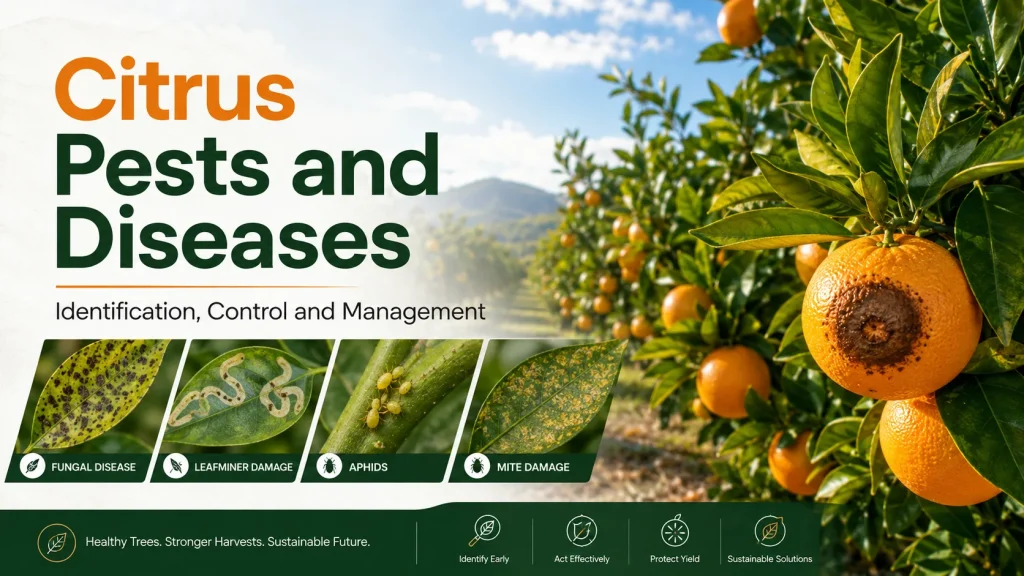
Introduction to Citrus Pests, Diseases and Orchard Protection
Citrus production can be affected by a wide range of diseases, insect pests, mites, nematodes and weeds. Without proper identification, monitoring and management, these problems can reduce tree vigor, fruit quality and overall orchard productivity.
The citrus plant protection handbook used as the main reference for this guide identifies citrus gummosis, citrus greening, bacterial canker, citrus tristeza and twig dieback among important disease problems. It also highlights citrus leafminer, Mediterranean fruit fly, aphids, whiteflies, scale insects and mites as important citrus pests. Weeds are another major concern, particularly where they compete with citrus trees for available water.
Successful citrus pest and disease management should therefore not depend on a single pesticide or treatment. It requires an integrated strategy based on correct diagnosis, orchard sanitation, irrigation management, healthy planting material, biological control, weed management and the selective use of appropriate crop protection products.
Chemical control still has an important place in commercial citrus production. Depending on the problem, the source discusses different classes of crop protection products, including copper fungicides, conventional fungicides, insecticides, acaricides and mineral oils. However, the selected active ingredient must match the actual pest or disease.
This guide covers the most important citrus pests and diseases, their characteristic damage and the main management approaches described in the reference, including the active ingredients specifically mentioned for their control.
Why Citrus Pest and Disease Management Is Important
A citrus tree can be attacked above and below ground. Pathogens may infect the roots, crown, trunk, shoots, leaves, flowers or fruit, while insect pests and mites may feed on young foliage, sap, fruit or other plant tissues.
Some pests are important not only because of direct feeding damage but also because they act as disease vectors.
Citrus aphids, for example, are closely associated with the spread of Citrus tristeza virus, while the Asian citrus psyllid is associated with citrus greening or Huanglongbing. For this reason, effective citrus insect control can sometimes contribute to disease management as well.
Weeds create another form of pressure. The handbook notes that weeds are particularly important because of water competition in dry citrus-growing regions. Important annual and perennial weed groups are specifically identified in the source.
Poor management may eventually result in:
- reduced tree vigor and growth
- leaf yellowing and premature leaf drop
- shoot and branch dieback
- fruit lesions or deformation
- premature fruit drop
- reduced marketable yield
- greater water competition
- increased pest and disease pressure
This is why a successful citrus orchard protection program begins with monitoring rather than spraying.
Once the causal organism has been correctly identified, growers can decide whether the problem requires cultural management, biological control, a fungicide, an insecticide, an acaricide or another approach.
Common Citrus Diseases
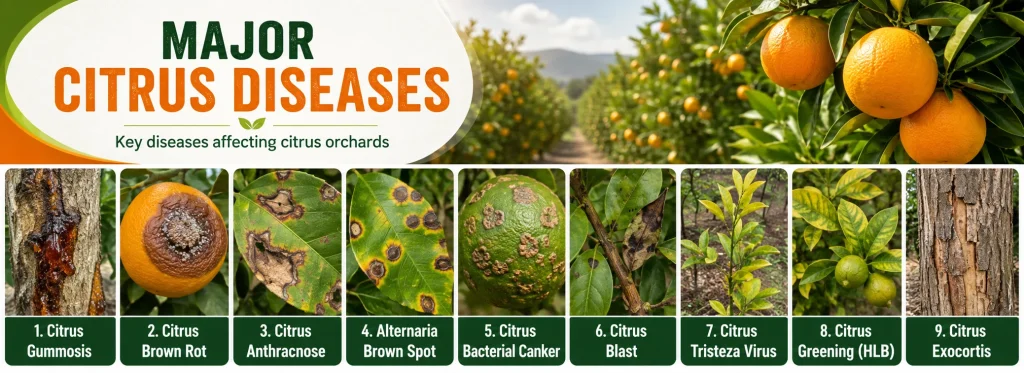
Citrus trees are affected by several important groups of diseases. The handbook divides them into fungal or fungus-like diseases, prokaryotic diseases, and viral or viroid diseases. Its disease section includes gummosis, brown rot, anthracnose, twig dieback, green and blue molds, Alternaria brown spot, bacterial canker, citrus blast, stubborn disease, witches’ broom, greening, tristeza and exocortis.
Correct classification is important because a product used against a fungal pathogen cannot be expected to cure a viral or viroid disease.
Fungal Diseases of Citrus
Citrus Gummosis and Phytophthora Crown Rot
Citrus gummosis, or Phytophthora crown rot, is one of the important citrus diseases described in the handbook. The principal pathogens mentioned include Phytophthora citrophthora and P. nicotianae.
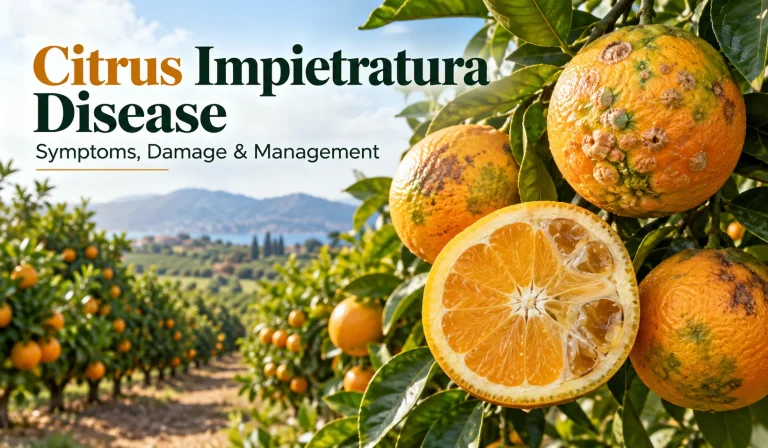
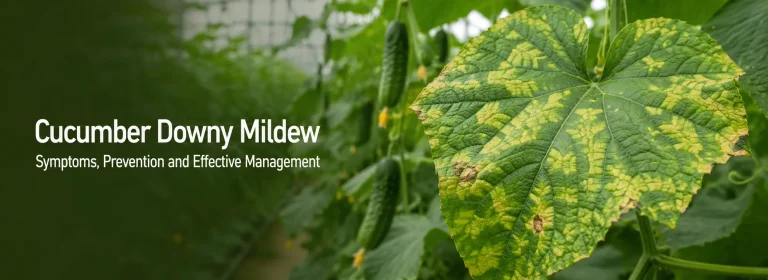
Typical symptoms include water-soaked brown lesions around the crown, cracking of affected bark and gum exudation. As the disease progresses, affected trees may show general weakness, yellowing, leaf drop and twig dieback.
Good citrus Phytophthora management starts with prevention. Drainage, clean planting material, suitable rootstocks, keeping the crown area relatively dry and avoiding movement of contaminated irrigation water from diseased trees toward healthy trees are emphasized in the source.
For chemical management, the handbook also discusses a fungicide formulation containing mancozeb + chlorothalonil + cymoxanil and mentions Behavaran Bordofix and Copper Oxychloride as a copper-based treatment in disease management.
These products should be viewed as components of an integrated Phytophthora program rather than replacements for drainage and orchard sanitation.
Citrus Brown Rot
Citrus brown rot is also associated with Phytophthora species, including P. parasitica and P. citrophthora in the source.
Affected fruit develops light to olive-brown decay and may fall prematurely. Wet conditions and contact with inoculum originating from the soil can increase disease development.
Management includes improving drainage, reducing contact between fruit and contaminated soil and limiting conditions that favor pathogen spread.
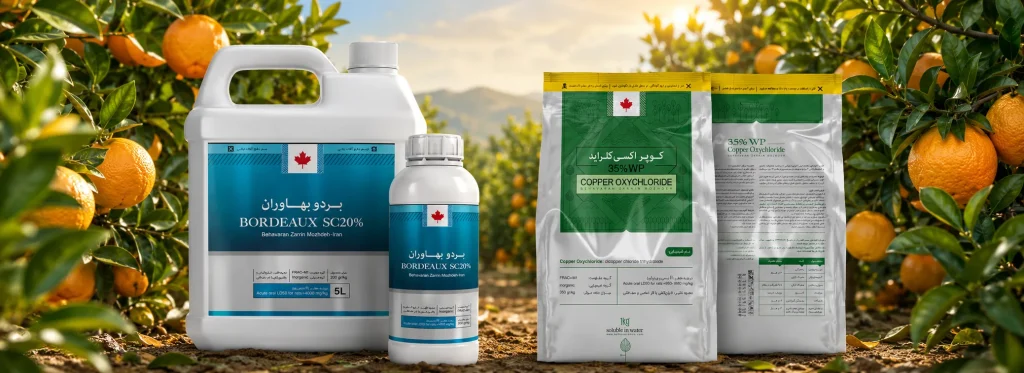
The handbook discusses copper-based fungicides like Behavaran Bordeaux as part of the management of Phytophthora-related citrus diseases. In commercial production, the exact copper product should be selected according to local citrus registrations and the current product label.
Citrus Anthracnose
Citrus anthracnose, associated with Colletotrichum species, can affect young leaves, shoots and fruit.
Symptoms may include necrotic lesions, shoot dieback, fruit spots and premature fruit drop. The disease has been reported from citrus-growing regions in both northern and southern Iran in the source.
Management combines removal of dead or infected branches with appropriate tree nutrition.
For chemical control, the handbook specifically mentions Captan as a fungicide option and also describes a traditional copper-based mixture containing copper sulfate, zinc sulfate and lime.
Therefore, when discussing fungicides for citrus anthracnose, Captan and Behavaran Bordeaux can be mentioned as options reported in the reference, subject to local registration.
Alternaria Brown Spot of Citrus
Alternaria brown spot is caused by Alternaria alternata. The disease mainly affects young shoots, leaves and fruit.
Brown necrotic lesions may develop on foliage and young shoots, often surrounded by yellow tissue. Young fruit may drop prematurely, while surviving fruit can develop surface blemishes that reduce marketability.
Cultural management includes timely pruning, removal of infected plant material and avoiding excessive nitrogen fertilization.
For chemical disease management, the handbook specifically mentions Behavaran Bordeaux, a copper-based product, in the management program for Alternaria brown spot.
This is a useful example of how copper fungicides for citrus may be incorporated into an integrated disease-management program alongside sanitation and canopy management.
Bacterial Diseases of Citrus
Citrus Bacterial Canker
Citrus bacterial canker is caused by Xanthomonas axonopodis pv. citri in the handbook.
Young leaves, shoots and fruit are particularly vulnerable. Rain can spread bacterial inoculum onto susceptible tissues, and wounds may increase infection. Citrus leafminer can also contribute to disease development by damaging young foliage.
Sanitation, pruning affected shoots and quarantine are important components of citrus canker management.
For chemical management, the reference specifically mentions:
Bordeaux mixture and copper oxychloride.
These copper bactericide/fungicide products are described in conjunction with sanitation rather than as a stand-alone cure.
For an international article, it is therefore appropriate to state that copper oxychloride and Bordeaux-based products are commonly included in citrus canker management programs where locally registered.
Citrus Blast
Citrus blast is associated in the source with Pseudomonas viridiflava and P. syringae pv. syringae.
Symptoms may include blossom and bud blast, fruit lesions, stem cankers, leaf blight and twig dieback. Cool and wet conditions can favor disease development, while wind and rain may contribute to spread.
Cultural management includes suitable tree spacing, wind protection, orchard sanitation and avoiding excessive nitrogen during susceptible periods.
The handbook also discusses copper products, particularly Behavaran Bordofix and copper oxychloride of Behavaran, for orchards with a history of the disease.
Again, chemical control should support rather than replace preventive orchard management.
Viral and Viroid Diseases of Citrus
Unlike fungal diseases, viral and viroid diseases cannot generally be managed with conventional fungicides.
Management therefore focuses heavily on healthy propagation material, resistant or tolerant rootstocks, quarantine and control of insect vectors where applicable.
Citrus Tristeza Virus
Citrus tristeza virus (CTV) is one of the major graft- and vector-transmitted diseases affecting citrus.
Symptoms may vary with the rootstock–scion combination and can include decline, yellowing and stem-pitting symptoms.
Aphids play an important role in disease spread.
The handbook emphasizes disease-free budwood and rootstocks and reduction of infected plant sources. It also lists Malathion and Pirimicarb for management of aphid vectors in nursery situations.
An important distinction should be made in the article:
Malathion and Pirimicarb do not cure Citrus tristeza virus; they are mentioned for management of the aphid vectors.
This wording is more scientifically accurate and useful for SEO around citrus tristeza management.
Citrus Greening or Huanglongbing
Citrus greening, also known as Huanglongbing (HLB), is one of the destructive citrus diseases discussed in the source.
Affected trees may develop mottled or yellow foliage, while fruit may become small, asymmetric and incompletely colored. Similar symptoms can also be caused by other diseases or nutritional problems, so visual diagnosis alone may not be sufficient.
Vector management is an important part of greening management.
The source specifically mentions processed kaolin as a physical deterrent and Clothianidin as an insecticide for Asian citrus psyllid management. It also warns about possible cross-resistance and recommends rotation with insecticides having different modes of action.
These treatments target the Asian citrus psyllid, not the bacterial pathogen already established inside an infected tree.
Citrus Exocortis Viroid
Citrus exocortis can produce bark cracking and scaling on susceptible rootstocks and may reduce tree growth.
Unlike vector-borne diseases such as tristeza, the source emphasizes transmission through infected propagation material, grafting and mechanical means.
Accordingly, management relies primarily on healthy budwood, clean planting material and avoidance of susceptible rootstocks.
No direct pesticide treatment is presented as a cure for exocortis.
Major Insect Pests of Citrus Trees
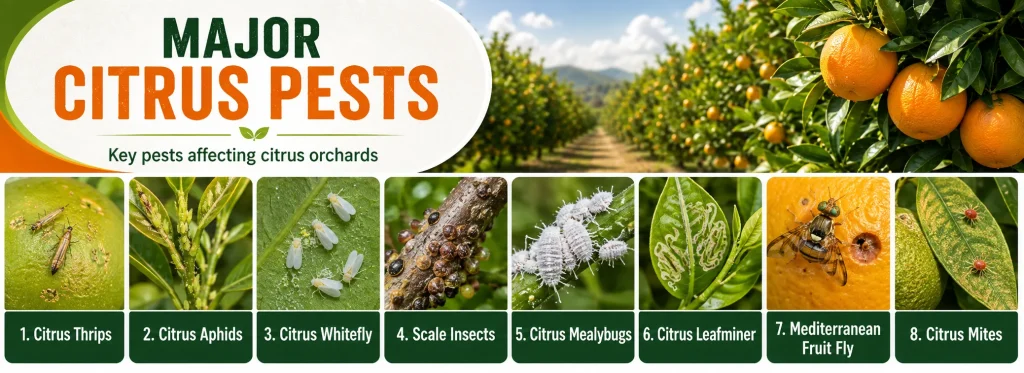
Important citrus insect pests identified in the handbook include thrips, aphids, whiteflies, scale insects, mealybugs, citrus leafminer and Mediterranean fruit fly.
Because these pests have very different feeding habits and life cycles, there is no single best insecticide for citrus pests.
Citrus Thrips
Citrus thrips feed on young leaves, shoots and developing fruit. Damage to fruit can result in characteristic scarring, while feeding on young foliage may cause deformation.
The handbook combines biological, behavioral, cultural and chemical control.
For chemical management, it specifically lists the following active ingredients or combinations:
Spirotetramat
Thiacloprid + Deltamethrin of Behavaran
Behavaran Profenofos
Behavaran Abamectin, in a program involving horticultural oil.
Predatory mites, spiders, lacewings and predatory bugs are also identified as natural enemies of citrus thrips.
For a commercial citrus thrips control program, active ingredient selection should therefore consider pest pressure, beneficial arthropods and current local registrations.
Citrus Aphids
Several aphid species can colonize citrus, including green and black citrus aphids. Aphids primarily feed on young leaves and shoots, and large colonies can distort fresh growth.
Their importance goes beyond direct damage because some species can transmit Citrus tristeza virus.
The handbook discusses Malathion Behavaran and Pirimicarb for control of aphid vectors in the context of tristeza management.
However, chemical aphid control should be combined with management of infected plant sources and healthy nursery material.
Citrus Whiteflies
Citrus whiteflies are sap-feeding pests that usually colonize the undersides of leaves.
The handbook includes whiteflies among important citrus pests and discusses population monitoring and yellow sticky cards in pest management.
The retrieved section of the source does not give me a sufficiently clear named insecticide recommendation that I can confidently attribute specifically to citrus whitefly, so I would not insert an active ingredient here merely for commercial purposes.
That is important for the credibility of the article.
Citrus Scale Insects and Mealybugs
Scale insects and mealybugs are important sap-feeding pests of citrus.
Different species may infest leaves, branches and fruit, and heavy infestations can weaken trees and reduce fruit quality.
The handbook describes several natural enemies and emphasizes integrated management. For mealybugs, biological control with beneficial predators such as Cryptolaemus is also discussed in the source.
Because the different scale species covered by the handbook have different management recommendations, it is better not to present one insecticide as a universal citrus scale insect treatment.
In the later chemical-control section of the pillar article, individual active ingredients can be organized more precisely by pest group.
Citrus Leafminer
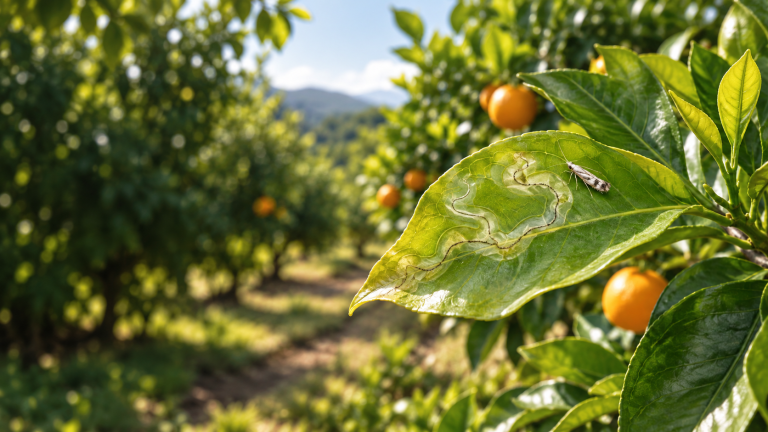
Citrus leafminer attacks young leaves. Larvae feed within leaf tissues, producing characteristic serpentine mines.
Young trees and fresh flushes may suffer greater damage.
Leafminer management is particularly important in areas affected by citrus canker because leafminer injury can increase the amount of susceptible damaged tissue. The source itself notes the role of citrus leafminer in bacterial canker epidemiology. one of most important pesticides for citrus leaf miner is Behavaran cyromazine.
The source has a dedicated section on leafminer management, but I would only add a specific active ingredient once it is directly confirmed from that section rather than extrapolating from other citrus pests.
Mediterranean Fruit Fly
The Mediterranean fruit fly (Ceratitis capitata) is identified as an important citrus and fruit pest.
Larvae develop inside fruit tissues, leading to deterioration of fruit quality and potentially severe economic losses.
Management requires monitoring and targeted pest-control strategies.
As with leafminer, I would not assign an insecticide name in this part of the article unless that product is explicitly linked to Mediterranean fruit fly in the source.
This distinction prevents the article from turning into an unsupported list of pesticides.
Citrus Mites and Their Damage
Citrus mites are important arthropod pests and should be managed separately from insects.
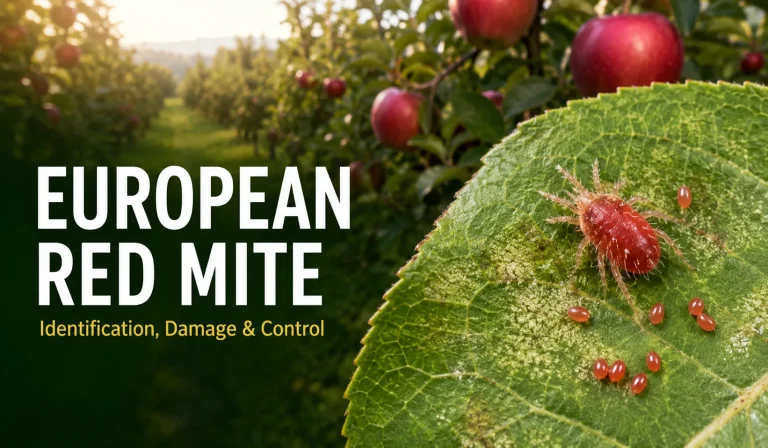
Mite infestations can result in leaf discoloration, fruit surface damage, premature leaf drop or reduced tree vigor depending on the species involved.
The handbook covers several citrus mite groups, including red and oriental citrus mites, and provides a relatively broad list of acaricides.
Among the active ingredients mentioned for citrus mite control are:
Pyridaben, Abamectin, Fenpyroximate and Spirodiclofen. The same source section also mentions Mancozeb in a mite-management recommendation.
For other citrus mite situations, the handbook also lists Tetradifon, Bromopropylate, Benzoximate, Hexythiazox, Spirodiclofen, Clofentezine and emulsifiable mineral oil.
This provides useful commercial keywords for the article, including:
acaricides for citrus mites, Abamectin for citrus mites, Spirodiclofen for citrus mites, Hexythiazox for citrus mites and Fenpyroximate for citrus mite control.
However, product selection should depend on the mite species, life stage, resistance history and local registration.
Repeated reliance on a single acaricide is also undesirable. The source itself emphasizes acaricide rotation according to pest biology.
Weeds in Citrus Orchards
Weeds are an important component of citrus orchard management because they compete with trees for resources and can increase water losses, particularly under dry conditions.
The source separates citrus weeds into annual and perennial groups and emphasizes that management should reflect weed biology. Important weeds are also listed directly in the handbook’s abstract.
Annual Weeds in Citrus Orchards
Important annual weeds mentioned in the source include:
Amaranthus spp., Chenopodium album, Cuscuta monogyna and Setaria viridis.
Annual weeds often depend heavily on seed production for future populations. Preventing establishment and seed production is therefore an important component of annual weed control in citrus orchards.
Management may combine mechanical, cultural and, where justified and registered, chemical weed control.
Perennial Weeds in Citrus Orchards
Problematic perennial weeds identified in the source include:
Sorghum halepense, Cynodon dactylon, Cyperus rotundus, Convolvulus arvensis and Cirsium arvense.
These weeds can be more difficult to manage because many can regenerate from underground structures and persist for several seasons.
The handbook particularly emphasizes controlling troublesome perennial weeds before establishing a new orchard.
For a pillar article, detailed citrus herbicide recommendations fit better in the later section titled Weed Control Strategies in Citrus Orchards, where chemical and non-chemical options can be compared without interrupting the pest and disease discussion.
How to Identify Citrus Pest and Disease Problems
Correct identification is the foundation of successful citrus pest and disease control.
The same visible symptom may have several possible causes.
Yellow leaves, for example, may be associated with disease, root damage, insect feeding or nutrient disorders. Fruit spots can be caused by fungal disease, bacterial disease or arthropod injury.
A useful diagnostic approach starts with the affected plant part.
Crown and lower trunk lesions with gum: investigate citrus gummosis and Phytophthora.
Brown fruit decay following wet conditions: investigate citrus brown rot.
Necrotic lesions on young leaves and fruit: consider diseases such as Alternaria brown spot.
Raised bacterial lesions: investigate citrus canker.
Winding mines in young leaves: inspect for citrus leafminer.
Colonies on tender shoots: check for citrus aphids.
Fruit scarring and damage to fresh foliage: consider thrips.
Small, asymmetric fruit with abnormal coloration: citrus greening may need to be ruled out.
This last point is particularly important. The source notes that visual symptoms of citrus greening may resemble symptoms of other diseases and nutrient deficiencies. Diagnosis should therefore not rely on appearance alone.
Only after diagnosis should the grower move to the next question:
Which control method is appropriate?
For example, applying Captan or a copper fungicide would make sense only where the target disease justifies such a treatment. An acaricide such as Abamectin or Spirodiclofen should only be considered when a relevant mite problem has been correctly identified.
This diagnostic approach also creates a natural SEO connection between phrases such as how to identify citrus diseases, citrus leaf symptoms, citrus fruit diseases, citrus pest identification and the individual disease pages linked from the pillar article.
Integrated Pest Management for Citrus Orchards
Integrated Pest Management for citrus orchards, or citrus IPM, combines monitoring, prevention, cultural control, biological control and targeted chemical intervention.
The handbook’s overall conclusion is that integrated management of diseases, pests and weeds can reduce losses and improve citrus performance.
A strong IPM program begins with monitoring.
Orchards should be checked for new pest colonies, mite populations, disease lesions, gum exudation, fruit damage, shoot dieback and weed emergence.
The next step is identification.
Chemical products should be matched to the target organism. For example:
- Captan is mentioned for citrus anthracnose.
- Bordofix / Bordeaux-based copper products appear in several disease-management sections.
- Copper oxychloride is mentioned for bacterial canker and citrus blast.
- Spirotetramat, Thiacloprid + Deltamethrin, Profenofos and Abamectin are discussed for citrus thrips.
- Pyridaben, Abamectin, Fenpyroximate, Spirodiclofen and Hexythiazox appear among mite-management options.
- Clothianidin is mentioned for Asian citrus psyllid management associated with citrus greening.
These examples show why citrus IPM does not mean avoiding pesticides completely. Instead, it means using the correct crop protection product only when justified and combining it with non-chemical measures.
Biological control is another important part of the system. Predatory mites, spiders, lacewings, parasitoid wasps and beneficial beetles are described throughout the handbook as natural enemies of citrus pests.
Protecting those organisms can help reduce long-term dependence on repeated insecticide applications.
Cultural and Preventive Practices in Citrus Orchards
Good orchard management provides the foundation for both citrus disease prevention and pest management.
One of the most important measures is using healthy planting and propagation material.
This is particularly important for graft-transmissible diseases such as tristeza and exocortis. No fungicide or insecticide can compensate for planting infected propagation material.
Proper drainage is also essential.
Phytophthora diseases are strongly connected with moisture around the root and crown zone. The source therefore emphasizes drainage, suitable rootstocks, orchard sanitation and irrigation management as core components of gummosis control.
Pruning is another important preventive tool.
Removing diseased or dead shoots can reduce inoculum associated with diseases such as anthracnose, Alternaria brown spot and bacterial canker.
Balanced fertilization should also be considered. Excessive nitrogen may promote tender growth and can increase vulnerability to some citrus disease problems.
Weed management contributes to orchard health by reducing competition and improving access for other management operations.
Finally, preventive practices should be combined with targeted crop protection products when needed.
For example, cultural management of Alternaria may be supplemented with copper products such as Bordofix where appropriate; bacterial canker programs may include Bordeaux mixture or copper oxychloride; anthracnose management may include Captan; and confirmed mite infestations may justify an appropriate registered acaricide such as Abamectin, Fenpyroximate or Spirodiclofen.
The key principle is that these active ingredients should support a well-managed orchard rather than substitute for sanitation, drainage, pruning, monitoring and correct diagnosis.
Biological Control of Citrus Pests
Biological control of citrus pests is an important component of integrated citrus pest management. Citrus orchards can support predators, parasitoids and naturally occurring microorganisms that help suppress pest populations and reduce excessive dependence on chemical insecticides.
The source identifies several natural enemies of citrus thrips, including predatory mites, spiders, lacewings and predatory bugs. Predatory mites belonging to genera such as Euseius, Amblyseius and Typhlodromus are specifically discussed as enemies of adult and immature citrus thrips.
Biological control is also important for citrus scale insects and mealybugs. Various parasitoid wasps are associated with citrus scales, while beneficial lady beetles may be used against particular pest groups.
The handbook specifically mentions Cryptolaemus lady beetles for biological control of citrus mealybugs and Rodolia lady beetles for management of cottony cushion scale.
For some leaf-feeding caterpillars, the source also mentions microbial biological control agents such as Bacillus thuringiensis and Beauveria bassiana.
This demonstrates an important principle of citrus IPM: natural enemies should be considered before unnecessary broad-spectrum pesticide applications are made.
Biological control works best when combined with:
- regular pest monitoring
- accurate pest identification
- orchard sanitation
- protection of natural enemies
- cultural management
- selective chemical intervention when pest pressure justifies treatment
Preserving beneficial organisms can help stabilize pest populations and improve the long-term sustainability of citrus pest management.
Chemical Control of Citrus Pests and Diseases
Chemical control of citrus pests and diseases remains an important part of commercial citrus production, but chemical products should be selected according to the organism causing the problem.
A fungicide used against Phytophthora cannot replace an acaricide needed for mites, while an insecticide used against aphids will not cure a viral disease such as citrus tristeza.
The source consistently presents chemical intervention as one part of integrated management rather than as the only method of orchard protection. Its overall conclusion emphasizes combining orchard sanitation, irrigation management, biological control and chemical measures to reduce the effects of citrus pests, diseases and weeds.
For this reason, a good citrus pesticide program should follow the sequence:
diagnosis → monitoring → selection of the appropriate pesticide group → selection of an active ingredient suitable for the target problem.
Fungicides for Citrus Diseases
Different fungicides for citrus diseases are mentioned throughout the source.
For citrus gummosis and Phytophthora crown rot, the handbook discusses a fungicide formulation containing:
Mancozeb + Chlorothalonil + Cymoxanil
and also refers to Bordofix as a copper-based treatment used within disease management.
For citrus anthracnose, the source specifically mentions:
Captan
as well as a traditional treatment based on copper sulfate, together with other components described in the source.
For Alternaria brown spot of citrus, Bordofix is specifically included in the disease-management section.
Copper products have an especially important place in the handbook. Bordeaux mixture, Bordofix and copper oxychloride are discussed in management programs for several citrus diseases.
For example, citrus bacterial canker management includes Bordeaux mixture and copper oxychloride in addition to pruning and quarantine measures.
Copper products are also discussed for citrus blast, particularly in orchards with a history of disease.
The source also mentions Thiabendazole in the postharvest management of green and blue mold of citrus fruit, caused mainly by Penicillium digitatum and P. italicum.
Therefore, the question “What is the best fungicide for citrus diseases?” does not have one universal answer. The appropriate active ingredient depends on the pathogen involved.
Insecticides for Citrus Pests
The source contains several named insecticides for citrus pests.
For citrus thrips, it mentions:
Spirotetramat
Thiacloprid + Deltamethrin
Profenofos
Abamectin
with horticultural oil also discussed as part of the pest-management program.
For aphids associated with transmission of Citrus tristeza virus, the source mentions:
Malathion and Pirimicarb.
These products are used to manage aphid vectors; they do not cure the virus inside an infected citrus tree.
For the Asian citrus psyllid, which is associated with citrus greening or Huanglongbing, the handbook specifically mentions:
Clothianidin
as an insecticide for psyllid management. Processed kaolin is also described as a non-conventional measure for reducing psyllid activity.
These examples demonstrate why insecticide selection for citrus should be based on the target pest rather than on a general spray program.
An insecticide appropriate for thrips may not be the preferred option for psyllids, aphids, scale insects or fruit flies.
Acaricides for Citrus Mites
The handbook contains a relatively broad range of acaricides for citrus mites.
Depending on the mite species discussed, active ingredients mentioned include:
Pyridaben
Abamectin
Fenpyroximate
Spirodiclofen
Tetradifon
Bromopropylate
Benzoximate
Hexythiazox
Clofentezine
The source also discusses emulsifiable mineral oil as part of some citrus mite-management programs.
It also mentions Mancozeb among chemical options in one citrus mite section.
The important point is that not all acaricides act equally against all mite life stages. Therefore, citrus mite control should be based on species identification, population development and previous acaricide use.
The source also explicitly emphasizes acaricide rotation, reinforcing the importance of resistance management.
Weed Control Strategies in Citrus Orchards
Effective weed control in citrus orchards should combine cultural, physical and chemical methods.
The handbook emphasizes that long-term weed management is necessary because citrus orchard weeds can re-establish when control programs are interrupted.
The source presents integrated weed management as a flexible system in which physical, cultural and chemical methods are selected according to orchard conditions. It specifically notes that herbicides should not automatically be regarded as the only weed-control option.
Non-chemical approaches discussed include:
- mulching
- cultivation
- cover vegetation
- physical weed suppression
- other cultural weed-control practices
Mulching may help reduce weed emergence and can form part of a sustainable citrus weed management program.
The handbook also contains a dedicated chemical weed-control section. One herbicide specifically named in that section is Paraquat, which the source describes in relation to emerged annual weeds.
Because herbicide registrations and restrictions can vary considerably between countries, an international article should present active ingredients reported in the reference without implying that all are currently approved for citrus in every market.
The most sustainable strategy remains integrated weed management in citrus orchards, combining weed identification, prevention and selective intervention.
Choosing the Right Crop Protection Product for Citrus
Selecting the right crop protection product for citrus should begin with the target organism, not with a brand name.
A grower should first identify whether the problem involves:
a fungal or fungus-like pathogen, a bacterial disease, an insect pest, a mite or weeds.
Then the appropriate pesticide category can be considered.
For example:
Phytophthora diseases: the source discusses products such as Mancozeb + Chlorothalonil + Cymoxanil and copper-based products.
Citrus anthracnose: Captan and copper-based management are mentioned.
Citrus bacterial canker: Bordeaux mixture and Copper oxychloride are included in management recommendations.
Citrus thrips: Spirotetramat, Thiacloprid + Deltamethrin, Profenofos and Abamectin are named.
Asian citrus psyllid: Clothianidin is mentioned.
Citrus mites: Abamectin, Pyridaben, Fenpyroximate, Spirodiclofen, Hexythiazox and several other acaricides are discussed.
The commercial question “What is the best pesticide for citrus trees?” should therefore be answered with another question:
What pest or disease has been correctly identified?
Once the target has been confirmed, growers can compare active ingredients, modes of action and registered product options.
For an international citrus article, the final product choice should also reflect current local registration and the official product label.
Resistance Management and Pesticide Rotation
Pesticide resistance management is essential for maintaining the long-term effectiveness of citrus crop protection products.
Repeated exposure to the same mode of action can select for less-sensitive individuals within pest populations.
The handbook explicitly discusses this problem in relation to Clothianidin used against the Asian citrus psyllid. Because of the possibility of cross-resistance with compounds that act in a similar way, the source recommends rotation with insecticides having different modes of action.
The same broad principle is also reflected in the citrus mite section, where rotation of acaricides is emphasized.
Effective pesticide rotation does not simply mean changing commercial brand names.
Two products can have different names while still belonging to the same mode-of-action group.
A more useful resistance-management approach therefore considers:
- the active ingredient
- the mode of action
- previous pesticide use
- the pest or pathogen being controlled
- use of non-chemical management methods
Combining biological, cultural and chemical strategies can reduce unnecessary selection pressure and support a more sustainable citrus IPM program.
Best Time to Spray Citrus Trees
There is no single best time to spray citrus trees because timing depends on the target pest or disease.
The source repeatedly links treatment decisions with pest biology, disease history, environmental conditions and monitoring rather than recommending one universal citrus spray calendar.
For insect pests such as thrips, the handbook links management decisions with the presence of the pest and the history of infestation in the orchard.
For some scale insects, intervention is also linked to the development of susceptible immature stages rather than simply to the presence of adult pests.
For fungal and bacterial diseases, rainfall, humidity and the seasonal activity of the pathogen can influence disease risk.
For example, the source connects copper-based disease management with periods of disease risk in orchards that have a history of citrus blast.
Therefore, citrus spray timing should be determined by:
target organism + susceptible stage + orchard history + environmental conditions.
This is more reliable than applying pesticides simply according to a fixed calendar.
Safety and Responsible Pesticide Use in Citrus Orchards
The citrus handbook is primarily a plant-protection guide rather than a comprehensive pesticide-safety manual. However, it repeatedly places pesticide use within an integrated management framework and, in some pest sections, states that chemical interventions should depend on local expert recommendations.
For an international pillar article, responsible pesticide use in citrus orchards should therefore be presented as part of correct crop-protection decision making.
Crop protection products should only be associated with pests or diseases for which they are appropriately registered, and the current product label should determine the legally permitted use.
This is particularly important because the citrus handbook was published as an Iranian applied guide in 2022, while registrations may differ between countries and may change over time. The source itself identifies the document as an applied citrus plant-protection instruction issued through the Iranian agricultural research and extension system.
Responsible citrus crop protection should also avoid unnecessary treatments that may disrupt predators and parasitoids involved in biological control.
Therefore, the objective is not maximum pesticide use; it is effective pest and disease management with the minimum unnecessary intervention.
Frequently Asked Questions About Citrus Pests and Diseases
What are the most common citrus pests and diseases?
Important citrus diseases discussed in the reference include gummosis, brown rot, anthracnose, Alternaria brown spot, bacterial canker, citrus blast, citrus greening, tristeza and exocortis. Important pests include thrips, aphids, whiteflies, scales, mealybugs, citrus leafminer, Mediterranean fruit fly and citrus mites.
What fungicides are used for citrus diseases?
The source mentions several fungicidal active ingredients and copper products, including Captan, Mancozeb + Chlorothalonil + Cymoxanil, Bordeaux mixture, Bordofix, Copper oxychloride and Thiabendazole, depending on the disease being managed.
What insecticides are mentioned for citrus thrips?
The handbook names Spirotetramat, Thiacloprid + Deltamethrin, Profenofos and Abamectin in its citrus thrips management section.
What acaricides are used for citrus mites?
The source discusses active ingredients including Pyridaben, Abamectin, Fenpyroximate, Spirodiclofen, Hexythiazox, Tetradifon, Bromopropylate, Benzoximate and Clofentezine in different mite-management sections.
Can insecticides cure citrus greening?
No. The insecticide mentioned in the handbook, Clothianidin, targets the Asian citrus psyllid vector. It does not cure an already infected tree.
Can insecticides cure citrus tristeza virus?
No. Malathion and Pirimicarb are discussed for aphid-vector management, not as treatments for the virus itself. Disease-free planting material and management of infection sources remain important.
What is the best fungicide for citrus diseases?
There is no single best fungicide. The correct choice depends on whether the disease is caused by Phytophthora, Colletotrichum, Alternaria, Penicillium or another pathogen.
Why is pesticide rotation important in citrus orchards?
Repeated use of products with similar modes of action can increase resistance pressure. The source specifically warns about possible cross-resistance in Asian citrus psyllid management and recommends rotation among different modes of action.
When is the best time to spray citrus trees?
There is no universal date. The source links management decisions to pest development, disease history, monitoring and environmental conditions.
Is biological control useful in citrus orchards?
Yes. Predatory mites, spiders, lacewings, parasitoid wasps and beneficial lady beetles are among the natural enemies discussed in the handbook.
Conclusion
Effective management of citrus pests and diseases requires more than simply choosing a pesticide.
Citrus orchards may be affected by fungal and fungus-like diseases, bacterial diseases, viruses and viroids, insect pests, mites and weeds. Each problem requires a different management strategy.
The citrus plant protection reference used for this article describes a broad range of crop protection options.
For fungal and bacterial diseases, these include products such as Captan, Copper oxychloride, Bordeaux mixture, Behavaran Bordeaux and a Mancozeb + Chlorothalonil + Cymoxanil formulation.
For citrus insect pests, the handbook mentions active ingredients such as Spirotetramat, Thiacloprid + Deltamethrin, Profenofos, Abamectin, Malathion, Pirimicarb and Clothianidin of Behavaran, depending on the target pest or vector.
For citrus mites, it discusses several acaricides, including Pyridaben, Abamectin, Fenpyroximate, Spirodiclofen and Hexythiazox, among others.
Citrus Pests and Diseases and the Crop Protection Products Mentioned in the Source
| Citrus pest / disease | Type | Crop protection products mentioned in the source |
|---|---|---|
| Citrus Gummosis / Phytophthora Crown Rot | Fungal / fungus-like disease | Mancozeb + Chlorothalonil + Cymoxanil (Aliado formulation), Bordeaux mixture / Bordofix, Copper oxychloride |
| Citrus Brown Rot | Phytophthora disease | Copper oxychloride, copper-based fungicides |
| Citrus Anthracnose | Fungal disease | Captan, Copper sulfate + Zinc sulfate + Lime mixture |
| Alternaria Brown Spot of Citrus | Fungal disease | Bordofix / Bordeaux-based copper treatment |
| Citrus Bacterial Canker | Bacterial disease | Bordeaux mixture, Copper oxychloride |
| Citrus Blast | Bacterial disease | Bordofix, Copper oxychloride |
| Citrus Tristeza Virus | Viral disease | No direct virucide; for aphid vectors the source mentions Malathion and Pirimicarb |
| Citrus Greening / Huanglongbing | Bacterial disease transmitted by psyllid | No direct curative pesticide for the disease; for Asian citrus psyllid the source mentions Clothianidin and Chlorfluazuron; processed Kaolin is also mentioned for vector suppression |
| Citrus Exocortis Viroid | Viroid disease | No direct pesticide treatment mentioned; management is based mainly on healthy propagation material and resistant/tolerant rootstocks |
| Citrus Thrips | Insect pest | Spirotetramat, Thiacloprid + Deltamethrin, Profenofos, Abamectin + horticultural oil |
| Citrus Aphids | Insect pest | Malathion, Pirimicarb are specifically mentioned for aphid-vector management in the tristeza section |
| Citrus Whitefly | Insect pest | In the retrieved section, yellow sticky traps are specifically recommended; I did not find a clearly stated insecticide association in the source section retrieved |
| Citrus Scale Insects | Insect pests | The handbook discusses horticultural/mineral oil, and for some scale/mealybug management sections also mentions products such as Pyriproxyfen and Acetamiprid depending on the species |
| Citrus Mealybugs | Insect pests | Biological control is emphasized; the source specifically mentions Cryptolaemus for mealybugs. Chemical recommendations vary by species and are not presented as one universal treatment |
| Citrus Leafminer | Insect pest | The article/source discusses chemical management in its dedicated section, but from the retrieved text I do not have a sufficiently clear product line to attribute a specific active ingredient without guessing |
| Mediterranean Fruit Fly | Fruit pest | Present in the source as a major citrus pest, but I do not have a sufficiently clear retrieved passage linking it to a named insecticide, so I would not add one without rechecking that section |
| Citrus Mites | Mite pests | Pyridaben, Abamectin, Mancozeb, Fenpyroximate, Spirodiclofen; elsewhere for citrus mites the source also lists Tetradifon, Bromopropylate, Benzoximate, Hexythiazox, emulsifiable mineral oil and Clofentezine |