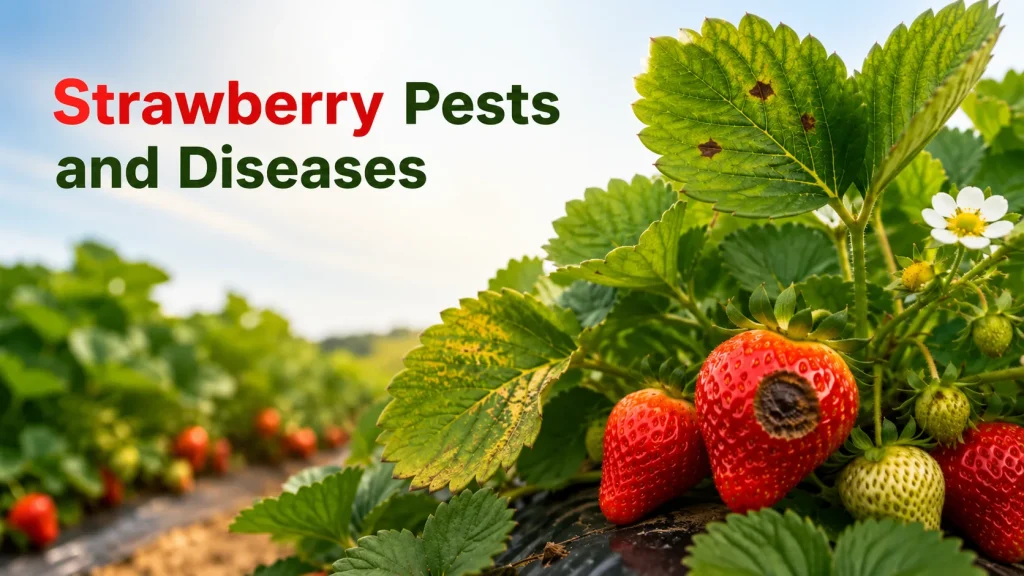
Strawberries are highly valued for their flavor, color and market appeal, but their soft fruits and dense plant canopy make them vulnerable to a wide range of pests and diseases. Problems may affect the leaves, flowers, fruits, runners, crowns and roots, reducing yield and shortening postharvest life.
Some strawberry pests, such as cyclamen mites, feed inside tightly folded young leaves and growing points, making them difficult to detect and control. Strawberry diseases may be caused by fungi, bacteria, oomycetes, viruses or other pathogens. Anthracnose fruit rot, angular leaf spot, gray mold, powdery mildew, common leaf spot, leather rot and crown or root rots are among the important problems growers may encounter.
This guide explains how to identify common strawberry pests and diseases, distinguish their symptoms and apply practical prevention and control measures. It also discusses strawberry mite control, fruit-rot prevention, pesticide selection and the safe use of fungicides and miticides.
Pesticide registrations, permitted crops, application rates and pre-harvest intervals vary between countries. Always follow the approved product label and recommendations from a qualified local crop-protection specialist.
What Damage Do Strawberry Pests and Diseases Cause?
Strawberry plants have tender foliage, flowers close to the canopy and fruits that often develop near the soil surface. These characteristics make the crop particularly sensitive to pest feeding, prolonged leaf wetness, soil splash, poor ventilation and fruit injury.
The effects of strawberry pests and diseases are not limited to visible spots or damaged leaves. Severe infestations and infections may interfere with vegetative growth, flowering, fruit set, yield and storage quality.
Common types of damage include:
- Distorted, curled or undersized young leaves
- Stunted and compact plant growth
- Shortened petioles and flower stalks
- Reduced flowering and fruit formation
- Brown, purple or black lesions on leaves
- Sunken spots and rotting areas on fruit
- Crown discoloration and plant collapse
- Root decay and reduced water uptake
- Lower fruit firmness and shelf life
- Reduced commercial quality and marketable yield
Correct diagnosis is essential because similar symptoms can have different causes. Curled strawberry leaves, for example, may result from cyclamen mites, aphids, viruses, herbicide injury, salinity or nutrient disorders. Likewise, black spots on strawberries may be associated with anthracnose, leather rot, gray mold, mechanical injury or heat damage.
Applying a fungicide to a bacterial disease or using a miticide when the problem is nutritional will not provide effective control. The first step in any strawberry pest-control or disease-control program is therefore accurate identification.
Most Important Strawberry Pests
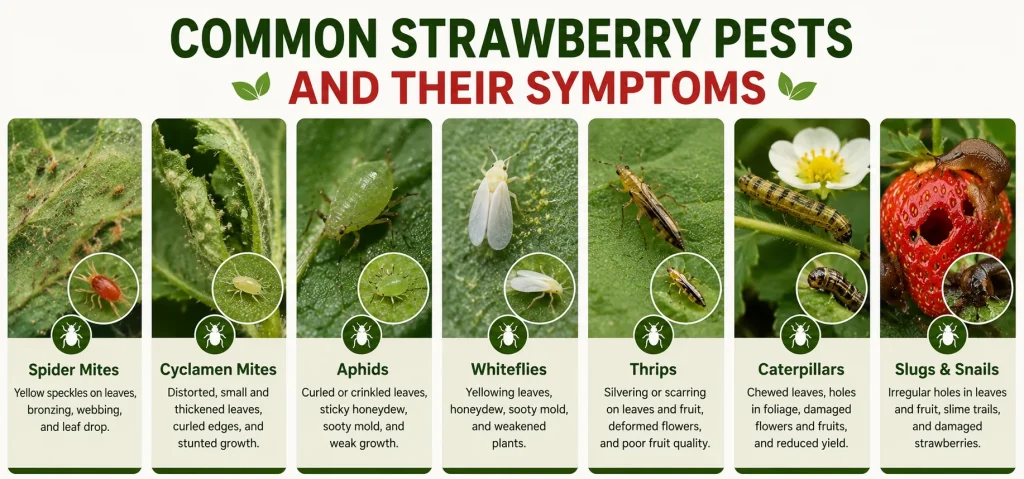
Several pests may attack strawberry leaves, flowers, fruits and roots. Important examples include cyclamen mites, two-spotted spider mites, thrips, aphids, whiteflies, leafhoppers, caterpillars, slugs and snails.
Pest pressure varies according to climate, production system, cultivar, planting material, field history, irrigation method and pesticide-use history. Protected cultivation and perennial strawberry fields may create favorable conditions for certain pests because host plants remain available for longer periods.
Cyclamen Mite or Strawberry Mite
The cyclamen mite, Phytonemus pallidus, is a tiny pest that attacks strawberries and several ornamental and greenhouse plants. It is sometimes referred to simply as the strawberry mite.
Adult cyclamen mites are extremely small and difficult to see without magnification. They usually live in protected, humid areas of the plant, including:
- The center of the crown
- Newly emerging leaves
- Folded and unopened leaflets
- Young buds
- Wrinkled or distorted plant tissue
These protected locations reduce exposure to sunlight, dry conditions and contact pesticides. This is one reason why cyclamen mite control can be more difficult than the control of mites that live openly on the lower leaf surface.
Infestations frequently enter a field through contaminated planting material. Mites may then spread through contact between plants, movement of workers, contaminated tools, plant debris or other mechanical pathways.
Symptoms of Cyclamen Mite Damage on Strawberries
Cyclamen mites feed mainly on young, actively growing plant tissue. Therefore, the earliest and most noticeable symptoms usually appear in the center of the strawberry plant.
Typical symptoms include:
- Small, thickened and wrinkled young leaves
- Curled or folded leaf margins
- Brown or bronze discoloration of tender tissue
- Shortened petioles
- Compact growth in the crown
- Distorted flower buds
- Misshapen flowers and fruits
- Reduced plant vigor
- Stunted or flattened plants
- Lower fruit number and size
In severe infestations, the entire plant may become dwarfed. The center of the plant appears tight and crowded because young leaves do not expand normally.
Cyclamen mite symptoms may resemble virus damage, nutrient disorders, cold injury or herbicide stress. Suspicious plants should be inspected carefully with sufficient magnification, focusing on unopened leaves and the growing point.
Cyclamen Mite Life Cycle and Seasonal Activity
Cyclamen mites develop through egg, larval, resting and adult stages. Females generally place their eggs in moist, protected plant tissue, especially between young, folded leaves.
Temperature and humidity affect the speed of population development. Cool to moderate conditions combined with high humidity and dense foliage may support population growth. Overhead irrigation and poor air circulation may also maintain favorable humidity in the center of the plant.
The pest may survive on infested plants and become active when new growth begins. Older or multi-year plantings may therefore develop larger populations when infected plants are not removed.
Regular scouting should begin early in the growing season. Plants with compact crowns, shortened petioles and distorted young leaves should be marked and examined immediately. Detecting a small infestation is much easier than controlling mites after they have spread through the field.
Management and Control of Strawberry Mites
Successful strawberry mite control depends on prevention, early detection, sanitation and carefully selected treatments. A single spray is often insufficient because mites remain hidden in folded leaves and meristematic tissue.
Important management practices include:
Use clean planting material:
Purchase certified or reliable strawberry transplants. Examine young plants for stunting, distorted leaves and abnormal crown growth before planting.
Scout regularly:
Inspect plants weekly, paying special attention to humid areas, dense plantings and the center of the canopy.
Remove infested plants:
Where infestations are limited, remove affected plants and nearby suspicious plants carefully. Do not leave infested material beside the field.
Manage infestation hot spots:
Early treatment of localized patches may reduce unnecessary spraying and slow movement into healthy areas.
Improve spray coverage:
When an approved miticide is required, the spray must reach the crown, folded leaves and protected growing tissue. Spraying only the outer leaf surfaces is unlikely to provide satisfactory control.
Avoid excessive nitrogen:
Overuse of nitrogen may produce dense, tender growth and reduce air circulation. Fertilization should be based on crop need and soil or tissue analysis.
Clean equipment and tools:
Tools used in infested sections should be cleaned before being moved into healthy areas.
Preserve beneficial organisms:
Broad-spectrum pesticide use may reduce predatory mites and other natural enemies. Integrating biological and chemical control can improve long-term pest management.
Best Miticide for Strawberries
There is no single product that can be described as the best miticide for every strawberry field. Product choice depends on:
- The mite species
- The dominant life stage
- Infestation severity
- Crop growth stage
- Temperature and humidity
- Spray coverage
- Harvest schedule
- Local pesticide registration
- Resistance-management requirements
Cyclamen mites and two-spotted spider mites differ in their preferred feeding sites and biology. A miticide that performs well against one species may not provide equal control of the other.
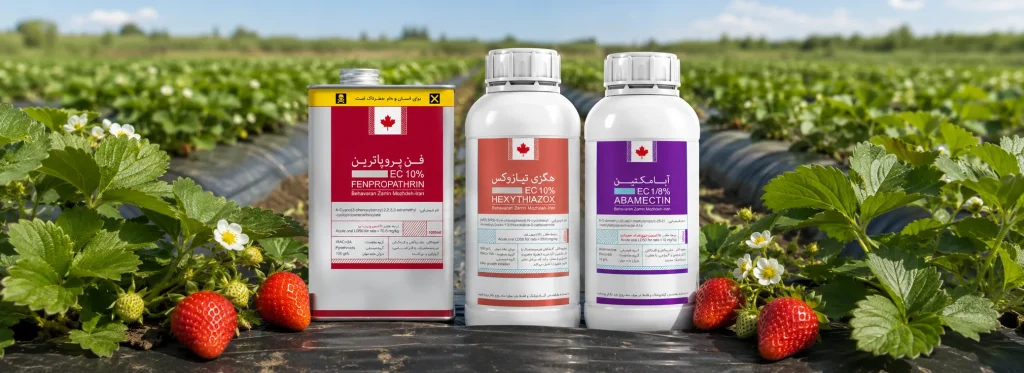
Active ingredients such as abamectin, fenpropathrin and hexythiazox may be considered in mite-management programs in markets where their use on strawberries is legally approved. However, they do not have identical activity.
Hexythiazox of Behavaran generally targets eggs and immature stages of certain mites and should not be relied upon alone when the population consists mainly of adults. Abamectin primarily acts on mobile mite stages and requires good coverage. Fenpropathrin has insecticidal and acaricidal activity but may also affect beneficial arthropods.
Before using any strawberry miticide:
- Confirm the mite species.
- Check that the product is registered for strawberries.
- Follow the approved application rate.
- Observe the pre-harvest interval.
- Avoid repeated use of the same mode-of-action group.
- Protect pollinators and beneficial mites.
- Ensure spray penetration into the target area.
- Follow the local label and technical recommendations.
Most Important Strawberry Diseases
Strawberry diseases can affect the foliage, flowers, fruit, runners, crowns and roots. They may be caused by fungi, bacteria, oomycetes, viruses or nematodes.
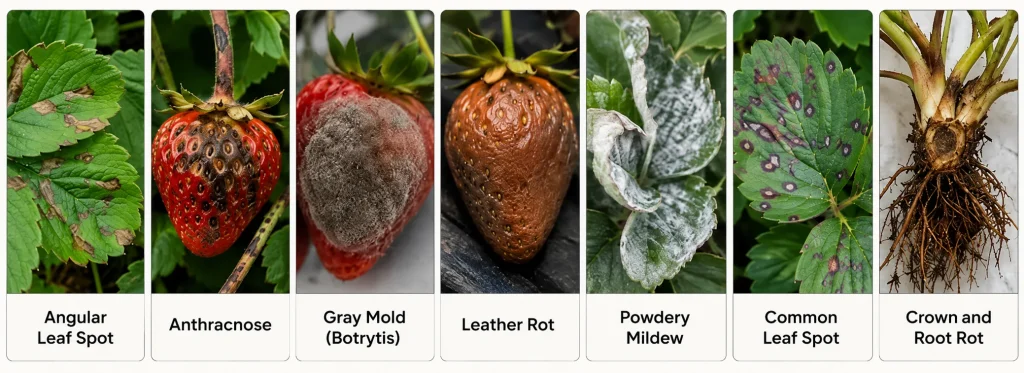
Important strawberry plant diseases include:
- Angular leaf spot
- Anthracnose fruit rot and crown rot
- Gray mold
- Powdery mildew
- Common leaf spot
- Leaf scorch
- Leather rot
- Phytophthora crown rot
- Root-rot complexes
Visual symptoms provide useful clues, but laboratory confirmation may be required because several strawberry leaf and fruit diseases produce similar symptoms.
Angular Leaf Spot of Strawberry
Angular leaf spot is a bacterial disease caused by Xanthomonas fragariae. The bacterium may enter a production area with infected or contaminated transplants and survive in infected plant tissue and crop debris.
Splashing rain, overhead irrigation, contaminated tools and movement through wet plants can spread bacterial cells from infected plants to healthy ones.
Cool to moderate temperatures combined with high humidity and long periods of leaf wetness generally favor disease development.
Symptoms of Angular Leaf Spot on Strawberry Leaves
Early symptoms usually appear as small, water-soaked lesions on the lower surface of leaves. Because the spots are restricted by leaf veins, they develop a characteristic angular shape.
When an infected leaf is held against the light, young lesions may appear translucent. As the disease develops, they become:
- Brown
- Reddish brown
- Dark and necrotic
- Larger through the merging of adjacent lesions
Under humid conditions, sticky, milky bacterial exudates may appear on the underside of infected leaves. After drying, these droplets can leave a whitish or shiny residue.
Severe infection may produce extensive leaf blight. The disease can also affect petioles, runners, flowers and calyx tissue. Brown or dry calyxes reduce fruit appearance and commercial quality.
Conditions That Favor Angular Leaf Spot
Angular leaf spot is more likely to spread under the following conditions:
- Infected planting material
- Repeated rainfall
- Overhead irrigation
- Extended leaf wetness
- Dense plant canopies
- Poor ventilation
- Working in the field while plants are wet
- Contaminated tools or equipment
- Infected crop debris
- Excessive nitrogen fertilization
The disease often begins in localized areas and spreads with splashing water. Frequent scouting and sanitation can help prevent a limited infection from becoming a field-wide problem.
Prevention and Control of Angular Leaf Spot
Because angular leaf spot is bacterial, standard fungicides do not provide curative control. Management should focus on exclusion, sanitation and limiting moisture-related spread.
Recommended practices include:
- Plant clean, reliable transplants.
- Remove severely infected leaves and plants.
- Avoid overhead irrigation where possible.
- Use drip or tape irrigation.
- Irrigate early enough for foliage to dry.
- Maintain suitable plant spacing.
- Improve air movement through the canopy.
- Clean tools and harvesting equipment.
- Avoid field operations while leaves are wet.
- Remove infected crop residues.
- Avoid excessive nitrogen application.
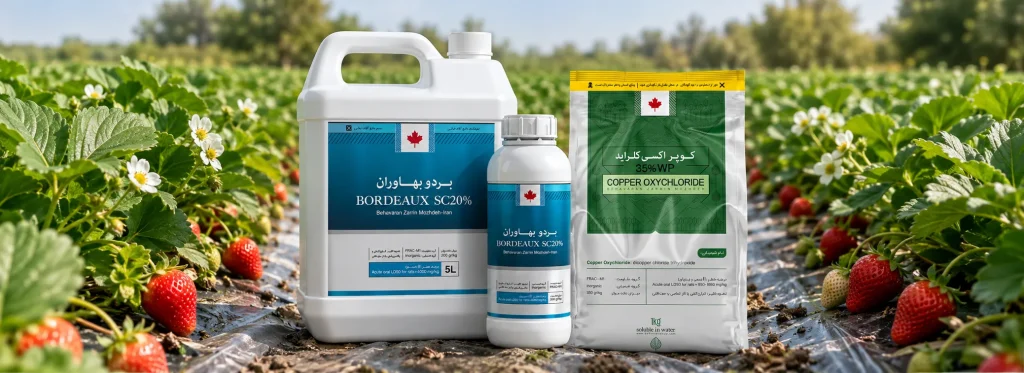
Copper-based products may suppress certain bacterial diseases where registered, but their effectiveness can be limited and repeated applications may cause phytotoxicity. Copper products such as Bordeaux mixture or copper oxychloride should only be used when approved for strawberries and applied at the label rate.
Strawberry Anthracnose
Strawberry anthracnose is associated with species of the genus Colletotrichum. The disease may affect fruits, flowers, flower stalks, petioles, runners and crowns.
Infected planting material is an important source of disease introduction. A transplant may carry latent infection without showing obvious symptoms at planting. Disease development may then accelerate when environmental conditions become warm and humid.
Symptoms of Anthracnose on Strawberry Fruit
Anthracnose fruit rot generally begins as small, water-soaked or light-brown spots on green, ripening or ripe fruit. These lesions gradually enlarge and become:
- Dark brown or black
- Firm
- Circular
- Sunken below the fruit surface
In dry weather, infected fruit may become dark, dry and mummified. Under humid conditions, salmon-pink or orange spore masses may form in the center of the lesions.
These pink or orange deposits are an important diagnostic sign, although other fruit-rot pathogens can sometimes produce similar symptoms.
Multiple lesions may merge and destroy most of the fruit. Infected strawberries are unsuitable for storage and may spread contamination to neighboring fruit during packing and transportation.
Anthracnose Symptoms on Leaves, Petioles and Crowns
On petioles and runners, anthracnose may cause small, dark, elongated and slightly sunken lesions. If a lesion expands around a petiole or runner, it may restrict movement of water and nutrients.
Leaf symptoms can include small brown, gray or black spots, but they are not always distinctive.
Crown infection is particularly damaging. Plants may initially wilt during the warmest part of the day and recover later. As crown rot develops, wilting becomes permanent and the plant may collapse.
When the crown is cut open, internal tissue may show reddish-brown discoloration. Crown symptoms should be examined carefully because other crown and root diseases may cause similar decline.
Conditions That Favor Strawberry Anthracnose
Anthracnose becomes particularly important in warm, wet weather. Rainfall and overhead irrigation disperse spores from infected tissues to healthy flowers, fruit and foliage.
Risk factors include:
- Infected transplants
- Warm temperatures
- High humidity
- Frequent rain
- Overhead irrigation
- Long wetness periods
- Dense plant growth
- Poor drainage
- Infected fruit and crop debris
- Fruit contact with contaminated soil
- Wounds caused by insects or handling
- Excessive nitrogen fertilization
The pathogen may survive on infected strawberry plants, weeds, mummified fruit and crop residues. Removing these infection sources is an important part of disease prevention.
Management and Control of Strawberry Anthracnose
Anthracnose management must begin before the disease becomes widespread. Once large numbers of fruit and plants are infected, complete control becomes difficult.
Important measures include:
Plant clean transplants:
Source plants from reliable nurseries with strong disease-management programs.
Reduce leaf and fruit wetness:
Use drip irrigation where possible and irrigate early in the day.
Improve airflow:
Provide appropriate spacing, manage runners and remove excessive foliage where agronomically appropriate.
Use suitable mulch:
Mulch reduces fruit contact with soil and limits soil splash onto leaves and fruit.
Remove infected material:
Collect rotten fruit, severely infected plants and diseased residues. Do not leave them in production rows.
Harvest frequently:
Remove ripe and damaged fruit at short intervals to reduce the amount of susceptible tissue and inoculum.
Maintain harvest hygiene:
Clean containers, tools and handling surfaces. Workers should avoid moving directly from heavily infected areas to clean areas without sanitation.
Use fungicides preventively when justified:
Fungicide programs are most effective when combined with sanitation, moisture management and resistance prevention.
Best Fungicide for Strawberry Anthracnose
The best fungicide for strawberry anthracnose depends on product registration, local pathogen sensitivity, crop stage, weather, disease pressure and the history of fungicide use.
Protectant fungicides are generally most effective when applied before severe infection develops. During flowering and fruit development, the pre-harvest interval and permitted residue limits require particular attention.
Repeated use of fungicides with the same mode of action can select resistant pathogen populations. Rotate approved fungicides from different mode-of-action groups and observe any restrictions on consecutive applications.
Before choosing a strawberry fungicide, check:
- Registration for strawberries
- Registration for the target disease
- Preventive or post-infection activity
- Mode-of-action group
- Pre-harvest interval
- Maximum number of applications
- Weather conditions
- Rainfastness requirements
- Tank-mix compatibility
- Local resistance-management guidance
What Causes Strawberry Fruit Rot?
Strawberry fruit rot is not a single disease. Several pathogens and environmental factors can cause berries to turn brown, soften, develop black spots or become covered with fungal growth.
The appearance and texture of the damaged area, environmental conditions and presence of spores or mold can help narrow the diagnosis.
Gray Mold
Gray mold, caused by Botrytis cinerea, is among the most common causes of strawberry fruit rot. Infections may begin in flowers and remain inactive until fruit starts to ripen.
Affected fruit usually develops soft, light-brown or tan tissue. Under humid conditions, a gray, dusty layer of spores forms over the infected area.
Disease risk increases with:
- Cool to moderate temperatures
- High humidity
- Frequent rain
- Dense foliage
- Poor air movement
- Dead flowers and plant debris
- Overripe or injured fruit
Anthracnose Fruit Rot
Anthracnose lesions are commonly firm, dark and sunken. In humid weather, pink or orange spore masses may develop on the lesion.
This symptom pattern differs from the soft, fuzzy decay typically associated with gray mold.
Leather Rot
Leather rot is commonly associated with Phytophthora species and is favored by wet soil, standing water and soil splash.
Affected strawberries may become brown, grayish or purple. The fruit often develops a firm, leathery texture and an unpleasant taste. Berries touching wet soil are particularly vulnerable.
Wound-Related Fruit Decay
Cracked, bruised or insect-damaged strawberries are more easily invaded by opportunistic fungi and bacteria.
Wounds may be caused by:
- Rough harvesting
- Packaging pressure
- Insect feeding
- Heavy rain
- Contact with soil
- Temperature stress
Heat Injury and Sunscald
Not every brown or black spot on a strawberry is caused by a pathogen. Intense sunlight and high temperatures may create dry, sunken or discolored areas.
Unlike active fruit rot, heat injury may lack fuzzy mold, spore masses or a typical decay odor.
Fruit-rot prevention requires moisture management, sanitation, careful harvesting, rapid cooling and disease-specific control where necessary.
What Causes Brown and Black Spots on Strawberries?
Brown or black spots may appear on strawberry leaves, flowers, petioles or fruit. Their shape, firmness, location and associated signs help distinguish possible causes.
Dark, sunken lesions on fruit:
These may indicate anthracnose, especially when pink or orange spores appear during humid weather.
Soft brown decay with gray fungal growth:
This symptom is more consistent with gray mold.
Firm, leathery brown fruit:
Leather rot should be considered, particularly when berries contact wet soil.
Angular brown leaf lesions:
Water-soaked spots restricted by veins may indicate bacterial angular leaf spot.
Purple circular spots with pale centers:
These symptoms may be associated with common leaf spot.
Dry, dark fruit patches without mold:
Sunscald, heat injury or mechanical damage may be responsible.
Since different strawberry fruit and leaf diseases can look similar, pesticide selection should not be based on color alone. When symptoms are unusual or widespread, submit representative samples to a plant-disease diagnostic laboratory.
How to Prevent Strawberry Pests and Diseases
Prevention is usually more effective and economical than attempting to control a severe infestation or epidemic. A strong prevention program begins before planting and continues through harvest and field cleanup.
Use Healthy Strawberry Transplants
Planting material can introduce mites, fungal pathogens, bacterial diseases and viruses into a clean field.
Before planting, inspect transplants for:
- Distorted young leaves
- Unusual stunting
- Angular or brown leaf spots
- Crown or root discoloration
- Visible pests
- Mold or damaged tissue
Suspicious plants should not be placed beside apparently healthy transplants.
Choose a Well-Drained Site
Poor drainage increases the risk of root, crown and fruit diseases. Raised beds can improve drainage and reduce prolonged water contact around the crown.
Avoid low areas where irrigation water or rainfall accumulates.
Manage Irrigation Carefully
Prolonged moisture on leaves, flowers and fruit creates favorable conditions for many strawberry diseases. Overhead irrigation can also splash spores and bacteria from infected plants or contaminated soil onto healthy tissue.
Where possible, use drip or tape irrigation to deliver water directly to the root zone. Irrigate early in the day so that any wet foliage has time to dry before nightfall.
Avoid overwatering. Saturated soil increases the risk of root rot, crown rot and leather rot, while excess moisture around fruit can encourage gray mold and other decay organisms.
Maintain Proper Plant Spacing
Dense plantings restrict airflow and trap humidity inside the canopy. These conditions increase the risk of gray mold, anthracnose, powdery mildew and leaf diseases.
Spacing should be selected according to:
- Cultivar growth habit
- Production system
- Climate
- Irrigation method
- Runner-management strategy
- Expected canopy size
Remove excessive runners or old foliage where appropriate, but avoid causing unnecessary wounds that could become infection sites.
Use Mulch to Protect Fruit
Suitable mulch reduces direct contact between strawberries and soil. It also limits soil splash, keeps fruit cleaner and may reduce leather rot and other soil-associated fruit diseases.
Plastic mulch, straw or other locally recommended materials may be used depending on the production system.
Mulch does not replace good irrigation management. Excessive water beneath mulch can still increase root and crown disease.
Remove Diseased Plants and Fruit
Rotten berries, severely infected leaves and collapsing plants can produce large amounts of inoculum. Remove them regularly from the production area.
Do not leave infected fruit in row middles or beside the field. Diseased material should be handled according to local sanitation and disposal recommendations.
Control Weeds
Weeds compete for light, water and nutrients, but they may also:
- Reduce airflow
- Increase humidity
- Harbor insects and mites
- Serve as alternate hosts for pathogens
- Interfere with spray coverage
Control weeds carefully to avoid injuring the shallow root system of strawberry plants.
Clean Tools and Harvesting Equipment
Knives, pruning tools, harvest trays and machinery may transfer pathogens between plants and fields.
Clean and disinfect tools after use in infected areas. Work in healthy areas first and move to diseased sections later whenever possible.
Harvest containers should also be kept clean, especially during outbreaks of anthracnose or gray mold.
Avoid Working in Wet Fields
Rain, dew and overhead irrigation can leave leaves wet for several hours. Walking through wet plants, pruning or harvesting under these conditions may spread bacterial and fungal pathogens.
Delay nonessential field operations until foliage is dry.
Use Balanced Plant Nutrition
Excessive nitrogen can produce soft, dense growth that remains wet longer and may be more susceptible to pests and diseases.
Fertilizer programs should be based on soil testing, water quality, tissue analysis, growth stage and realistic yield goals.
Nutrient deficiencies, salinity and fertilizer injury may also cause symptoms that resemble strawberry diseases. Balanced nutrition supports plant vigor but should not be treated as a substitute for disease control.
Scout the Crop Regularly
Frequent inspection allows growers to detect a problem before it spreads widely.
During scouting, examine:
- The center of the crown
- Folded young leaves
- Lower leaf surfaces
- Flowers and flower stalks
- Developing and ripe fruit
- Fruit touching the soil
- Crowns and roots of declining plants
- Field edges and humid areas
Record the location and progression of symptoms. Mapping hot spots can improve targeted management and reduce unnecessary whole-field treatments.
Principles of Strawberry Spraying and Pesticide Selection
Strawberries are harvested frequently and are often eaten fresh. Pesticide selection must therefore consider crop safety, legal use, residue limits, pollinator protection and the interval between application and harvest.
Spraying should never begin with the question, “Which product is strongest?” It should begin with, “What is causing the damage?”
Identify the Pest or Disease Correctly
Before selecting a pesticide, determine:
- Whether the cause is an insect, mite, fungus, bacterium, oomycete or noninfectious disorder
- Which plant part is affected
- How quickly symptoms are spreading
- Whether damage is localized or widespread
- Which life stage of the pest is present
- Whether laboratory confirmation is needed
A pesticide chosen for the wrong target wastes money and may damage beneficial organisms without solving the problem.
Check the Pre-Harvest Interval
The pre-harvest interval, or PHI, is the minimum required time between the last pesticide application and harvest.
This is especially important in strawberries because fruit may be picked every few days. A product with a long PHI may not be suitable during an active harvest period.
Always confirm the PHI on the approved local label. Do not rely on information from another country because registrations and residue requirements may differ.
Use Only Registered Products
A pesticide may be effective against a pest but still be illegal for use on strawberries in a particular market.
Check:
- Approved crop
- Approved target pest or disease
- Application rate
- Maximum number of treatments
- Spray interval
- PHI
- Re-entry interval
- Protective equipment requirements
- Restrictions during flowering
Increasing the dose above the label rate does not guarantee better control and may increase phytotoxicity and residue risk.
Choose the Correct Application Timing
Timing can be more important than product strength.
Examples include:
- Protectant fungicides generally work best before severe infection.
- Ovicidal miticides are most useful when eggs and immature stages dominate.
- Gray mold programs often require protection around flowering and fruit development.
- Localized mite infestations are easier to control before they spread.
- Copper-based products may injure plants under unfavorable conditions.
Avoid spraying during strong wind, intense heat, immediate rain risk or peak pollinator activity unless the label specifically permits the treatment.
Achieve Uniform Spray Coverage
Different targets require different spray placement.
Cyclamen mites remain hidden in the crown and folded young leaves. Two-spotted spider mites often feed on the lower leaf surface. Fruit-rot fungicides must protect flowers and developing berries.
Select nozzle type, pressure and water volume to reach the target without excessive runoff. More water is not always better; excessive runoff wastes pesticide and may contaminate soil or water.
Rotate Modes of Action
Repeated use of the same active ingredient or mode-of-action group encourages pesticide resistance.
Changing brand names is not enough if the active ingredient or resistance group remains the same.
Follow recognized resistance-management classifications such as:
- FRAC groups for fungicides
- IRAC groups for insecticides and miticides
Rotate effective registered products from different groups and combine pesticide use with sanitation and cultural controls.
Test Tank-Mix Compatibility
Mixing pesticides, fertilizers and adjuvants can cause:
- Precipitation
- Separation
- Foaming
- Reduced activity
- Nozzle blockage
- Crop injury
Check both product labels before mixing. Conduct a small jar test where appropriate and avoid complex mixtures without technical justification.
Protect Pollinators and Beneficial Arthropods
Strawberry flowers attract bees and other pollinators. Some insecticides and miticides may harm them directly or through residues.
Where treatment during flowering is unavoidable:
- Use only legally approved products.
- Select the least hazardous effective option.
- Avoid application while bees are actively foraging.
- Follow all pollinator restrictions on the label.
- Prevent spray drift onto flowering weeds and nearby habitats.
Preserving predatory mites and beneficial insects can also support long-term pest control.
Best Fungicide and Miticide for Strawberries
There is no universal best fungicide or miticide for strawberries. The correct choice depends on accurate diagnosis and local registration.
A useful product must match:
- The target organism
- The crop stage
- The dominant pest life stage
- Weather conditions
- Harvest timing
- Resistance-management needs
- Label restrictions
Choosing the Best Fungicide for Strawberries
Different diseases require different fungicide programs.
A fungicide used against powdery mildew may not adequately control gray mold. A product used against anthracnose may not be appropriate for Phytophthora crown rot. Bacterial angular leaf spot also cannot be managed like a fungal disease.
Before selecting a strawberry fungicide, consider:
- Confirmed disease
- Disease pressure
- Preventive or post-infection activity
- Systemic or contact action
- FRAC group
- PHI
- Rainfastness
- Crop-growth stage
- Maximum permitted applications
- Local resistance history
Copper-based fungicides and bactericides, including Bordeaux formulations and copper oxychloride, may have a role against certain bacterial or fungal diseases where approved. However, copper can cause plant injury under some conditions, and it should not be presented as a cure for every strawberry disease.
For anthracnose and fruit-rot programs, preventive timing, sanitation and rotation between approved fungicide groups are essential.
Choosing the Best Miticide for Strawberries
First identify whether the problem is caused by cyclamen mites, two-spotted spider mites or another mite species.
Then determine whether the population consists mainly of:
- Eggs
- Immature stages
- Adults
- A mixture of life stages
Miticides differ in their target stages. For example, a product with strong activity against eggs and immature stages may not rapidly reduce a population dominated by adults.
Where locally registered, active ingredients such as abamectin, hexythiazox and fenpropathrin may be considered within a resistance-managed program. They should not be used interchangeably without considering their activity profile, impact on beneficial organisms and local label.
The best strawberry mite-control program combines:
- Clean planting material
- Early scouting
- Removal of hot spots
- Good spray penetration
- Conservation of beneficial mites
- Rotation of modes of action
- Correct PHI and application timing
Strawberry Pest and Disease Identification Table
| Observed symptom | Possible cause | Additional clues | Recommended first step |
|---|---|---|---|
| Small, wrinkled leaves in the crown | Cyclamen mite | Short petioles and compact plant growth | Inspect folded leaves with magnification |
| Yellow stippling and bronzed foliage | Two-spotted spider mite | Fine webbing and mites under leaves | Examine lower leaf surfaces |
| Angular, water-soaked leaf spots | Angular leaf spot | Lesions limited by veins; whitish exudate may occur | Reduce leaf wetness and confirm bacterial cause |
| Dark, sunken fruit lesions | Anthracnose fruit rot | Pink or orange spores in humid weather | Remove infected fruit and confirm diagnosis |
| Soft brown fruit with gray mold | Gray mold | Dusty gray sporulation | Remove infected fruit and improve airflow |
| Firm, brown, leathery fruit | Leather rot | Wet soil or soil splash; unpleasant taste | Improve drainage and reduce soil contact |
| White powdery growth on leaves | Powdery mildew | Upward leaf curling and reduced vigor | Improve airflow and select an approved fungicide |
| Purple spots with pale centers | Common leaf spot | Round lesions on foliage | Remove infected leaves and manage moisture |
| Sudden plant wilting | Crown or root rot | Internal crown discoloration or damaged roots | Examine crown and root tissue |
| Distorted flowers or fruit | Mites, thrips or pollination problems | Feeding scars or abnormal young leaves | Inspect flowers and crown carefully |
| Dry brown fruit patches | Sunscald or heat injury | No mold or typical decay odor | Reduce heat stress and improve canopy protection |
| Holes or feeding damage on fruit | Slugs, snails or chewing pests | Slime trails or night feeding | Inspect plants after dark and manage habitat |
This table provides an initial guide only. Several strawberry pests and diseases can occur at the same time, and visual symptoms may overlap.
Frequently Asked Questions About Strawberry Pests and Diseases
Why Are My Strawberry Leaves Curling?
Curled strawberry leaves may result from cyclamen mites, aphids, powdery mildew, viruses, salinity, herbicide injury or nutrient imbalance.
If the youngest leaves in the crown are small, thick and severely distorted, cyclamen mites should be investigated. If leaf surfaces show white powdery growth, powdery mildew may be more likely.
What Causes Black Spots on Strawberries?
Black or dark-brown spots may be caused by anthracnose fruit rot, leather rot, gray mold, mechanical injury or sunscald.
Sunken, firm lesions with pink or orange spores strongly suggest anthracnose. Soft decay with gray fungal growth is more consistent with gray mold.
Why Do Strawberries Rot Before Harvest?
Common causes include:
- Gray mold
- Anthracnose
- Leather rot
- Excessive humidity
- Overhead irrigation
- Fruit contact with soil
- Poor ventilation
- Insect or mechanical injury
- Delayed harvesting
Frequent harvesting, sanitation, drip irrigation and improved airflow can significantly reduce losses.
What Is the Best Fungicide for Strawberries?
The best fungicide depends on the diagnosed disease. There is no single fungicide suitable for anthracnose, gray mold, powdery mildew, angular leaf spot and crown rot.
Choose only a locally registered product that matches the target disease, crop stage and harvest schedule.
What Is the Best Miticide for Strawberries?
The best miticide depends on the mite species and life stage.
Cyclamen mites and two-spotted spider mites require different spray placement and may respond differently to active ingredients. Accurate identification should come before treatment.
Can Abamectin Be Used for Strawberry Mites?
Abamectin may be used against certain mite species in countries where it is registered for strawberries. Its effectiveness depends on species, life stage, application timing and spray coverage.
Always verify the local label and PHI before use.
Are Copper Products Suitable for Strawberry Diseases?
Copper products may help suppress certain bacterial and fungal diseases where registered. They are not universal treatments and may cause phytotoxicity, especially under unsuitable conditions or at excessive rates.
Use Bordeaux mixture, copper oxychloride or other copper formulations only according to an approved label.
Should Diseased Strawberry Leaves Be Removed?
Severely infected leaves and fruit can serve as sources of infection and should generally be removed from the crop.
Avoid excessive defoliation, and perform sanitation when plants are dry to reduce disease spread.
Can Strawberries Be Sprayed During Flowering?
Applications during flowering require extra caution because bees and other pollinators are active.
Only use products approved for this growth stage, follow pollinator restrictions and avoid spraying during peak foraging periods.
How Can Strawberry Fruit Rot Be Prevented?
Key measures include:
- Drip irrigation
- Good plant spacing
- Clean mulch
- Regular removal of rotten fruit
- Frequent harvesting
- Careful handling
- Rapid postharvest cooling
- Disease-specific preventive treatments where justified
Is Every Brown Leaf Spot a Fungal Disease?
No. Brown spots may result from fungal or bacterial disease, fertilizer injury, salinity, heat, drought, pesticide injury or nutrient disorders.
Diagnosis should consider lesion shape, plant part, field pattern and recent weather or crop-management practices.
How Long After Spraying Can Strawberries Be Harvested?
The waiting period depends on the product’s legally approved pre-harvest interval. There is no single number for all pesticides.
Always follow the PHI stated on the local product label.
Conclusion
Strawberry pests and diseases can damage leaves, flowers, fruit, crowns and roots, leading to lower yield, reduced fruit quality and shorter storage life. Cyclamen mites, two-spotted spider mites, angular leaf spot, anthracnose, gray mold, powdery mildew and crown or root rots are among the most important problems affecting strawberry production.
Symptoms such as distorted young leaves, compact crown growth, angular leaf spots, soft gray fruit rot, dark sunken lesions and sudden plant wilting should be investigated promptly. However, diagnosis should never rely on a single symptom because infectious diseases, pests and environmental disorders can look similar.
The most reliable strawberry pest and disease management program combines:
- Healthy planting material
- Well-drained soil
- Drip irrigation
- Appropriate plant spacing
- Sanitation
- Weed control
- Balanced fertilization
- Regular scouting
- Accurate diagnosis
- Responsible pesticide use
Before selecting the best fungicide or miticide for strawberries, identify the target problem and confirm that the product is approved for the crop and pest in the country of use. Follow the application rate, pre-harvest interval, safety instructions and resistance-management requirements on the label.
An integrated approach that combines cultural, biological, sanitary and chemical methods offers the best opportunity to produce healthy plants, high-quality fruit and a marketable strawberry crop.