
Introduction
As modern irrigation systems and greenhouse cultivation continue to expand, the prevalence of snail and slug infestations has increased significantly in many agricultural regions. Effective management of these pests is essential to protect crop quality and maximize yields.
One of the most widely used and effective molluscicides available today is Metaldehyde. For decades, metaldehyde-based bait formulations have been recognized as one of the most reliable solutions for controlling snails and slugs in both agricultural and horticultural systems.
This article explores the biology and damage caused by snails and slugs, explains how metaldehyde works, and highlights the benefits of using Bahavaran Metaldehyde Bait as an effective pest management solution.
What Is Metaldehyde?
Metaldehyde is a specialized molluscicide used primarily for the control of snails and slugs. It has been utilized in agriculture since the early twentieth century and remains one of the most effective active ingredients for managing mollusk pests.
Unlike broad-spectrum insecticides, metaldehyde specifically targets mollusks, making it a highly effective solution for snail and slug infestations in agricultural settings.
Metaldehyde is commonly formulated as pellets or bait granules that attract pests through food-based attractants, encouraging consumption and ensuring effective control.
Why Are Snails and Slugs Dangerous Agricultural Pests?
Snails and slugs are nocturnal pests that are most active during cool, humid conditions. During the day, they hide under plant debris, stones, mulch, weeds, and moist soil surfaces.
Their feeding behavior can result in extensive damage to a wide range of crops.
Major Types of Damage Caused by Snails and Slugs
1. Seedling Destruction
Young seedlings are highly vulnerable to snail and slug feeding. In severe infestations, entire seedling populations can be destroyed overnight.
2. Leaf Damage
These pests feed on foliage, creating irregular holes and ragged feeding scars that reduce photosynthetic activity.
3. Fruit Damage
Snails and slugs often attack fruits that come into contact with the soil, including strawberries, melons, cucumbers, tomatoes, and many vegetable crops.
4. Reduced Market Quality
Feeding damage, slime trails, and contamination significantly reduce crop marketability and consumer acceptance.
5. Increased Disease Risk
Feeding wounds created by snails and slugs can serve as entry points for fungal and bacterial pathogens, increasing the likelihood of secondary infections.
Signs of Snail and Slug Infestation
Early detection is critical for successful control.
Common signs include:
- Irregular holes in leaves
- Damaged seedlings and young plants
- Slime trails on leaves, soil, containers, and greenhouse surfaces
- Feeding scars on fruits and vegetables
- Presence of snails or slugs during evening hours or early mornings
Because these pests are primarily active at night, infestations often go unnoticed until significant damage has occurred.
How Does Metaldehyde Work?
Metaldehyde affects the physiological processes of snails and slugs.
When a slug or snail consumes or comes into contact with metaldehyde bait, the active ingredient disrupts mucus production and causes excessive secretion of slime. As a result, the pest rapidly loses water and becomes dehydrated.
The pest eventually ceases feeding activity and dies from dehydration and physiological stress.
One of the major advantages of metaldehyde is that snails and slugs stop feeding shortly after consuming the bait, which significantly reduces crop damage even before mortality occurs.
Benefits of Metaldehyde Bait for Snail and Slug Control
Metaldehyde bait formulations offer several advantages over conventional pesticide applications.
Highly Attractive to Pests
Baits contain food-based attractants that lure snails and slugs away from crops and toward the treatment area.
Easy Application
Metaldehyde bait can be distributed directly around crops without specialized spraying equipment.
Rapid Feeding Cessation
Pests stop feeding soon after exposure, minimizing further crop damage.
Effective in Various Cropping Systems
Suitable for:
- Vegetable production
- Fruit orchards
- Greenhouses
- Nurseries
- Ornamental plants
- Turfgrass and landscape areas
Cost-Effective Pest Management
Targeted bait applications often require lower amounts of active ingredient compared to broad-area pesticide treatments.
Behavaran Metaldehyde Bait
Product Overview
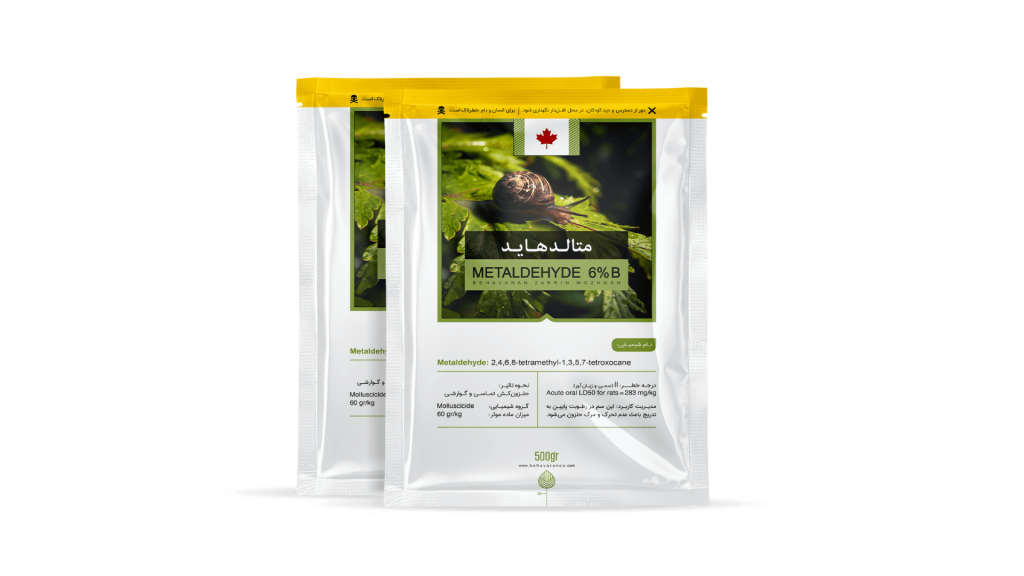
Bahavaran Metaldehyde Bait is a specialized bait formulation developed for the effective control of snails, slugs, and other harmful mollusks in agricultural environments.
The product combines highly attractive bait materials with metaldehyde to maximize pest attraction and control efficiency.
It is designed for use in:
- Agricultural fields
- Vegetable farms
- Fruit orchards
- Greenhouses
- Nurseries
- Landscaping and turf areas
Advantages of Behavaran Metaldehyde
High Attraction Power
The formulation is designed to attract snails and slugs effectively, increasing bait consumption and improving control results.
Effective Population Reduction
By targeting pests directly through feeding behavior, the product helps reduce infestations quickly.
Easy-to-Use Formulation
The bait can be applied easily without complex equipment.
Compatible with Integrated Pest Management (IPM)
Bahavaran Metaldehyde can be incorporated into comprehensive pest management programs alongside cultural and mechanical control practices.
Reduced Crop Damage
Early intervention helps protect seedlings, leaves, fruits, and marketable yields.
Best Time to Apply Metaldehyde Bait
Application timing is critical for successful snail and slug control.
The best times to apply Bahavaran Metaldehyde Bait include:
- Late afternoon
- Evening hours
- Periods of high humidity
- Early stages of infestation
- Following light irrigation when pests become active
Since snails and slugs are most active at night, evening applications generally provide the highest level of effectiveness.
Integrated Snail and Slug Management
Although metaldehyde bait is highly effective, the best results are achieved when it is integrated with additional pest management practices.
Remove Pest Shelters
- Eliminate weeds
- Remove excess mulch
- Dispose of plant debris
- Reduce unnecessary ground cover
Improve Drainage
Snails and slugs thrive in moist environments. Improving drainage can reduce habitat suitability.
Monitor Fields Regularly
Routine scouting helps identify infestations before economic damage occurs.
Use Metaldehyde Bait Strategically
Applying Bahavaran Metaldehyde Bait in areas where pests are active provides the most effective control.
Why Farmers Choose Metaldehyde for Snail Control
Metaldehyde remains one of the most widely used molluscicides because of its:
- Proven effectiveness
- Fast action
- Ease of application
- Compatibility with IPM programs
- Economic value
- Long history of successful agricultural use
For growers facing recurring snail and slug infestations, metaldehyde bait continues to be one of the most dependable solutions available.
Conclusion
Snails and slugs are serious agricultural pests capable of causing extensive damage to seedlings, foliage, fruits, and marketable crops. Effective management requires early detection, habitat management, and targeted control measures.
Metaldehyde has long been recognized as one of the most effective active ingredients for snail and slug control. By combining attractive bait technology with proven molluscicidal action, Behavaran Metaldehyde Bait provides growers with a practical, reliable, and efficient solution for protecting crops against destructive mollusk pests.
When used as part of an Integrated Pest Management program, Bahavaran Metaldehyde Bait can help reduce pest populations, minimize crop losses, and improve overall agricultural productivity.