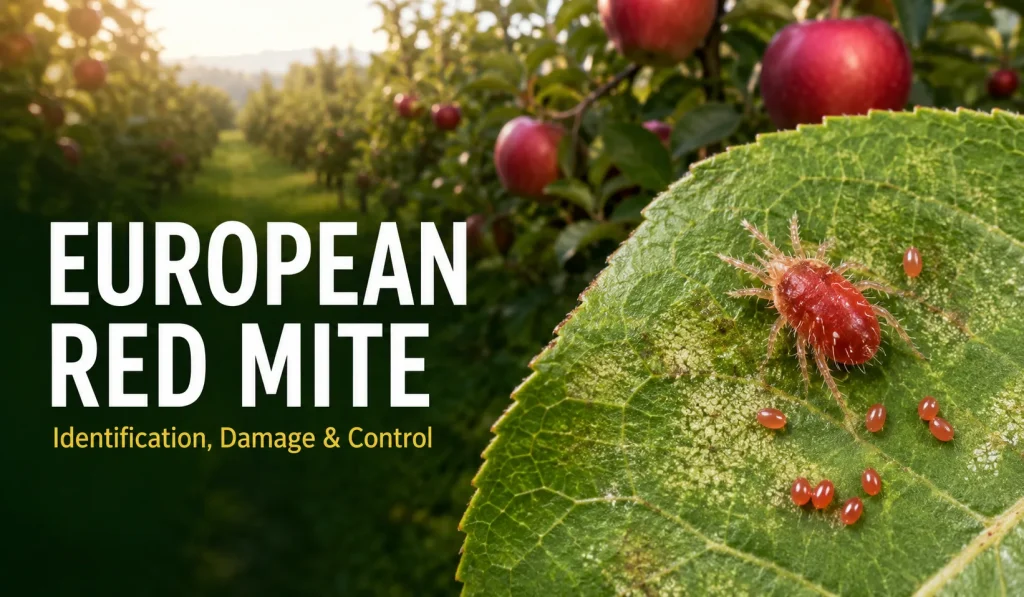
The European red mite (Panonychus ulmi) is a major pest of apple and other fruit trees in many orchard-growing regions. Because of its small size, rapid reproduction, and ability to overwinter on tree branches, infestations can develop before growers notice visible symptoms. Correct identification is therefore essential for effective monitoring and European red mite control.
What Is the European Red Mite?
The European red mite is a plant-feeding mite that attacks the leaves of fruit trees and several ornamental plants. It feeds by piercing individual leaf cells and removing their contents, including chlorophyll. Continued feeding gradually reduces photosynthesis and weakens the affected tree.
Although individual mites are extremely small, large populations can cause serious economic damage. Infested leaves may become yellow, brown, or bronze, while severe infestations can reduce fruit size, color, quality, and the formation of fruit buds for the following season.
European red mite populations usually increase rapidly during warm weather. Several generations may overlap during the growing season, meaning eggs, larvae, nymphs, and adults can all be present on the same tree at the same time.
Scientific Name and Classification of European Red Mite
The scientific name of the European red mite is Panonychus ulmi (Koch). It belongs to the family Tetranychidae, a group commonly known as spider mites or plant-feeding mites.
Its basic classification is as follows:
- Common name: European red mite
- Scientific name: Panonychus ulmi
- Family: Tetranychidae
- Class: Arachnida
- Primary feeding site: Leaves of fruit trees and ornamental plants
The species was first described by Koch in 1836 after being collected from elm. It later became established in many important fruit-growing regions and is now regarded as a widespread orchard pest.
Unlike insects, adult mites have four pairs of legs and belong to the arachnid group. The larvae, however, initially emerge with only three pairs of legs.
Why Is European Red Mite an Important Orchard Pest?
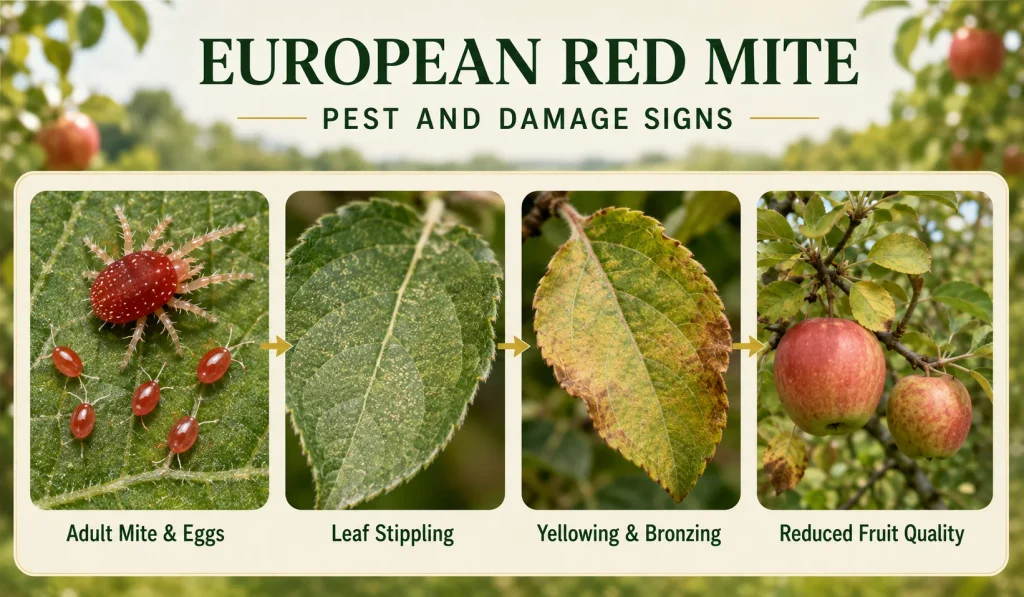
The European red mite is important because it directly affects the photosynthetic capacity and productivity of fruit trees. Both immature and adult mites feed on leaf cells, producing many tiny pale feeding spots. As feeding continues, these spots merge and the leaves develop a characteristic bronze appearance.
Heavy infestations may lead to:
- Weakening of the host tree
- Yellowing and bronzing of leaves
- Premature leaf drop
- Reduced fruit size and quality
- Poor fruit coloration
- Lower numbers of fruit buds for the following season
- Greater sensitivity to environmental stress
The European red mite on apple trees is especially important because repeated feeding can reduce both the current crop’s market quality and the tree’s production potential for the next year.
This pest can also reproduce quickly. Development from egg to adult may take approximately one to three weeks, depending on temperature. Under favorable conditions, several overlapping generations can occur during one growing season. For this reason, regular monitoring is necessary before the population reaches damaging levels.
Where Is the European Red Mite Found?
The European red mite has spread across many temperate and fruit-growing regions of the world. It is commonly associated with commercial orchards, nurseries, ornamental landscapes, and areas where susceptible host plants are grown.
Its distribution has also been influenced by the movement of infested nursery plants. Overwintering eggs can remain attached to branches, buds, and young planting material, allowing the pest to enter new production areas unnoticed.
Global Distribution of European Red Mite
Today, the European red mite is considered a widely distributed orchard pest. It has been reported from many regions of Europe, Asia, the Middle East, North America, and other temperate fruit-producing areas.
The pest is particularly important in regions where apple, pear, quince, plum, peach, and cherry trees are grown commercially. Its population development is influenced by temperature, host condition, orchard management, pesticide use, and the abundance of natural enemies.
Warm conditions can accelerate development and increase the number of generations produced during the season. However, outbreaks are not caused by temperature alone. Repeated use of broad-spectrum pesticides may reduce predatory mites and beneficial insects that naturally suppress European red mite populations.
Distribution of European Red Mite in Iran
In Iran, the European red mite was initially considered an important quarantine pest. It was first observed on imported apple trees in northern Iran during the 1970s and was later detected on imported dwarf apple rootstocks intended for orchards in West Azerbaijan.
Despite efforts to prevent its spread, the pest became established in several major fruit-growing regions. It has been reported from provinces including:
- Golestan
- Mazandaran
- Gilan
- East Azerbaijan
- West Azerbaijan
- Ardabil
- Kurdistan
- Hamadan
- Zanjan
- Kermanshah
- Tehran
- Alborz
- Semnan
- Isfahan
- Razavi Khorasan
- South Khorasan
Its actual distribution may be wider because the mite is extremely small and early infestations can be overlooked. Inspection of nursery stock and regular orchard monitoring are therefore important for limiting its movement and detecting new infestations.
European Red Mite Host Plants
The European red mite has a broad host range, but it is most economically important on pome fruits, particularly apple, pear, and quince. It can also survive and reproduce on several stone fruits, ornamental trees, shrubs, and alternative host plants.
Knowing the host range is important because untreated plants around an orchard may support mite populations and contribute to reinfestation.
Apple, Pear, and Quince Trees
Apple is one of the most important hosts of Panonychus ulmi. European red mite eggs often overwinter in clusters on apple branches, especially around buds and where younger shoots join older branches.
After hatching, the larvae move toward developing buds and young leaves. They commonly begin feeding near veins, petioles, and the undersides of expanding leaves. Later in the season, mites and summer eggs may also be found on the upper leaf surface near the main vein.
Pear and quince trees can also support damaging populations. Regular monitoring is particularly important in orchards with a previous history of European red mite infestation.
Stone Fruits and Other Orchard Hosts
The European red mite may also attack several stone-fruit and orchard crops, including:
- Plum
- Peach
- Sweet cherry
- Sour cherry
- Almond
- Walnut
- Hawthorn
- Grapevine
The importance of each host varies according to the region, climate, cultivar, orchard management, and availability of natural enemies. Apple generally remains the most significant commercial host, but nearby alternative hosts should also be considered when investigating repeated mite infestations.
European red mites may also be found on strawberries, raspberries, wild berries, and other plants growing near production areas.
Ornamental Plants and Alternative Hosts
In addition to fruit crops, the European red mite can survive on several ornamental trees, shrubs, and non-crop plants. Reported hosts include:
- Elm
- Willow
- Oak
- Acacia
- Maple
- Ash
- Blackthorn
- Rose
- Licorice and other herbaceous plants
Alternative hosts may help maintain local mite populations, particularly where susceptible plants grow close to orchards or nurseries. However, the presence of a suitable host does not always mean that economically damaging populations will develop.
How to Identify European Red Mite
Accurate identification is essential because several plant-feeding mites can occur on the same crops. The European red mite is very small and should ideally be examined with a hand lens or magnifying device.
Identification should consider several characteristics together, including body color, shape, dorsal hairs, white tubercles, egg appearance, host plant, overwintering site, and the presence or absence of visible webbing.
Identification of Adult Female European Red Mites
Adult females are larger and more rounded than males. Their main characteristics include:
- Approximately 0.4 to 0.7 millimeters in length
- Oval or egg-shaped body
- Red to reddish-brown coloration
- Strongly rounded and raised dorsal surface
- Prominent white tubercles arranged across the back
- A stiff hair or bristle arising from each tubercle
- Dorsal hairs generally curved toward the rear of the body
- Four pairs of legs
The rows of pale tubercles and dorsal bristles are among the most useful features for distinguishing adult female European red mites from other red-colored plant mites.
Identification of Adult Male European Red Mites
Adult males are smaller and more slender than females. They are usually approximately 0.3 millimeters long and may appear orange rather than dark red.
The rear portion of the male’s body gradually becomes narrower, giving it a more tapered appearance. Males also lack the prominent white dorsal spots seen on adult females.
Because males are small and move relatively quickly, identification based only on color may be difficult. Body shape and comparison with adult females on the same leaf can improve accuracy.
Appearance of European Red Mite Eggs
European red mite eggs have a distinctive appearance that can be helpful for field identification. They are:
- Slightly flattened and onion-shaped
- Red to dark orange
- Marked with fine grooves extending from the center toward the base
- Equipped with a thin stalk or projection in the center
- Commonly deposited on branches, around buds, or near leaf veins
Winter eggs are generally darker and slightly larger than summer eggs. Their average diameter is approximately 150 micrometers, compared with around 140 micrometers for summer eggs.
Overwintering eggs may be deposited in rows or dense clusters. Heavy egg deposits can give parts of a branch or the area around a bud a reddish appearance.
Identification of Larvae and Nymphs
Newly hatched larvae are usually lemon-yellow to pale orange. After feeding, their color gradually changes to red or brown. The most important identifying feature of the larval stage is the presence of only three pairs of legs.
Nymphs are larger than larvae and have four pairs of legs. Their color may also range from yellow-orange to red-brown after feeding. European red mite development includes two main nymphal stages:
- Protonymph
- Deutonymph
Resting periods occur between the active developmental stages. Therefore, both moving and inactive mites may be observed when inspecting infested leaves.
Differences Between European Red Mite and Other Plant-Feeding Mites
The European red mite can be confused with the two-spotted spider mite and other reddish plant-feeding mites. Several features can help separate them.
Adult female European red mites are red or reddish-brown and have noticeable white tubercles with dorsal bristles. Their eggs are red, onion-shaped, and have a central stalk. They may overwinter as dense egg clusters on branches and around buds.
In contrast, two-spotted spider mites are usually yellowish-green and commonly have two dark spots on the body. They often produce noticeable webbing on leaves and shoots, while European red mite infestations generally produce little or no conspicuous webbing.
For reliable identification, examine:
- Adult body color and shape
- Presence of white dorsal tubercles
- Egg color and shape
- Overwintering stage and location
- Presence or absence of webbing
- Host plant
- Pattern of leaf damage
Correct identification prevents unnecessary pesticide applications and provides the foundation for an effective European red mite control program.
European Red Mite Damage Symptoms
Recognizing European red mite damage symptoms at an early stage can prevent serious losses in orchard productivity. The mites are extremely small, so growers often notice changes in leaf color before seeing the pest itself. Symptoms usually begin as fine pale spots and gradually develop into yellowing, bronzing, or browning as the infestation becomes more severe.
How European Red Mites Feed on Leaves
European red mites pierce individual leaf cells with their mouthparts and remove the cell contents, including chlorophyll. Each feeding site produces a tiny pale spot on the leaf surface.
As more cells are damaged, the small spots merge and reduce the leaf’s ability to carry out photosynthesis. The tree may then produce less energy for shoot growth, fruit development, and fruit-bud formation.
Larvae and nymphs often begin feeding near veins, petioles, and the lower surface of young leaves. During summer, active mites and their eggs may also be found on the upper leaf surface, particularly near the main vein.
Yellowing, Bronzing, and Browning of Leaves
Early European red mite damage appears as fine yellow or whitish stippling. These symptoms may initially be difficult to distinguish from nutrient problems, drought stress, or injury caused by other mites.
As feeding continues, affected leaves may change from green to:
- Pale yellow
- Yellowish-brown
- Bronze
- Dark brown
Bronzing is one of the most characteristic symptoms of a well-developed infestation. However, visual symptoms should always be confirmed by inspecting the leaves with a hand lens because several environmental and nutritional problems can produce similar discoloration.
Premature Leaf Drop Caused by Heavy Infestations
When mite populations become very high, heavily damaged leaves may dry out and fall before the normal autumn leaf-drop period. In severe outbreaks, premature defoliation may begin during mid-summer.
Early leaf loss reduces the time available for photosynthesis and weakens the tree. It may also expose fruit to excessive sunlight, increase the risk of sunburn, and reduce the tree’s ability to store energy for winter and the following growing season.
The severity of premature leaf drop depends on the cultivar, tree health, irrigation, temperature, mite density, and duration of feeding.
Effects on Fruit Size, Color, and Quality
Although European red mites primarily feed on leaves, their damage can indirectly affect fruit development. Trees with heavily damaged foliage may not produce enough carbohydrates to support normal fruit growth.
Possible effects include:
- Smaller fruit
- Poor or uneven fruit color
- Reduced fruit firmness and quality
- Lower market value
- Delayed or irregular fruit development
European red mite on apple trees is particularly important because fruit size, skin color, and appearance strongly influence marketability. Damage may be more serious when trees are also affected by drought, poor nutrition, excessive crop load, or other pests and diseases.
Effects of European Red Mite Damage on Next Season’s Yield
The consequences of a severe infestation may continue after harvest. Fruit trees form many of the buds required for the following crop during the current growing season.
When damaged leaves cannot produce sufficient energy, the tree may form fewer or weaker fruit buds. As a result, an uncontrolled infestation can reduce both the current crop’s quality and the next season’s yield potential.
Maintaining healthy foliage through monitoring and integrated European red mite control is therefore essential for long-term orchard productivity.
European Red Mite Life Cycle
Understanding the European red mite life cycle helps orchard managers select the most appropriate monitoring and control period. The pest passes through egg, larval, nymphal, and adult stages, with resting periods occurring between active developmental stages.
Overwintering Eggs on Branches and Buds
The European red mite mainly overwinters as eggs attached to the surface of branches. These winter eggs are commonly found:
- Around buds
- At the junction of young and older branches
- In bark crevices
- Near fruit spurs
- On small branches with a history of infestation
Eggs may be deposited in one or several rows. In heavy infestations, large numbers of red eggs can give parts of the branch a reddish appearance.
Winter eggs enter a dormant state that allows them to survive unfavorable conditions. Mobile stages are less tolerant of freezing temperatures and are more likely to die during severe winter weather.
When Do European Red Mite Eggs Hatch?
Hatching is strongly influenced by temperature and local climate. Winter eggs generally begin hatching as temperatures rise and buds start developing. Hatching is gradual rather than simultaneous and may continue through part of the spring.
Because eggs hatch over an extended period, one inspection is not enough to determine the complete population. Orchards with a history of infestation should be checked repeatedly from the period before bud development through early leaf growth.
The exact timing varies among regions, seasons, cultivars, and orchard microclimates.
Larval, Nymphal, and Adult Stages
Newly hatched larvae have three pairs of legs and are usually lemon-yellow or pale orange. After feeding, they gradually become reddish or brown.
The mite then passes through two main nymphal stages:
- Protonymph
- Deutonymph
Nymphs have four pairs of legs and are larger than larvae. Resting stages occur between active stages, during which the mite remains relatively motionless before molting.
Adult females are rounded, red to reddish-brown, and marked with white dorsal tubercles and bristles. Adult males are smaller, more orange, and have a tapered rear portion.
Reproduction and Number of Generations per Year
Development from egg to adult may take approximately one to three weeks, depending largely on temperature. Multiple generations can occur during a single growing season, and generations often overlap.
In cooler areas, the European red mite may produce around six to eight summer generations. In warmer and more favorable regions, considerably more generations may occur.
Overlapping generations mean that eggs, larvae, nymphs, and adults may all be present at the same time. This makes control more difficult and highlights the importance of identifying the dominant life stage before choosing a management method.
Effect of Temperature on European Red Mite Population Growth
Warm weather accelerates development and can cause populations to rise quickly. During hot summer conditions, adult longevity may be shorter, but rapid development allows the pest to complete generations in less time.
In cooler spring and autumn conditions, development becomes slower and adults may live longer. Local temperature patterns therefore affect:
- Egg-hatch timing
- Generation length
- Number of generations
- Seasonal population peaks
- Appropriate monitoring frequency
Temperature should be considered together with tree condition, natural-enemy activity, rainfall, irrigation, and previous pesticide use.
How to Monitor European Red Mite in Orchards
Regular monitoring is more reliable than waiting for visible bronzing to appear. By the time obvious damage is present, the population may already be difficult to manage.
Inspecting Branches for Overwintering Eggs
During the dormant period, examine representative branches from different parts of the orchard. Pay particular attention to areas around buds, fruit spurs, bark crevices, and branch junctions.
Sampling should include trees from:
- Orchard borders
- Previously infested blocks
- Dusty or drought-stressed areas
- Locations with a history of broad-spectrum pesticide use
- Both the interior and exterior of the orchard
A hand lens can help distinguish the red, onion-shaped European red mite eggs from scale insects, plant tissue, and eggs of other pests.
Checking the Upper and Lower Surfaces of Leaves
After leaf development begins, inspect both sides of leaves. Early stages often feed near veins on the lower surface, while summer mites and eggs may also occur on the upper surface.
Look for:
- Moving red or orange mites
- Red eggs near the main vein
- Pale feeding spots
- Yellowing or bronzing
- Predatory mites and beneficial insects
Leaves should be inspected from different canopy heights and directions because mite populations are rarely distributed evenly.
Recommended Leaf Sampling Method
Select trees across the orchard rather than collecting all leaves from one area. Take leaves from several canopy positions and examine them consistently at regular intervals.
Record the approximate number of active mites per leaf and note whether eggs, larvae, nymphs, adults, or natural enemies dominate the sample.
Sampling frequency should increase during warm weather, after a rapid population rise, or when early bronzing is observed. Local extension services may recommend a specific sampling protocol for the crop and region.
Recording Mite and Natural Enemy Populations
Monitoring records should include:
- Date and orchard block
- Crop and cultivar
- Number of leaves examined
- Average number of active mites per leaf
- Presence of overwintering or summer eggs
- Number of predatory mites or beneficial insects
- Leaf-damage level
- Weather conditions
- Previous pest-management actions
Recording both pests and natural enemies is important. A moderate European red mite population may decline naturally when predator numbers are high, while the same mite density may increase rapidly in an orchard with few predators.
Economic Thresholds for European Red Mite Control
An economic threshold is the pest density at which management should be considered to prevent unacceptable crop loss. Thresholds are not universal and may vary according to crop, region, cultivar, tree health, fruit value, weather, and natural-enemy populations.
Winter Egg Threshold Before Bud Break
The referenced orchard guideline considers approximately 300 overwintering eggs per two meters of sampled branches an economic threshold under favorable northern climatic conditions.
This figure should be interpreted alongside:
- Previous infestation history
- Distribution of eggs within the orchard
- Crop value
- Tree vigor
- Expected spring temperatures
- Presence of predatory mites
Local crop-protection recommendations should take priority because thresholds may differ between countries and production systems.
Spring and Summer Mite Thresholds
A general spring and summer guideline is approximately three to five active mites per leaf in regions where the pest produces fewer generations.
In warmer areas with conditions highly favorable to mite activity, lower thresholds may be used. The referenced source suggests considering management at approximately two mites per leaf through late June and three mites per leaf from July onward in high-risk regions.
These numbers should not be used alone. Predator populations, leaf condition, water stress, crop stage, and expected weather must also be considered.
When Is Acaricide Application Necessary?
Chemical intervention may be considered when:
- Monitoring confirms that the local economic threshold has been exceeded
- Mite numbers continue to rise between sampling dates
- Natural enemies are too scarce to suppress the population
- Leaf bronzing is beginning to develop
- Trees are under additional environmental stress
- Fruit quality or next season’s bud formation is at risk
A registered acaricide should only be selected and applied by trained adults in accordance with the product label, local regulations, crop registration, and professional crop-protection advice.
Integrated Management of European Red Mite
Integrated management of European red mite combines monitoring, cultural practices, biological control, and carefully justified chemical intervention. The goal is not to eliminate every mite, but to keep populations below damaging levels while conserving beneficial organisms.
Combining Cultural, Biological, and Chemical Control Methods
An integrated program may include:
- Dormant-season egg monitoring
- Regular leaf sampling
- Maintaining adequate tree irrigation
- Managing weeds and suckers
- Conserving predatory mites
- Avoiding unnecessary broad-spectrum pesticides
- Using locally registered acaricides only when thresholds are exceeded
- Rotating modes of action to reduce resistance pressure
Each method supports the others. Cultural practices improve tree tolerance, natural enemies slow population growth, and threshold-based chemical decisions reduce unnecessary applications.
Importance of Early Detection and Timely Control
European red mite control is most effective before widespread bronzing and premature leaf drop occur. Early detection also allows managers to determine which life stage is dominant and whether predators are present.
Once several generations overlap and severe symptoms appear, achieving control becomes more difficult. Monitoring should therefore begin before bud break and continue throughout the growing season.
Preventing European Red Mite Outbreaks
Outbreak prevention depends on maintaining ecological balance in the orchard. Important measures include:
- Inspecting new nursery material
- Monitoring known infestation hotspots
- Avoiding unnecessary pesticide applications
- Protecting predatory mites and beneficial insects
- Preventing prolonged water stress
- Maintaining balanced plant nutrition
- Keeping complete pest-management records
Broad-spectrum insecticides may destroy natural enemies and allow European red mite populations to increase even when the orchard had few mites before treatment.
Cultural Control of European Red Mite
Cultural control does not always eliminate the pest, but it can reduce population growth, improve tree tolerance, and increase the effectiveness of biological control.
Using Overhead Irrigation to Reduce Mite Populations
Where appropriate for the crop and local disease conditions, overhead irrigation or water washing may physically disturb mites and reduce dust on leaves. Dusty and water-stressed conditions often favor mite outbreaks.
However, overhead irrigation can increase the risk of some fungal and bacterial diseases. Irrigation methods should therefore be selected with guidance from local horticultural and plant-protection specialists.
Managing Weeds and Orchard Floor Vegetation
Keeping orchard-floor vegetation at a manageable height can improve airflow, facilitate monitoring, and reduce competition for water and nutrients.
Repeated or excessive cultivation should be avoided because it may increase dust, damage roots, and disrupt beneficial organisms. Orchard-floor management should balance vegetation control, soil conservation, irrigation efficiency, and habitat for natural enemies.
Removing Tree Suckers During Spring
Tree suckers can support mite populations and make spray coverage and canopy inspection more difficult. Removing unnecessary suckers during spring can reduce potential feeding sites and improve orchard sanitation.
Pruning tools should be kept clean, and excessive pruning should be avoided because stressed trees may be more sensitive to mite damage.
Maintaining Proper Tree Health and Irrigation
Healthy trees tolerate mite feeding better than drought-stressed or nutritionally imbalanced trees. Good orchard management should include:
- Adequate and timely irrigation
- Balanced fertilization
- Proper pruning
- Prevention of excessive crop load
- Management of other pests and diseases
- Protection of root health
Excessive nitrogen should be avoided because very soft vegetative growth may favor some pest problems.
Biological Control of European Red Mite
Biological control is a central part of long-term European red mite management. Several predatory mites and insects feed on European red mite eggs and mobile stages.
Phytoseiid Predatory Mites
Predatory mites in the family Phytoseiidae are among the most important natural enemies of European red mite. They search leaf surfaces for eggs, larvae, and nymphs and may prevent low populations from developing into outbreaks.
Their effectiveness depends on climate, prey availability, pesticide history, and the presence of suitable habitat.
Typhlodromus Predatory Mites
Species belonging to the genus Typhlodromus are important predators in many fruit orchards. They can feed on European red mites and other small arthropods.
Conserving established Typhlodromus populations is often more sustainable than repeatedly relying on chemical treatments. Orchard managers should monitor predator numbers alongside pest densities before making treatment decisions.
Stethorus Lady Beetles
Small black lady beetles in the genus Stethorus are specialized mite predators. Both larvae and adults can consume different stages of plant-feeding mites.
Their presence may indicate that a mite population is already established. Avoiding unnecessary broad-spectrum pesticides can allow these predators to contribute to natural suppression.
Orius and Anthocoris Predatory Bugs
Predatory bugs in the genera Orius and Anthocoris feed on various small arthropods, including mites. Although they may not always provide complete control alone, they contribute to the orchard’s natural-enemy community.
A diverse group of predators is generally more stable than relying on a single biological-control species.
Protecting Natural Enemies from Broad-Spectrum Pesticides
Broad-spectrum pesticides used against other orchard pests may unintentionally kill predatory mites and insects. Loss of these natural enemies can lead to a secondary European red mite outbreak.
When intervention is necessary, orchard managers should consult current local recommendations and select registered options with the least possible impact on beneficial organisms.
Chemical Control of European Red Mite
Chemical control should be considered only after monitoring confirms that the population is likely to cause economic damage. Product registration, permitted crops, resistance group, pre-harvest interval, and effects on natural enemies must all be considered.
All pesticide handling and application must be performed by trained adults according to the approved label and local regulations.
Dormant Oil Spraying Against Overwintering Eggs
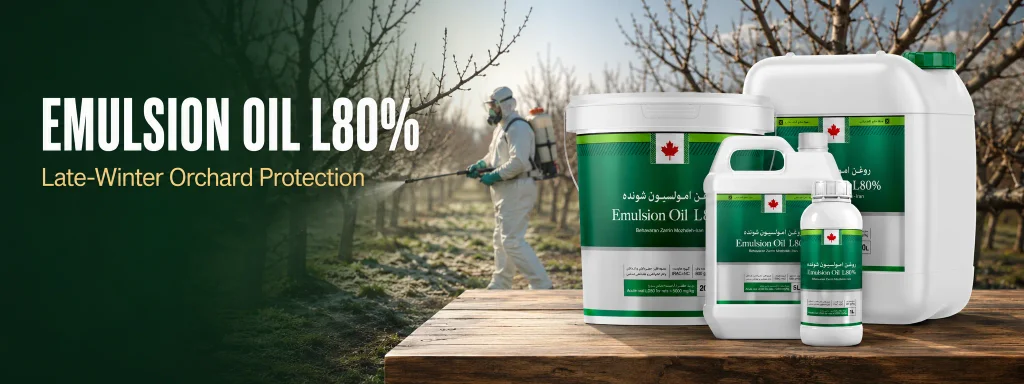
In professional orchard programs, registered dormant horticultural oils like OIL-L80% of Behavaran may be considered for suppressing overwintering eggs. Their physical mode of action can reduce egg survival while generally having less impact on some beneficial organisms than many broad-spectrum treatments.
Suitability depends on crop species, cultivar sensitivity, weather, tree condition, and local label approval.
Best Time for Winter Spraying
Dormant-season treatments are generally scheduled between leaf fall and bud break according to the registered label and local crop-protection guidance.
Weather is critical. Applications made under unsuitable temperatures or before rapid temperature changes may injure trees. A qualified adviser should determine the correct treatment window for the crop, cultivar, and region.
Fenpropathrin Behavaran for European Red Mite Control
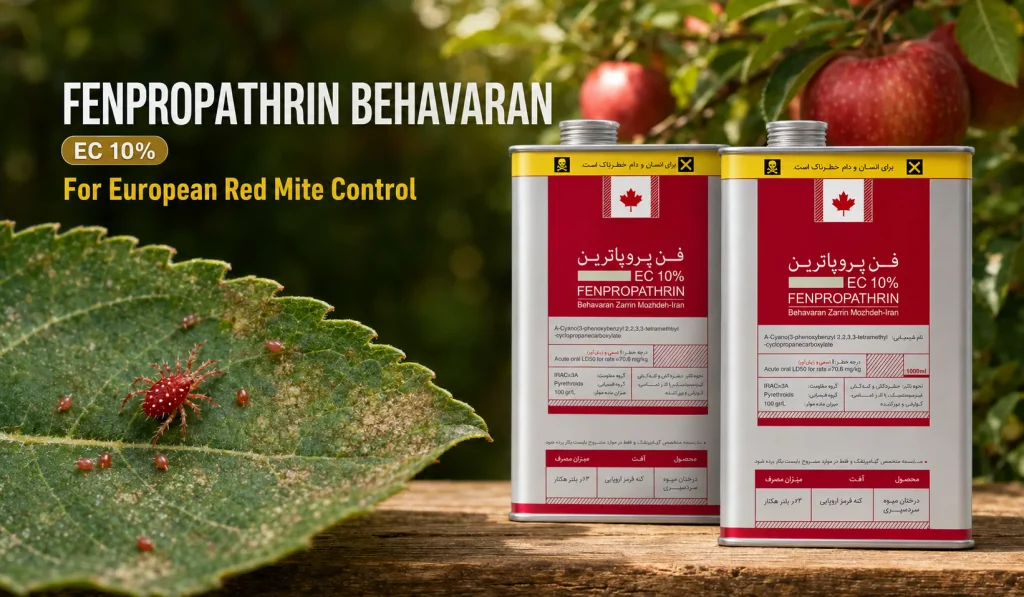
Fenpropathrin Behavaran EC 10% is a non-systemic pyrethroid insecticide and acaricide developed for the control of European red mite and other mobile mite stages. It acts mainly through contact and ingestion and provides a rapid knockdown effect. Fenpropathrin is classified as both a pyrethroid insecticide and acaricide, while the Behavaran formulation belongs to IRAC Group 3A. PubChem, Behavaran Zarrin Mozhdeh
Because Fenpropathrin Behavaran primarily targets active mites rather than serving as a dedicated ovicide, it is most relevant when orchard monitoring confirms that larvae, nymphs, or adults dominate the population. It should be included within a threshold-based integrated pest management program rather than used as a routine preventive treatment.
Fenpropathrin may also affect predatory mites, pollinators, and other beneficial arthropods. Therefore, it must only be handled and applied by trained adults where the crop and target pest are covered by the current local registration and product label. Resistance pressure can be reduced by avoiding repeated reliance on IRAC Group 3A and following a professional rotation program based on different modes of action.
Spring and Summer Acaricide Applications
Spring or summer intervention should be based on leaf sampling, economic thresholds, predator abundance, and the dominant mite stage.
Repeated calendar-based applications should be avoided. Unnecessary treatments increase costs, affect natural enemies, and accelerate the development of acaricide resistance.
Selecting an Acaricide Based on the Mite’s Life Stage
Acaricides differ in the stages they affect. Some primarily target eggs, while others are more active against larvae, nymphs, or adults.
Before selecting a registered product, determine whether the population consists mainly of:
- Overwintering eggs
- Summer eggs
- Larvae
- Nymphs
- Adults
- A mixture of several stages
Selection should be made by a qualified crop-protection adviser using the current product label and local registration database.
Importance of Complete Spray Coverage
European red mites and eggs may occur around buds, branch junctions, leaf veins, and both leaf surfaces. Poor coverage can leave part of the population unaffected.
Professional applicators should ensure that equipment is calibrated and that application follows the registered label. Excessive runoff should be avoided because it wastes product and increases environmental contamination.
Using Potassium Soap to Reduce Mite Populations
Registered potassium-based insecticidal soaps may help reduce exposed mobile mites by contact. They do not generally provide long residual activity and may not affect protected eggs.
Plant sensitivity, water quality, temperature, and coverage can influence performance. Only products registered for the crop and pest should be considered, following professional advice and label directions.
Effective Acaricides for European Red Mite Control
The most effective option depends on the crop, mite stage, resistance history, natural enemies, local registration, and environmental conditions. No single acaricide is suitable for every orchard or every stage of infestation.
Ovicide Acaricides for Egg Control
Ovicidal products are designed to target eggs or newly emerging stages. They may be considered when monitoring shows that eggs dominate the population.
Because product registrations and resistance patterns change, active ingredients should be selected from the current local crop-protection list rather than relying on old recommendations.
Acaricides for Active Nymphs and Adults
When mobile stages dominate, an acaricide registered for larvae, nymphs, or adults may be more appropriate than an egg-focused product.
The decision should account for:
- Percentage of each life stage
- Predator abundance
- Previous products used
- Resistance group
- Crop growth stage
- Pre-harvest interval
- Weather conditions
Plant-Based and Biological Acaricides
Some locally registered products contain plant-derived oils, microbial components, or other biologically based materials. Their performance can vary according to formulation, coverage, mite density, and weather.
These products should not automatically be considered harmless. They must still be used according to their labels and evaluated for crop safety and effects on beneficial organisms.
Rotating Acaricide Modes of Action
Using products from the same mode-of-action group repeatedly can select resistant mites. Rotation means changing to an effective registered product from a different resistance group when another justified treatment is required.
Changing brand names does not necessarily mean changing the mode of action. The resistance-group code on the label should be checked by a qualified adviser.
Preventing Acaricide Resistance
Resistance can be delayed by:
- Treating only when monitoring justifies intervention
- Avoiding repeated use of the same resistance group
- Applying only registered label rates
- Achieving adequate coverage
- Conserving natural enemies
- Integrating cultural and biological methods
- Keeping accurate treatment records
An acaricide should not be expected to compensate for poor monitoring, water stress, incorrect identification, or repeated disruption of beneficial species.
Safety Precautions When Controlling European Red Mite
Pesticide safety is essential for applicators, workers, consumers, beneficial organisms, and the environment. Product labels and local regulations are legally binding and take priority over general recommendations.
Following the Product Label and Recommended Dosage
Use only products registered for the target crop and European red mite. Never estimate rates, copy instructions from another product, or use a product because its brand name resembles a registered option.
Only trained adults wearing the required protective equipment should prepare or apply pesticides.
Observing the Pre-Harvest Interval
The pre-harvest interval is the minimum required period between the final application and harvest. It varies by product, crop, and country.
Failing to observe this interval can result in unacceptable residues and regulatory violations. Orchard records should clearly document every application and the corresponding harvest restriction.
Protecting Beneficial Mites and Predatory Insects
Before treatment, evaluate the abundance of predatory mites, Stethorus beetles, and predatory bugs. Selective products and threshold-based decisions can help preserve these organisms.
Avoid treating flowering areas when pollinators may be exposed, and follow all environmental precautions stated on the label.
Avoiding Unsafe Pesticide and Oil Mixtures
Pesticides, horticultural oils, sulfur products, fertilizers, and adjuvants should never be mixed unless the approved labels explicitly permit the combination.
Unsafe mixtures may cause crop injury, reduce effectiveness, create hazardous exposure, or damage application equipment. Compatibility must be confirmed by a qualified professional.
Applying Acaricides Under Suitable Weather Conditions
Wind, temperature, humidity, rainfall, and tree stress can influence both safety and performance. Applications should not proceed under conditions prohibited by the label.
Professional applicators should also protect nearby water sources, non-target vegetation, workers, livestock, and neighboring properties.
Frequently Asked Questions About European Red Mite
What Are the First Signs of European Red Mite Damage?
The first signs are usually fine pale or yellow feeding spots on leaves. As feeding increases, leaves may become yellow, bronze, or brown. Confirm the diagnosis by examining both leaf surfaces for mites and red eggs.
Which Crops Are Most Susceptible to European Red Mite?
Apple, pear, and quince are major hosts. The pest may also occur on plum, peach, cherry, almond, grapevine, ornamental trees, roses, and several alternative hosts.
Where Do European Red Mites Overwinter?
They mainly overwinter as red eggs on branches, especially around buds, fruit spurs, bark crevices, and junctions between young and older wood.
What Is the Best Time to Control European Red Mite?
The best management period depends on monitoring results, the dominant life stage, economic thresholds, and local conditions. Early detection before severe leaf bronzing provides the widest range of management options.
Can Dormant Oil Control European Red Mite Eggs?
A locally registered dormant horticultural oil may suppress overwintering eggs when used by trained adults according to its label. Crop sensitivity, weather, and treatment timing must be evaluated by a qualified adviser.
What Is the Best Acaricide for European Red Mite?
There is no universally best acaricide. Selection depends on crop registration, mite life stage, resistance history, pre-harvest interval, natural enemies, and local regulations. A licensed crop-protection adviser should select the appropriate registered option.
Can Biological Control Replace Acaricide Application?
In some orchards, predatory mites and insects can maintain European red mite populations below damaging levels. Biological control is most successful when broad-spectrum pesticides are minimized and pest populations are monitored regularly.
How Can Acaricide Resistance Be Prevented?
Treat only when necessary, rotate resistance groups, preserve natural enemies, follow the registered label, maintain adequate professional coverage, and keep accurate application records.
Conclusion: Protecting Orchards from European Red Mite Damage
The European red mite is a small but economically important pest of apple and other orchard crops. Its feeding can cause leaf stippling, bronzing, premature leaf drop, reduced fruit quality, and lower yield potential in the following season.
Successful European red mite control begins with correct identification and regular monitoring. Cultural practices, healthy irrigation management, conservation of predatory mites, and threshold-based decisions should form the foundation of an integrated program. Chemical intervention should remain a carefully selected final measure carried out by trained adults under the product label and local crop-protection regulations.