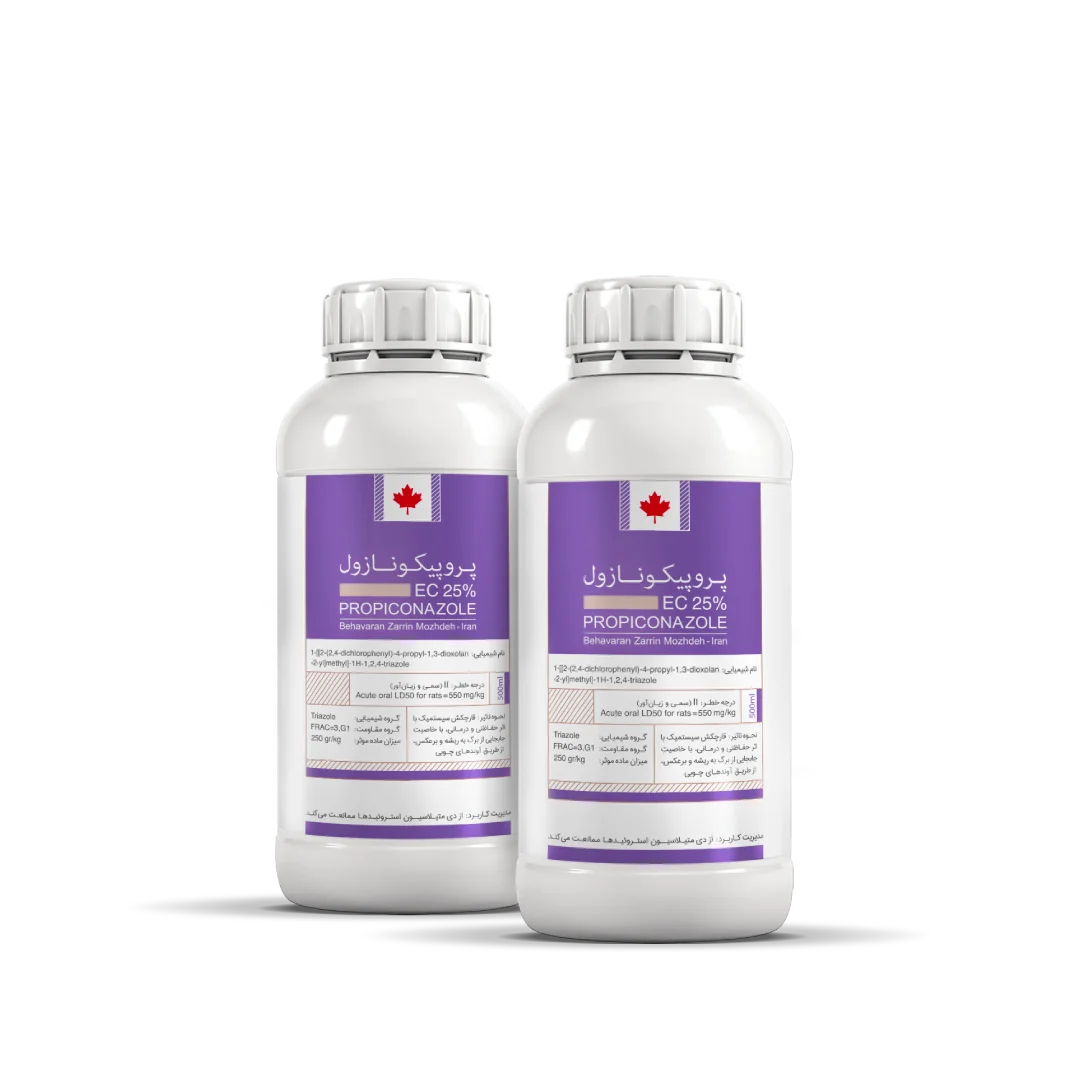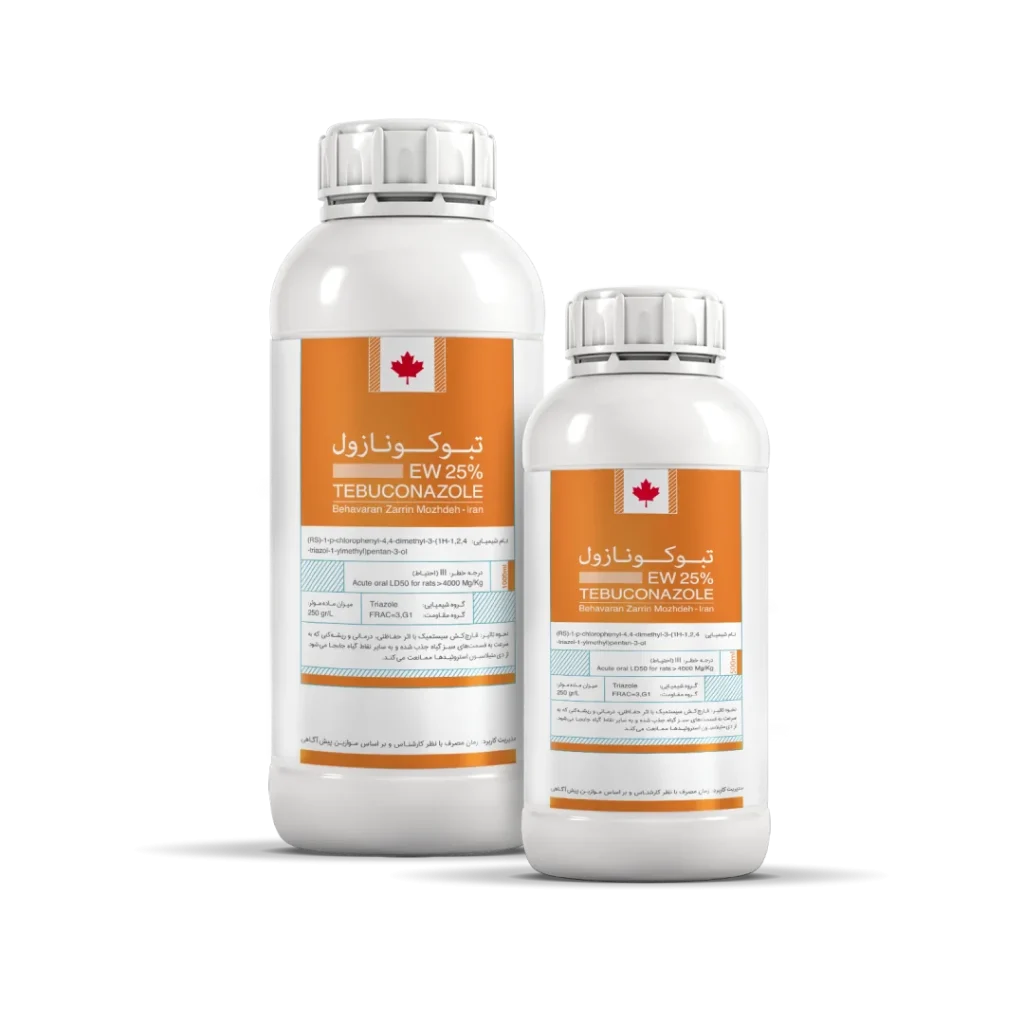
Propiconazole fungicide by Behavaran is a systemic triazole fungicide with preventive and curative activity for wheat rust, rice sheath blight and cereal diseases.
Propiconazole (Tilt) Behavaran is a systemic triazole fungicide with both preventive and curative activity. After application, the active ingredient is absorbed by plant tissues and moves systemically, helping protect treated plants against a range of important fungal diseases.
Propiconazole is widely used in cereal and field-crop disease management programs and is particularly effective against diseases such as wheat rust, rice sheath blight, powdery mildew and several other fungal diseases of cereals.
500 ml
Propiconazole fungicide belongs to the triazole group of fungicides and acts as a sterol biosynthesis inhibitor.
Its activity is based on inhibition of the sterol 14-demethylase enzyme, which is essential for the biosynthesis of ergosterol in fungal cell membranes.
By disrupting ergosterol production, Propiconazole interferes with normal fungal growth and development, helping stop the progression of infection inside plant tissues.
Because of its systemic activity, Propiconazole is absorbed through leaves and other green plant tissues and is transported mainly through the xylem, providing internal protection beyond the treated surface.
Propiconazole fungicide offers several useful characteristics in crop disease management:
Depending on local registration and crop recommendations, Propiconazole fungicide may be used in the management of diseases such as:
Propiconazole is commonly used in wheat disease-management programs, especially where rust diseases are a major concern.
Based on the available product information, the recommended rate for:
Wheat – rust and Fusarium head blight: 1 L/ha
Application timing depends on disease pressure, crop growth stage and local recommendations. In wheat, treatments are often considered from late winter to early spring when environmental conditions favor disease development.
Propiconazole can also be used against rice sheath blight, an important fungal disease that can cause significant yield and quality losses under favorable disease conditions.
Recommended rate according to the supplied product information:
Rice – sheath blight: 1 L/ha
Internationally, Propiconazole fungicide is also used in disease-management programs for crops such as:
Always follow local registration requirements and official label instructions for each crop.
According to the available product information, the pre-harvest interval for rice, wheat and barley is 30 days.
The PHI may vary by crop, country and local registration, so users should always follow the approved label for their market.
Propiconazole fungicide is a single-site fungicide, so resistance management is important.
To reduce the risk of resistance development:
| Product | Diseases | Consumption rate |
|---|---|---|
| Wheat | rust and Fusarium head blight | 1 L per hectare |
| Rice | stem blight (sheath blight) | 1 L per hectare |
| Packaging | 500ml |
|---|---|
| Formulation | EC25% |
| Resistance group | FRAC=3,G1 |
| Chemical group | Triazole |
| Amount of active ingredient | 250 gr/L |
Dispose containers per local regulations.