What Is Pistachio Crown Gall Disease?
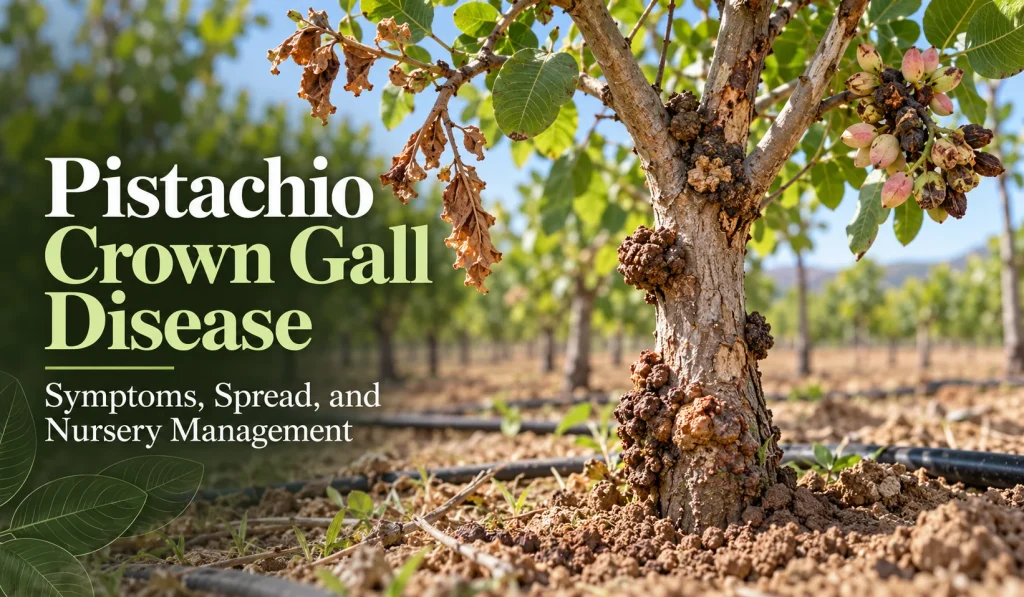
Pistachio crown gall disease is a serious bacterial disease affecting pistachio seedlings and trees (Pistacia vera), particularly in nurseries and newly established orchards. The disease is characterized by the development of abnormal, tumor-like growths called galls, usually around the root crown where the stem meets the soil surface.
Crown gall disease is caused by the soilborne bacterium Agrobacterium tumefaciens. Once the pathogen enters plant tissues through wounds, it interferes with normal cell growth, resulting in irregular swellings that can gradually enlarge and disrupt plant development.
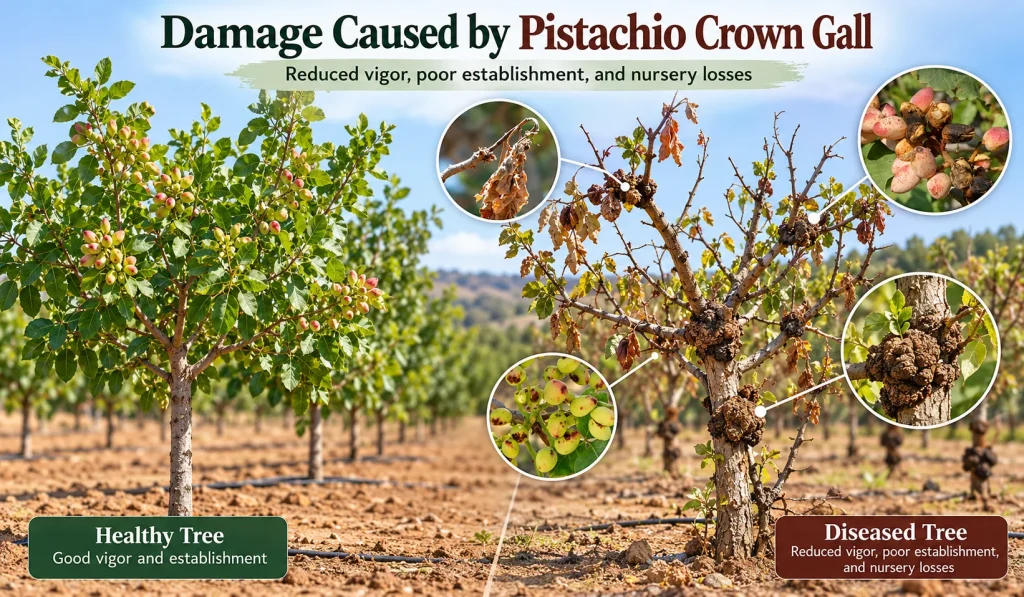
Infected pistachio seedlings may experience reduced vigor, stunted growth, leaf yellowing, and progressive decline. Severe infections can interfere with root development and the movement of water and nutrients, eventually leading to seedling death.
Pistachio crown gall disease is especially concerning because the bacterium can survive in contaminated soil and plant residues for extended periods. Infected planting materials can also introduce the pathogen into previously healthy orchards.
Unlike some common fungal diseases of pistachio, crown gall cannot be reliably controlled with conventional fungicide applications. Therefore, early detection, nursery sanitation, healthy planting materials, and preventive disease management are essential to reducing its spread and economic impact.
Why Is Crown Gall a Serious Threat to Pistachio Nurseries?
Pistachio nurseries play a critical role in producing healthy planting materials for commercial orchards. When crown gall disease develops in a nursery, its consequences can extend beyond individual infected seedlings.
One of the most significant economic problems is the reduced marketability of infected nursery plants. Seedlings showing visible crown galls are generally unsuitable for distribution because they may introduce the pathogen into new planting areas.
The main risks associated with pistachio crown gall disease include:
- Loss of nursery plants: Infected seedlings may become weakened, severely stunted, or unsuitable for commercial sale.
- Spread through planting materials: Infected seedlings can carry the pathogen into disease-free orchards.
- Long-term soil contamination: The crown gall bacterium can remain viable in contaminated soil and plant debris for extended periods.
- Reduced orchard establishment success: Poor root development and declining seedling vigor can interfere with successful transplant establishment.
- Increased production costs: Nursery operators may face additional expenses associated with inspection, sanitation, removal of infected plants, and disease prevention.
Because pistachio orchards represent long-term agricultural investments, introducing infected seedlings during orchard establishment can create serious management and financial challenges.
Preventing crown gall disease at the nursery stage is therefore one of the most effective ways to protect the long-term productivity and health of pistachio orchards.
What Causes Crown Gall Disease in Pistachio Trees?
The primary causal agent of pistachio crown gall disease is Agrobacterium tumefaciens, a soilborne bacterial plant pathogen capable of infecting numerous plant species.
The bacterium typically enters pistachio seedlings through wounds near the root crown, roots, or lower stem. Following infection, abnormal plant cell proliferation leads to the formation of characteristic galls.
The pathogen is particularly important in nursery environments because young pistachio plants frequently experience handling, transplanting, root disturbance, and grafting operations that may create entry points for bacterial infection.
Understanding Agrobacterium tumefaciens
Agrobacterium tumefaciens is a Gram-negative, rod-shaped, aerobic, non-spore-forming bacterium. It is motile and may possess multiple flagella that enable movement in suitable environments.
The pathogen has a broad host range, affecting numerous agricultural and horticultural plants. Crown gall disease is economically important in several woody crops, including stone fruits, pome fruits, grapes, and other perennial species.
A distinguishing feature of crown gall bacteria is their ability to alter the normal growth behavior of infected plant cells. Pathogenic strains transfer genetic material into susceptible plant cells, leading to abnormal cell division and gall formation.
This explains why visible crown galls are not simply superficial bacterial growths. They consist primarily of altered plant tissues that continue developing after infection.
For pistachio nursery operators, understanding the biology of Agrobacterium tumefaciens is essential because the disease must be managed primarily by preventing bacterial introduction and infection.
How the Bacteria Infect Pistachio Seedlings
The crown gall pathogen generally requires an injury or wound to enter susceptible pistachio tissues.
Common infection sites include wounds caused by:
- Pruning and grafting operations
- Root damage during transplanting
- Mechanical injuries from nursery equipment
- Soil cultivation near the root crown
- Frost-related tissue damage
- Insect and nematode injuries
When susceptible wounded tissues come into contact with contaminated soil or other sources of the bacterium, infection may occur.
The pathogen becomes established in the affected tissue and initiates abnormal cell growth. Over time, these proliferating cells form visible galls near the crown or root system.
Young pistachio seedlings are particularly vulnerable because their root systems and lower stems can be damaged during routine nursery operations.
Preventing wounds, using clean propagation materials, and avoiding contaminated soil are critical steps in reducing bacterial crown gall infections.
Symptoms of Pistachio Crown Gall Disease
Recognizing the early symptoms of pistachio crown gall disease is essential for identifying infected seedlings and preventing the pathogen from spreading throughout a nursery or orchard.
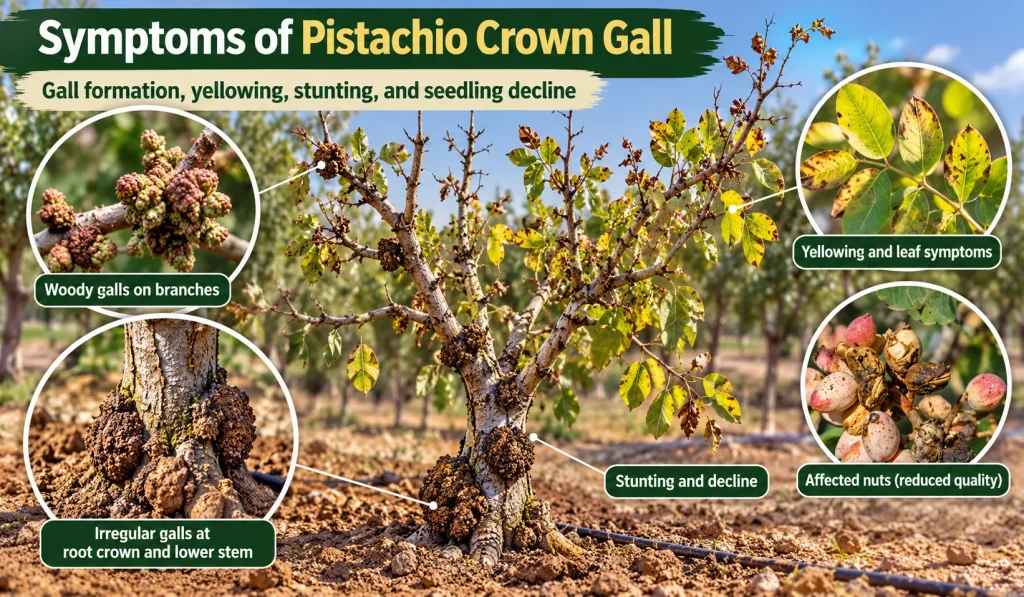
The most characteristic symptom is the formation of irregular swellings or tumor-like masses around the root crown, usually near the soil surface.
These galls change in appearance as the disease progresses. Young galls are generally soft and pale, while older galls become larger, harder, darker, and increasingly irregular.
In addition to visible gall formation, infected plants may develop reduced growth, yellowing foliage, weak root systems, and general decline.
Gall Formation Around the Root Crown
The development of abnormal galls around the root crown is the most recognizable sign of bacterial crown gall disease in pistachio seedlings.
During the early stages of infection, the galls may appear as small, soft swellings with a white or cream-colored surface.
As the disease progresses, these growths enlarge and become irregular in shape. Their color gradually changes from pale cream to brown or nearly black.
Older galls often develop a rough, hardened appearance and may surround a significant portion of the lower stem or crown area.
Because some galls occur below the soil surface, visual inspection of the aboveground portion of a seedling may not reveal the full extent of infection.
Nursery inspections should therefore include careful examination of the stem base and accessible root crown whenever disease is suspected.
Leaf Yellowing, Stunted Growth, and Seedling Decline
Although gall formation is the primary diagnostic feature, infected pistachio seedlings may also exhibit symptoms associated with impaired plant development.
These symptoms include:
- Reduced shoot growth and overall plant vigor
- Yellowing of leaves
- Poor root development
- Weak or delayed seedling establishment
- Progressive decline in plant health
- Drying or death of severely affected seedlings
Large galls near the root crown can interfere with normal vascular function and nutrient movement within the plant.
As a result, infected pistachio seedlings may be less capable of supporting healthy shoot development.
However, leaf yellowing and stunted growth are not exclusive to crown gall disease. Similar symptoms can result from nutrient deficiencies, root disorders, water stress, or other pathogens.
The presence of characteristic crown galls, supported by laboratory diagnosis when necessary, is important for distinguishing bacterial crown gall from other pistachio nursery problems.
Early vs. Advanced Crown Gall Symptoms
The appearance of crown gall disease changes considerably as the infection develops.
| Disease stage | Typical symptoms |
|---|---|
| Early infection | Small, soft, white or cream-colored swellings near the root crown |
| Developing infection | Enlarging, irregular galls and reduced seedling vigor |
| Advanced infection | Hardened, brown to black galls with abnormal tissue growth |
| Severe infection | Stunted growth, yellowing foliage, root dysfunction, and possible seedling death |
Early identification is important because infected planting materials can spread the disease before extensive decline becomes visible.
How Does Crown Gall Spread in Pistachio Nurseries?
The spread of pistachio crown gall disease is closely associated with contaminated soil, infected planting materials, irrigation water, agricultural equipment, and wounds that allow bacterial entry.
Because Agrobacterium tumefaciens can survive in soil and plant residues for long periods, infected nursery sites may remain a source of inoculum even after visibly diseased plants have been removed.
Effective management requires understanding the main transmission pathways and adopting preventive measures throughout nursery production.
Transmission Through Contaminated Soil and Seedlings
Contaminated soil is an important source of crown gall infection in pistachio nurseries.
The pathogen can persist in soil and plant residues and may remain present for at least two years under suitable conditions.
Movement of contaminated soil between nursery beds, containers, or planting sites can introduce the bacterium into previously unaffected areas.
Infected seedlings are another major concern. When diseased plants are transported from nurseries to commercial orchards, they may carry the pathogen into healthy production environments.
This creates a potentially long-term disease management problem, particularly in newly established pistachio orchards.
To minimize transmission:
- Use certified, healthy planting materials.
- Inspect seedlings before distribution and transplantation.
- Avoid transferring soil from known infected sites.
- Remove infected plants and associated contaminated materials using appropriate sanitary procedures.
- Monitor nursery beds regularly for suspicious root crown swellings.
Infection Through Pruning and Grafting Wounds
Pruning and grafting are routine practices in pistachio propagation, but both activities can create wounds that provide entry points for crown gall bacteria.
Cuts, damaged bark, and exposed tissues are particularly vulnerable when they come into contact with contaminated tools, soil, or irrigation water.
Grafting techniques that produce extensive injuries around the stem may increase the opportunity for bacterial infection.
Maintaining clean tools and minimizing tissue damage are therefore essential nursery management practices.
Nursery workers should carefully handle seedlings during grafting and pruning and avoid unnecessary injury to the lower stem and root crown.
The Role of Irrigation Water and Farm Equipment
Irrigation water and agricultural machinery can contribute to the movement of crown gall bacteria within and between nursery areas.
Contaminated water may carry the pathogen to susceptible plants, particularly when water moves across infected soil.
Farm equipment can also transfer contaminated soil. Tractor tires, tillers, cultivation tools, and other machinery may move soil particles from affected areas into healthy nursery sections.
Pruning and grafting tools can create additional risks when they are used on infected plants and subsequently contact healthy seedlings without proper disinfection.
To reduce disease transmission, nursery managers should:
- Clean machinery and tools after working in infected areas.
- Prevent the movement of contaminated soil between nursery blocks.
- Maintain proper irrigation management.
- Avoid unnecessary soil disturbance around seedling crowns.
- Establish sanitation procedures for nursery workers and equipment.
Environmental Conditions That Favor Crown Gall Development
Environmental conditions strongly influence the establishment and development of crown gall disease in pistachio trees.
The presence of the pathogen alone does not necessarily result in visible disease. Infection is also influenced by plant susceptibility, tissue injuries, soil conditions, and environmental factors.
Moist, compacted soil and wounded plant tissues can create favorable conditions for bacterial infection and disease development.
Soil Moisture and Poor Drainage
High soil moisture can favor crown gall development and contribute to conditions that allow the pathogen to persist and spread.
The disease is of particular concern where soil remains excessively wet or compacted.
Poorly drained nursery beds may expose susceptible roots and crown tissues to prolonged moisture and contaminated soil.
High soil humidity, particularly under conditions approaching 80–90% relative soil moisture, has been associated with increased disease development.
For disease prevention, nursery operators should maintain appropriate soil moisture and avoid prolonged waterlogging.
Well-managed irrigation and suitable soil conditions are important components of integrated crown gall prevention.
Temperature and Disease Development
Temperature influences the time required for visible crown gall symptoms to develop after infection.
Under temperatures of approximately 20–25°C, symptoms may become apparent within 13–14 days under conditions described for the disease.
At lower temperatures, approximately 10–15°C, the appearance of symptoms may take around 27–28 days.
These intervals are approximate observations rather than fixed diagnostic timelines, since actual disease development depends on environmental conditions, the host plant, and infection severity.
Temperature should therefore be considered alongside other factors such as soil moisture, plant injuries, and pathogen presence.
Frost, Mechanical Injuries, and Nematode Damage
Crown gall bacteria typically enter plants through injured tissues.
Frost damage can create cracks and wounds that expose susceptible plant cells to infection.
Similarly, mechanical injuries caused by cultivation, handling, transplanting, or nursery machinery can damage roots and lower stems.
Nematode activity may also contribute to infection opportunities by producing injuries in root tissues.
To reduce these risks, growers should protect seedlings from avoidable physical damage, manage soil pests, and carry out cultivation and grafting operations carefully.
How to Prevent Crown Gall Disease in Pistachio Nurseries
Preventing pistachio crown gall disease is more effective than attempting to treat established infections.
No consistently effective curative treatment has been established for crown gall disease in pistachio seedlings. Therefore, prevention should focus on clean nursery production, healthy planting materials, sanitary practices, and minimizing opportunities for bacterial infection.
An effective prevention program should begin before seedlings are planted and continue through propagation, grafting, irrigation, and distribution.
Use Certified Disease-Free Pistachio Seedlings
Using healthy, certified pistachio seedlings is one of the most important measures for preventing crown gall disease.
Infected nursery plants can introduce the pathogen into previously healthy orchards and establish long-term sources of soil contamination.
Before planting or distributing seedlings:
- Purchase plants from reputable, inspected nurseries.
- Examine the root crown and lower stem for abnormal swellings.
- Avoid planting seedlings with suspicious galls or unexplained decline.
- Conduct periodic nursery inspections.
- Seek diagnostic confirmation when crown gall disease is suspected.
Planting materials with confirmed crown gall infection should not be distributed to disease-free production areas.
Avoid Wounding Seedlings During Planting and Grafting
Wounds around the root crown and lower stem are major infection entry points for crown gall bacteria.
Preventing injury during nursery production can significantly reduce opportunities for pathogen establishment.
Seedlings should be handled carefully during planting, grafting, transplanting, and cultivation.
Special attention should be given to preventing root and crown damage caused by tools, nursery equipment, or soilborne pests.
Correct seed positioning during sowing is also important. Improper seed orientation may result in abnormal seedling growth and twisting near the root crown, potentially increasing tissue damage.
Select Healthy, Uncontaminated Nursery Soil
Because crown gall is a soilborne bacterial disease, nursery soil must be carefully selected and managed.
Before preparing nursery beds or filling seedling containers, growers should assess the soil for a history or evidence of crown gall contamination.
Soil collected from infected nursery areas should not be transferred into disease-free seedling production sites.
Where contamination is suspected, appropriate diagnostic testing and evaluation of the planting site are recommended.
Avoiding contaminated soil is particularly important because the pathogen can persist for extended periods and infect susceptible plants when wounds are present.
Disinfect Pruning and Grafting Tools
Pruning and grafting tools should be cleaned and disinfected to reduce the risk of transferring plant pathogens between seedlings.
A diluted household bleach solution consisting of one part bleach and nine parts water is one sanitation option described for nursery tools.
Tools should first be cleaned of visible soil and plant debris before disinfection.
Disinfectants must be used according to their product instructions, including appropriate contact time, handling precautions, and material compatibility.
Good sanitation practices are especially important when tools have been used on plants showing suspicious crown gall symptoms.
Choose Appropriate Grafting Techniques
Grafting methods influence the extent and location of wounds created on pistachio seedlings.
Because crown gall bacteria infect plants through injured tissues, selecting techniques that minimize unnecessary damage is an important preventive measure.
In nursery management recommendations, budding techniques, particularly shield budding, are preferred over cleft grafting or similar methods where they are suitable for the planting material.
This approach can reduce extensive woody tissue injuries that may increase infection opportunities.
Regardless of the grafting method, clean tools, healthy propagation materials, and careful handling are essential.
Improve Irrigation Practices to Reduce Disease Spread
Appropriate irrigation management helps reduce conditions that favor crown gall disease and limits the movement of contaminated water and soil.
Drip irrigation is generally preferable to basin or flood irrigation where the objective is to reduce water movement between planting areas.
Nursery operators should avoid prolonged soil saturation and maintain irrigation systems that provide adequate moisture without creating excessively wet conditions near the root crown.
Irrigation systems should also be maintained to prevent unnecessary water runoff from infected areas into healthy nursery sections.
Combining appropriate irrigation with soil sanitation and healthy planting materials supports an effective crown gall prevention program.
Pistachio Crown Gall Disease Management Strategies
Managing pistachio crown gall disease requires an integrated approach focused on preventing new infections, identifying diseased plants, and limiting movement of the pathogen.
Because existing crown galls are difficult to eliminate and effective chemical cures are not available, nursery operators should prioritize prevention and sanitation rather than relying on pesticide applications.
A successful disease management program includes regular inspections, removal of infected plants, contamination control, and careful selection of future planting locations.
Regular Nursery Inspection and Early Detection
Routine inspection is essential for identifying crown gall disease before infected planting materials are distributed.
Nursery operators should examine seedlings periodically, paying particular attention to the root crown and lower stem.
Plants showing abnormal swellings, reduced growth, yellowing, or unexplained decline should be examined more closely.
When symptoms are uncertain, laboratory diagnosis can help distinguish bacterial crown gall from other root or crown disorders.
Early detection allows nursery managers to isolate affected areas, prevent movement of suspicious plants, and implement sanitation measures before the disease spreads further.
Removal and Disposal of Infected Plants
Removing infected seedlings is an important measure for reducing crown gall inoculum in nursery production systems.
Plants with confirmed crown gall disease should be separated from healthy planting materials and removed using appropriate phytosanitary procedures.
Where practical, associated contaminated soil and infected root materials should also be carefully managed to reduce pathogen spread.
Infected plant material should be disposed of according to local plant health and environmental regulations.
During removal, unnecessary movement of contaminated soil or plant debris should be avoided.
After handling infected plants, tools and equipment should be cleaned and disinfected before they are used in unaffected nursery areas.
Preventing the Movement of Contaminated Soil and Equipment
Contaminated soil and nursery machinery can serve as important pathways for the spread of crown gall bacteria.
To reduce disease movement, nursery operators should establish clear hygiene procedures for equipment, workers, and planting materials.
Recommended measures include:
- Cleaning tractor tires and cultivation equipment after working in infected areas.
- Avoiding the transfer of soil from affected nursery beds.
- Using clean containers and propagation materials.
- Separating infected plants from healthy nursery stock.
- Cleaning and disinfecting pruning and grafting tools.
- Preventing irrigation runoff from carrying contaminated soil into healthy areas.
These practices are particularly important in nurseries that supply pistachio seedlings to multiple orchards or production regions.
Avoiding Replanting in Previously Infested Areas
Establishing new pistachio nurseries or orchards in soil with a known history of crown gall disease presents a significant risk.
The pathogen may persist in contaminated soil and plant residues even after visibly infected plants have been removed.
For this reason, growers should avoid establishing pistachio orchards in fields known to have serious crown gall contamination.
Before selecting a new nursery or orchard site, review the disease history of the land and assess its suitability for healthy pistachio production.
When crown gall has previously occurred, professional evaluation and appropriate soil testing can help determine the level of risk.
The most reliable long-term strategy for pistachio crown gall management is to prevent the introduction of the bacterium through healthy planting materials, clean soil, proper irrigation, careful grafting, and consistent nursery sanitation.
Can Chemical Treatments Control Pistachio Crown Gall?
Chemical control of pistachio crown gall disease remains a major challenge for nursery growers and orchard managers. Unlike many fungal diseases that can be managed with registered fungicides, bacterial crown gall cannot be reliably cured once the characteristic tumors have developed.
The disease is associated with Agrobacterium tumefaciens, a soilborne bacterium that infects plant tissues through wounds and triggers abnormal cell growth. Following infection, the affected plant cells begin forming tumor-like structures known as crown galls.
Although copper-based compounds like Bordeaux 20% and other antimicrobial products are used to manage certain bacterial plant diseases, there is no established, consistently effective chemical treatment capable of eliminating existing crown galls in pistachio trees.
Applying conventional fungicides or bactericides to developed galls should not be considered a reliable curative strategy. Removing the visible gall also does not guarantee that the infection has been eliminated.
Therefore, pistachio crown gall management should focus primarily on disease prevention, early detection, sanitation, and the use of healthy planting materials, rather than attempting to treat advanced infections with chemical products.
Why Existing Crown Galls Are Difficult to Treat
The main reason crown gall disease is difficult to treat lies in the unique infection mechanism of Agrobacterium tumefaciens.
Pathogenic strains of this bacterium can transfer genetic material into susceptible plant cells. This genetic material alters the regulation of plant growth, causing infected cells to divide abnormally and form tumors.
Once this process begins, gall development can continue even when the original bacteria are no longer actively present in every affected tissue.
Several factors make established crown galls particularly difficult to control:
- Altered plant cell growth: Crown galls consist primarily of abnormal plant tissues rather than a simple accumulation of bacteria.
- Limited curative activity: Conventional fungicides and bactericides cannot reliably reverse the cellular changes responsible for gall formation.
- Protected infection sites: Galls frequently occur around the root crown or below the soil surface, making treatment difficult.
- Persistent soil contamination: The bacterial pathogen may remain in contaminated soil and plant residues, creating opportunities for additional infections.
- Risk of reinfection: Wounds caused by cultivation, grafting, pruning, or mechanical damage may provide new infection pathways.
For these reasons, chemical treatments should not be promoted as guaranteed solutions for existing crown gall disease in pistachio nurseries.
In severely affected nursery plants, removal and appropriate disposal are generally more practical than attempting repeated chemical treatments with uncertain effectiveness.
The Importance of Preventive Disease Management
Preventive management is the foundation of effective pistachio crown gall disease control.
Because established infections are difficult to eliminate, the most important objective is preventing the pathogen from entering healthy nursery plants and orchard soils.
A comprehensive prevention program should include:
- Healthy planting materials: Use certified, disease-free pistachio seedlings from reputable nurseries.
- Clean nursery soil: Avoid using soil from areas with a known history of bacterial crown gall.
- Regular inspections: Examine seedling crowns and roots for unusual swellings or abnormal growth.
- Wound prevention: Minimize root and stem injuries during propagation, grafting, transplanting, and cultivation.
- Tool sanitation: Clean and disinfect pruning and grafting equipment according to appropriate sanitation procedures.
- Irrigation management: Use suitable irrigation methods and prevent contaminated runoff from reaching healthy planting areas.
- Removal of infected plants: Isolate and remove confirmed infected seedlings to reduce disease spread.
- Nursery hygiene: Prevent the movement of contaminated soil, containers, equipment, and propagation materials.
Biological prevention approaches involving certain nonpathogenic Agrobacterium strains have also been developed for crown gall management in some crops. However, their effectiveness depends on the pathogen strain, crop species, application conditions, and local product registration. They should not be presented as proven treatments for pistachio crown gall without crop-specific evidence.
By combining preventive measures with regular monitoring, nursery growers can reduce infection risks and support healthier pistachio orchard establishment.
Best Practices for Establishing a Healthy Pistachio Orchard
Establishing a productive pistachio orchard begins with selecting healthy planting materials and creating growing conditions that minimize the risk of soilborne diseases.
Since pistachio trees are perennial crops cultivated for many years, decisions made during orchard establishment can influence plant health, long-term productivity, and future management costs.
Preventing the introduction of pistachio crown gall disease is especially important because infected seedlings may introduce Agrobacterium tumefaciens into previously unaffected soil.
The following practices can help growers establish healthier pistachio orchards.
1. Select Healthy and Certified Pistachio Seedlings
Purchase pistachio seedlings from reputable nurseries that follow appropriate plant health inspection and propagation practices.
Before planting, examine the lower stem, root crown, and accessible roots for abnormal swellings, suspicious galls, or tissue damage.
Avoid planting seedlings with confirmed crown gall symptoms.
Healthy nursery stock reduces the risk of introducing bacterial pathogens into new orchard sites.
2. Evaluate Soil Health Before Planting
Select orchard sites with suitable soil conditions and no known history of crown gall contamination.
Where crown gall has previously occurred, assess the potential disease risk before replanting susceptible crops.
Avoid transporting soil from infected nurseries or orchards into disease-free planting areas.
Proper soil preparation should also aim to reduce excessive compaction and support healthy root development.
3. Prevent Root and Crown Injuries
Mechanical injuries create entry points for crown gall bacteria.
During planting and orchard maintenance, avoid damaging the root system and lower stem.
Use appropriate cultivation methods and prevent machinery from making direct contact with tree trunks.
Protect young pistachio trees from unnecessary wounds caused by pruning, grafting, cultivation equipment, or soilborne pests.
4. Maintain Proper Irrigation and Drainage
Irrigation management is essential for healthy pistachio root development and disease prevention.
Avoid prolonged soil saturation and irrigation practices that encourage movement of contaminated soil between trees.
Where suitable, drip irrigation can help deliver water more precisely and reduce surface runoff compared with basin irrigation.
Maintain adequate drainage and adjust irrigation schedules according to soil conditions, tree age, and environmental requirements.
5. Follow Strict Orchard Sanitation Practices
Good orchard sanitation helps limit the movement of soilborne pathogens.
Clean pruning tools, grafting equipment, and machinery before transferring them from potentially contaminated areas to healthy orchard blocks.
Remove confirmed infected nursery plants according to appropriate phytosanitary procedures.
Avoid moving contaminated soil, infected roots, or plant residues into unaffected growing areas.
6. Inspect Young Pistachio Trees Regularly
Routine inspections are particularly important during the early years of orchard establishment.
Look for abnormal growth around the root crown, reduced plant vigor, yellowing foliage, and unexplained seedling decline.
Since several root disorders may produce similar aboveground symptoms, laboratory confirmation may be necessary when crown gall disease is suspected.
Early identification allows growers to make informed management decisions and reduce the risk of disease spread.
7. Develop a Long-Term Disease Prevention Plan
A sustainable pistachio orchard management program should combine healthy planting materials, proper irrigation, sanitation, careful grafting, and regular disease monitoring.
Good recordkeeping can also help growers identify areas with recurring disease problems.
Record the source of planting materials, planting dates, suspected disease symptoms, laboratory diagnoses, and sanitation measures implemented.
A healthy pistachio orchard starts with prevention. Investing in disease-free seedlings and appropriate management practices during orchard establishment can help reduce the risk of bacterial crown gall and protect long-term orchard productivity.
Frequently Asked Questions About Pistachio Crown Gall
What Are the First Signs of Crown Gall in Pistachio Trees?
The earliest visible signs of pistachio crown gall disease are usually small, soft, white or cream-colored swellings around the root crown, near the soil surface.
As the disease progresses, these swellings enlarge, become irregular in shape, and gradually turn brown or black.
Affected seedlings may also exhibit reduced growth, yellowing leaves, and declining vigor. However, these symptoms can result from other plant health problems, so accurate diagnosis is important.
Can Pistachio Crown Gall Spread Through Soil?
Yes. Agrobacterium tumefaciens, the bacterium associated with pistachio crown gall disease, can survive in contaminated soil and plant residues for extended periods.
The pathogen may spread through infected seedlings, soil movement, irrigation water, agricultural machinery, and contaminated tools.
Preventing the movement of contaminated soil and using healthy planting materials are important measures for limiting disease transmission.
Is There an Effective Cure for Crown Gall Disease?
There is currently no consistently effective chemical cure for established crown gall disease in pistachio trees.
Once the pathogen has triggered abnormal plant cell growth, conventional fungicides and bactericides cannot reliably reverse the process or eliminate developed galls.
Disease management should therefore prioritize prevention, sanitation, early detection, and removal of severely affected nursery plants.
Growers should not rely on unregistered chemical treatments or products claiming guaranteed elimination of existing crown galls.
Should Infected Pistachio Seedlings Be Removed?
Yes. Pistachio seedlings with confirmed crown gall disease should generally be removed from nursery production to reduce the risk of spreading the pathogen.
Infected planting materials should not be distributed or transplanted into healthy orchards.
Removal should include appropriate management of infected roots and associated contaminated materials, while minimizing soil movement.
Tools and equipment used during removal should be cleaned and disinfected before reuse in healthy nursery areas.
How Can Nursery Growers Prevent Crown Gall?
Nursery growers can reduce the risk of pistachio crown gall disease by implementing an integrated prevention program.
The most important measures include using certified disease-free seedlings, selecting uncontaminated nursery soil, preventing wounds around the root crown, disinfecting propagation tools, managing irrigation carefully, and inspecting seedlings regularly.
Confirmed infected plants should be removed using appropriate phytosanitary procedures, and contaminated soil or equipment should not be transferred into healthy nursery areas.
By maintaining strict sanitation and producing healthy planting materials, pistachio nurseries can help protect commercial orchards from bacterial crown gall disease.