Systemic fungicide with protective action, specifically used to control leaf and panicle blast disease in rice.
Mode of Action
Active ingredient
FRAC Group
Mode of Action
Thiophanate-methyl
1 (Benzimidazole)
Systemic fungicide that is converted to carbendazim inside the plant. It inhibits fungal cell division (mitosis) by binding to β-tubulin and preventing spindle formation, stopping growth and reproduction of the fungus.
Tricyclazole
16
Specifically inhibits melanin biosynthesis in the rice blast fungus. Melanin is required for the formation of the appressorium (infection structure) that generates pressure to penetrate plant tissues. By blocking melanin production, the fungus cannot successfully infect the plant.
Uses
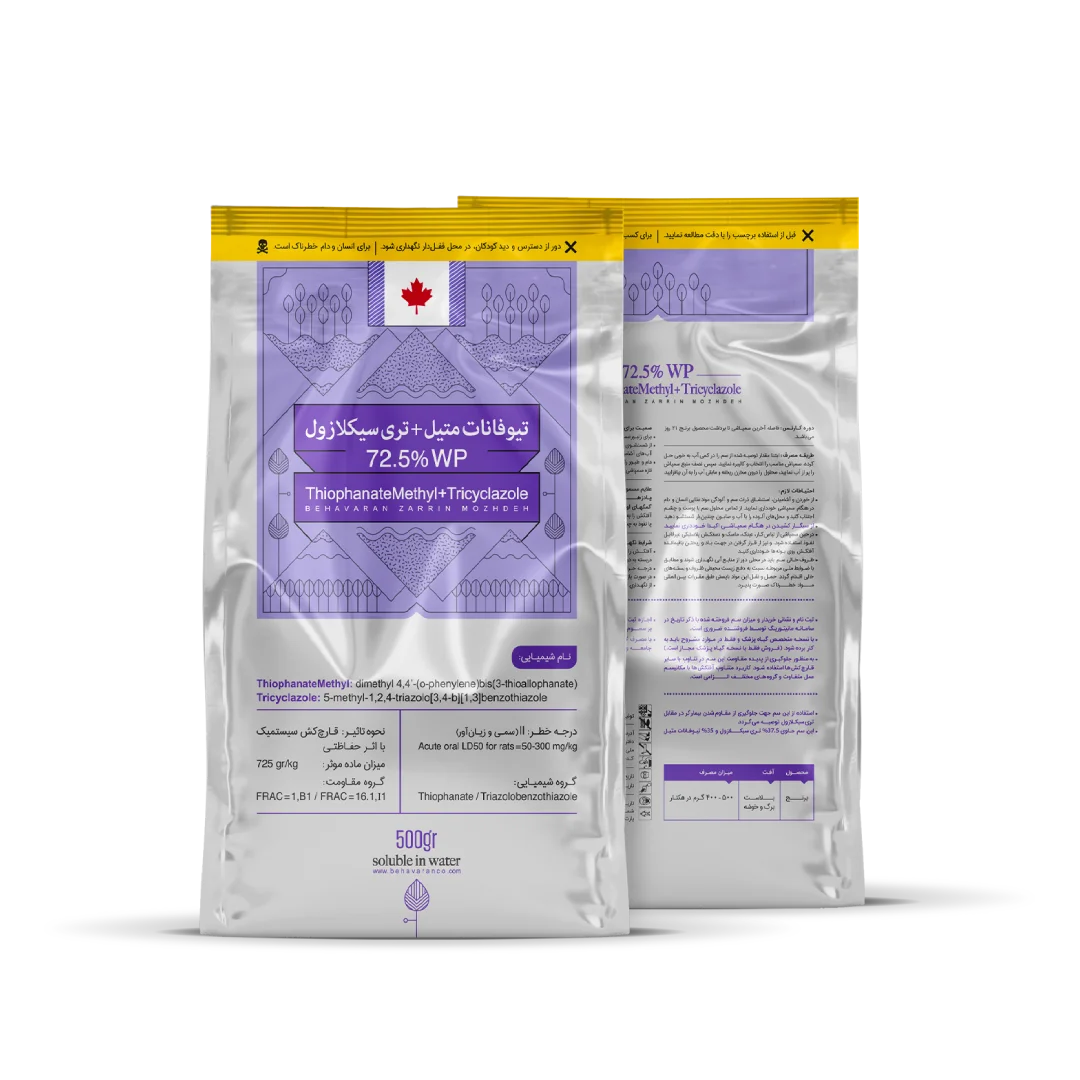
This fungicide is a combination of tricyclazole, a systemic fungicide from the triazolobenzothiazole family, and thiophanate-methyl, a systemic fungicide with protective and curative properties from the thiophanate group. Its mode of action is by inhibiting melanin and beta-tubulin biosynthesis, thereby preventing fungal mitosis and penetration into plant tissues.
Application Guide
In most countries and in Iran, it is used to control rice blast in both field and nursery. To prevent resistance development, this fungicide should be used in rotation with other fungicides. Mixing with other pesticides or chemical fertilizers should be avoided. The pre-harvest interval (PHI) of Vista fungicide in rice is 21 days.
Rice – blast disease: 400–500 g per hectare.
Product
Diseases
Consumption rate
Rice
blast disease
400–500 g per hectare
Additional information
Packaging
1000gr
Formulation
WP72.5%
Resistance group
FRAC=1,B1, FRAC=16.1,I1
Chemical group
Thiophanate, Triazolobenzothiazole
Amount of active ingredient
725gr/Kg
Wear suitable protective clothing, chemical-resistant gloves, goggles, and a mask during mixing, loading, and spraying to avoid skin, eye, and inhalation exposure.
Do not eat, drink, or smoke while handling or applying the product; wash hands, face, and exposed skin with soap and water after work.
Avoid inhaling dust during measuring and mixing of the wettable powder; prepare spray solution in well-ventilated areas.
Do not mix this fungicide with other pesticides or chemical fertilizers, as incompatibility may cause reduced efficacy or phytotoxicity.
Store in original labeled container, tightly closed, in a cool, dry, locked place away from food, feed, and the reach of children and animals.
Collect and dispose of empty containers and product residues according to local regulations; do not burn or bury containers in or near water sources.
Toxic to aquatic organisms; prevent contamination of ponds, streams, canals, and irrigation channels by avoiding cleaning of equipment or disposal of leftover spray near water bodies..
Avoid spraying under strong wind to reduce drift to non‑target plants, neighboring crops, and natural habitats.
Use in an integrated disease management (IDM) program and rotate with fungicides of different modes of action to slow down resistance development in the rice blast pathogen.
Do not exceed recommended frequency of applications; repeated overuse may affect soil microorganisms and ecological balance in paddy fields.
Do not exceed recommended frequency of applications; repeated overuse may affect soil microorganisms and ecological balance in paddy fields.