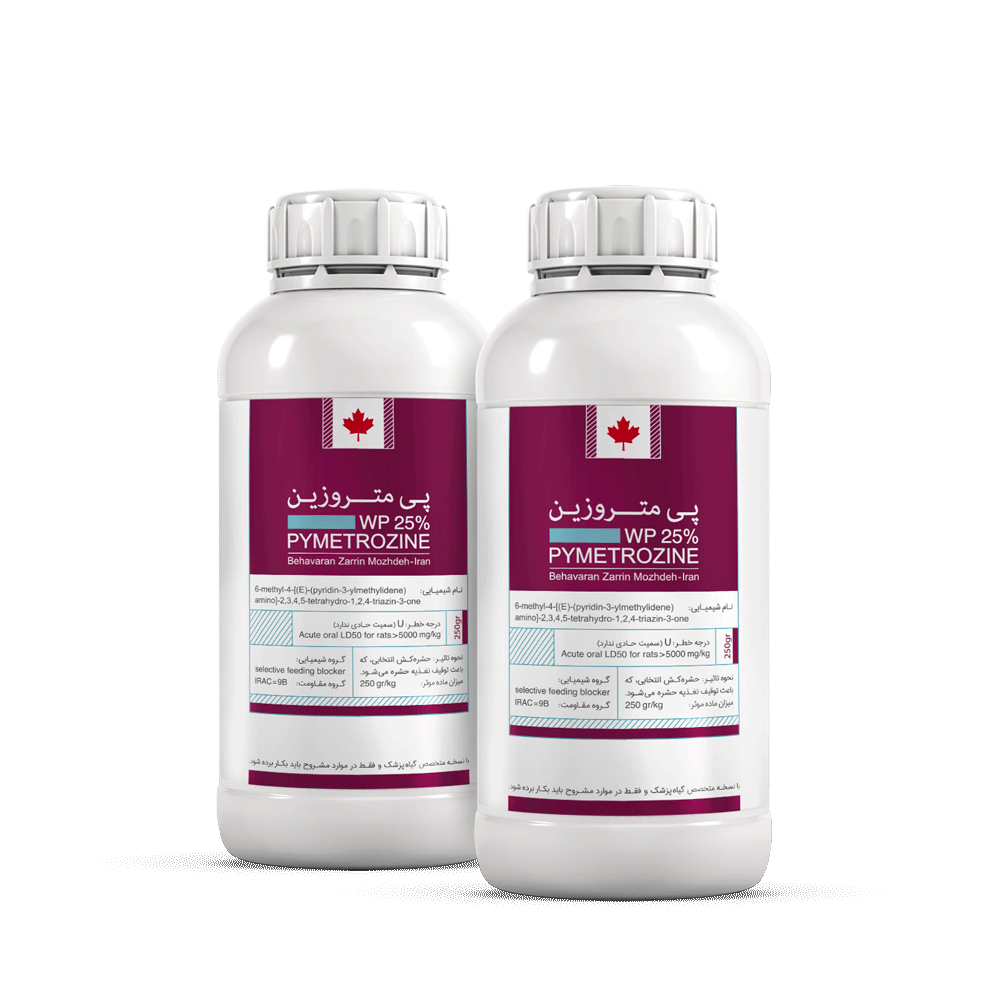
Pymetrozine 25% WP is a selective systemic insecticide for effective aphid control in tobacco, sesame, fruit trees, cotton, potatoes, and cucurbits. Learn about its mode of action, usage information, safety precautions, and environmental guidelines.
Active Ingredient: Pymetrozine 25% WP A selective, systemic insecticide highly effective against various aphid species in crops such as tobacco, sesame, fruit trees, cotton, potatoes, and cucurbits.
Mode of Action
Pymetrozine is a selective systemic insecticide from the pyridine group. It works by paralyzing the feeding apparatus of aphids, preventing them from sucking plant sap. As feeding stops, the insects gradually die within 1 to 4 days after application.
Uses
In Iran, Pymetrozine is used to control different species of aphids in:
Tobacco
Sesame
Fruit trees
Cotton
Potatoes
Cucurbit and vegetable crops
In other countries, it is also applied against sap-sucking pests such as aphids, whiteflies in vegetables and ornamentals, and pollen beetles in tobacco.
It is especially useful for managing aphid populations resistant to organophosphate and carbamate insecticides. However, continuous and repetitive use is not recommended as it may contribute to resistance development.
For best results, application should begin at the first appearance of aphids, and repeated if necessary. To limit the spread of viruses—such as Potato Leaf Roll Virus—application is recommended when 90% of the field has emerged.
Pre-harvest interval (PHI):
3 days for pepper and cucumber
7 days for potatoes, leafy vegetables, and greens
Product
Pest
Consumption rate
Cotton, Tobacco, and Cucurbits
Aphids
1 liter per hectare
Additional information
Packaging
250gr
Formulation
WP25%
Resistance group
IRAC=9B
Chemical group
Selective feeding blocker
Amount of active ingredient
250gr/kg
This product must only be handled and applied by trained, licensed agricultural professionals.
Avoid contact with skin, eyes, and inhalation of spray mist; always use proper PPE.
Keep away from children, animals, and unauthorized individuals.
Do not consume food, drinks, or smoke while handling pesticides.
Wash hands and exposed skin after use.
In case of accidental exposure, seek medical help immediately and provide the product label.
This insecticide is highly toxic to bees, and application should not occur within 6 meters of field borders to protect beneficial insects and pollinators.
Highly hazardous to bees—avoid spraying near flowering plants and maintain a safe buffer zone around the field.
Prevent contamination of water sources, canals, and habitats of aquatic organisms.
Avoid drift onto non-target crops and beneficial insect habitats.
Dispose of empty containers responsibly according to local environmental regulations.
Do not contaminate soil or waterways with leftover spray solution.