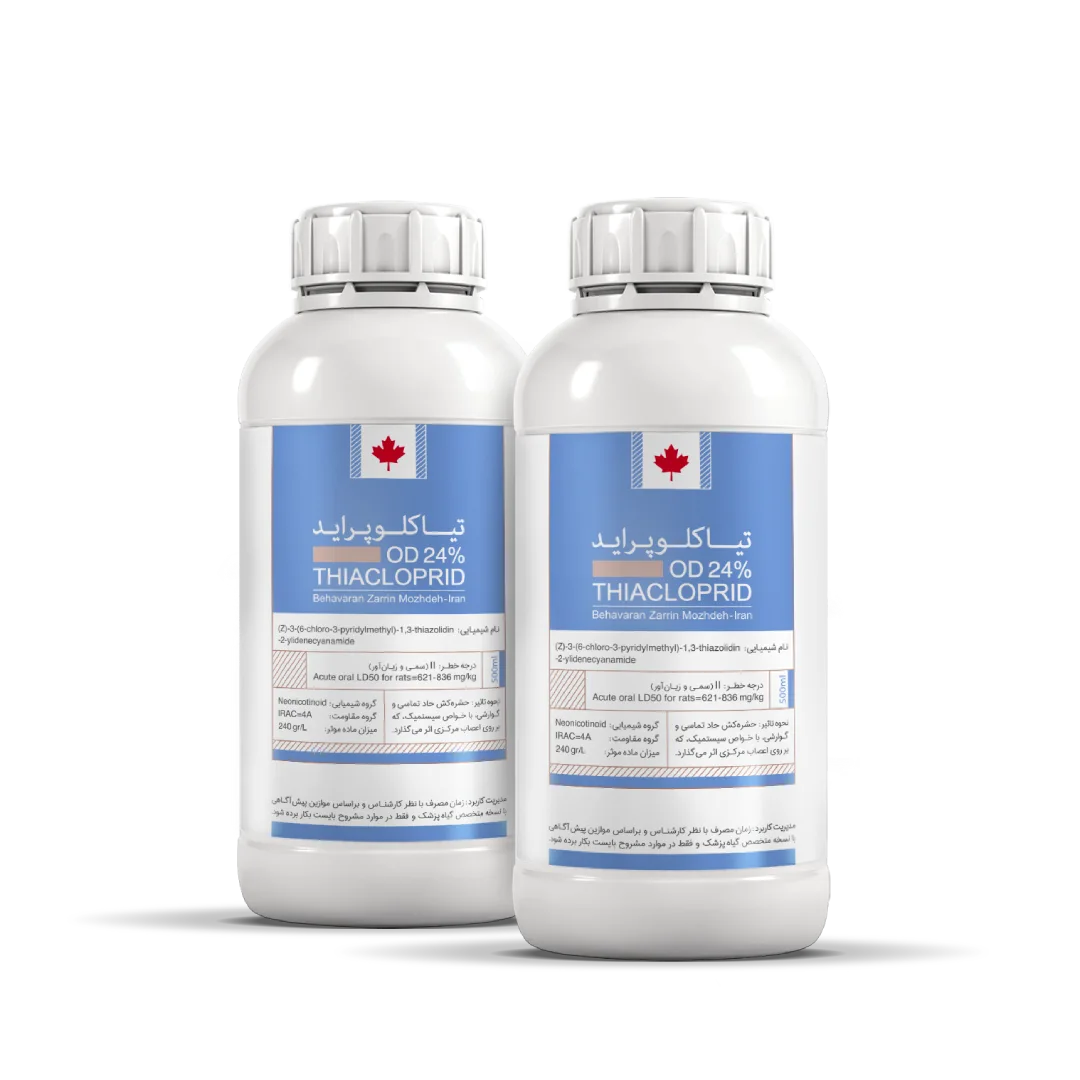
Thiacloprid Systemic Insecticide
Thiacloprid is a systemic insecticidal active ingredient belonging to the neonicotinoid group. It is used in agricultural pest-management programs against a range of susceptible sucking and chewing insect pests.
After application, Thiacloprid can be absorbed by plant tissues, allowing the active ingredient to reach insects that feed on treated plants. Its systemic properties make it particularly useful in pest-management programs where direct contact with all target insects may be difficult.
Thiacloprid acts primarily on the insect nervous system and should always be used according to the approved product label and local agricultural regulations.
What Is Thiacloprid?
Thiacloprid is a neonicotinoid insecticide designed to interfere with normal nerve transmission in susceptible insects.
It may be used in registered crop-protection programs against pests such as aphids, whiteflies, thrips, leafhoppers and other insects, depending on local registration.
Its activity against sap-feeding pests makes Thiacloprid relevant for crops where insects feed on leaves, shoots and other plant tissues.
Thiacloprid Mode of Action
Thiacloprid acts on
nicotinic acetylcholine receptors in the insect nervous system.
After exposure, the active ingredient binds to these receptors and disrupts normal nerve-signal transmission.
This continuous stimulation interferes with normal insect movement and physiological function, eventually leading to paralysis and death of susceptible pests.
Because Thiacloprid has a specific mode of action, resistance-management practices are important when it is included in repeated crop-protection programs.
Main Benefits of Thiacloprid
Thiacloprid can provide several useful characteristics in agricultural pest management:
- systemic insecticidal activity
- activity against several susceptible sucking pests
- contact and ingestion activity
- movement within treated plant tissues
- suitability for integrated pest-management programs
- useful activity where pests are difficult to reach with direct spray contact
- compatibility with resistance-management programs when properly rotated
Thiacloprid for Sucking Insect Pests
One of the main applications of
Thiacloprid is the management of susceptible sap-feeding insects.
These pests may damage crops directly by removing plant sap and indirectly by causing physiological stress or contaminating plant surfaces.
Depending on crop registration, target pests may include:
- aphids
- whiteflies
- thrips
- leafhoppers
- psyllids
- other susceptible sucking insects
Application should always be based on correct pest identification and crop-specific recommendations.
Thiacloprid for Aphid Management
Aphids are important pests of many agricultural and horticultural crops.
They feed on plant sap and may cause:
- leaf curling
- yellowing
- reduced plant vigor
- delayed growth
- honeydew accumulation
- development of sooty mold
Some aphid species may also transmit plant viruses.
Thiacloprid may be incorporated into aphid-management programs where its use is registered for the relevant crop.
Early monitoring is important because aphid populations can increase rapidly under favorable environmental conditions.
Thiacloprid for Whitefly Management
Thiacloprid may also be used against susceptible whitefly populations where registered.
Whiteflies feed mainly on the underside of leaves and remove plant sap.
Heavy infestations may contribute to:
- yellowing
- reduced plant growth
- leaf weakening
- honeydew production
- development of sooty mold
- reduced crop quality
Because whiteflies can reproduce rapidly, treatment decisions should be based on regular monitoring.
Thiacloprid for Thrips Management
Thrips are small insects that feed on leaves, flowers and developing plant tissues.
Feeding damage may result in:
- silver or bronze discoloration
- leaf distortion
- flower damage
- fruit scarring
- reduced market quality
Where locally registered,
Thiacloprid may be included in thrips-management programs together with appropriate cultural, biological and chemical control measures.
Systemic Activity of Thiacloprid
An important characteristic of
Thiacloprid is its systemic behavior.
After application, the active ingredient can be absorbed into plant tissues. This can help expose pests that feed on treated vegetation even when they are not directly contacted by spray droplets.
However, effective control still depends on factors such as:
- correct application timing
- plant growth stage
- pest population
- environmental conditions
- adequate application coverage
- compliance with the approved label
Best Time to Apply Thiacloprid
Thiacloprid should be used when pest monitoring indicates that treatment is necessary.
Treatment decisions should consider:
- pest species
- population density
- crop growth stage
- pest life stage
- presence of natural enemies
- environmental conditions
- economic treatment thresholds
Applying insecticides only when necessary helps improve pest-management efficiency and reduces unnecessary selection pressure for resistance.
Thiacloprid in Integrated Pest Management
Thiacloprid should not be considered the only method of pest control.
It can be incorporated into an
Integrated Pest Management (IPM) program that may include:
- regular crop scouting
- accurate pest identification
- conservation of natural enemies
- biological control where available
- weed and alternative-host management
- field sanitation
- use of economic thresholds
- appropriate chemical intervention
Combining several pest-management methods can provide more sustainable control than relying exclusively on insecticides.
Thiacloprid Resistance Management
Repeated use of insecticides with the same mode of action may increase the risk of resistance development.
When using
Thiacloprid, resistance-management practices may include:
- avoiding unnecessary repeated treatments
- rotating with insecticides from different mode-of-action groups
- following registered application rates
- avoiding repeated use of products with the same target site
- integrating non-chemical pest-management measures
- applying treatments only when justified by monitoring
Resistance-management recommendations should always follow current local guidance and the approved pesticide label.
Safety and Handling
Thiacloprid products should be handled and applied according to the registered product label.
During handling and application:
- wear appropriate personal protective equipment
- avoid direct contact with skin and eyes
- avoid inhaling spray mist
- prevent contamination of food and animal feed
- avoid contamination of water sources
- store the product in its original container
- keep pesticides away from children and unauthorized persons
Environmental precautions and crop-specific restrictions should always be followed.
Frequently Asked Questions About Thiacloprid
What is Thiacloprid?
Thiacloprid is a systemic neonicotinoid insecticide used in registered agricultural programs against susceptible insect pests.
Is Thiacloprid a systemic insecticide?
Yes. Thiacloprid can be absorbed into plant tissues and provide systemic insecticidal activity.
How does Thiacloprid work?
Thiacloprid acts on nicotinic acetylcholine receptors in the insect nervous system, disrupting normal nerve transmission.
What pests can Thiacloprid control?
Depending on local registration, Thiacloprid may be used against pests such as aphids, whiteflies, thrips, leafhoppers and other susceptible insects.
Can Thiacloprid be used in IPM programs?
Yes. It can be used as one part of an Integrated Pest Management program alongside monitoring, biological control and cultural pest-management practices.
Why is resistance management important with Thiacloprid?
Repeated use of insecticides with the same mode of action may select for resistant pest populations, so rotation with other insecticide groups is recommended.