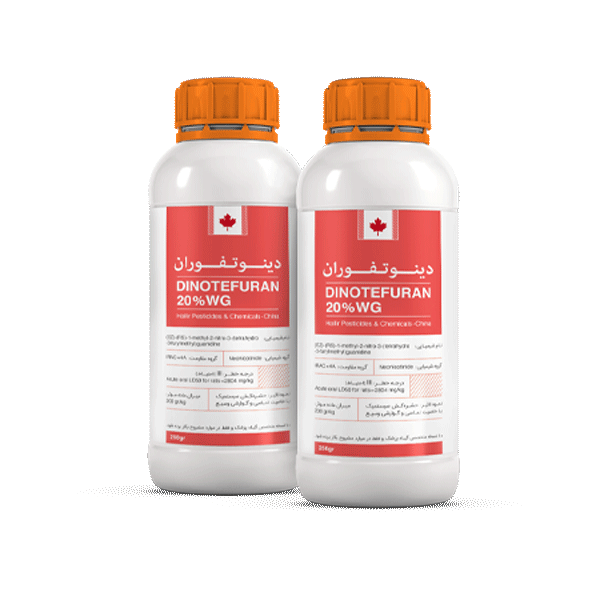
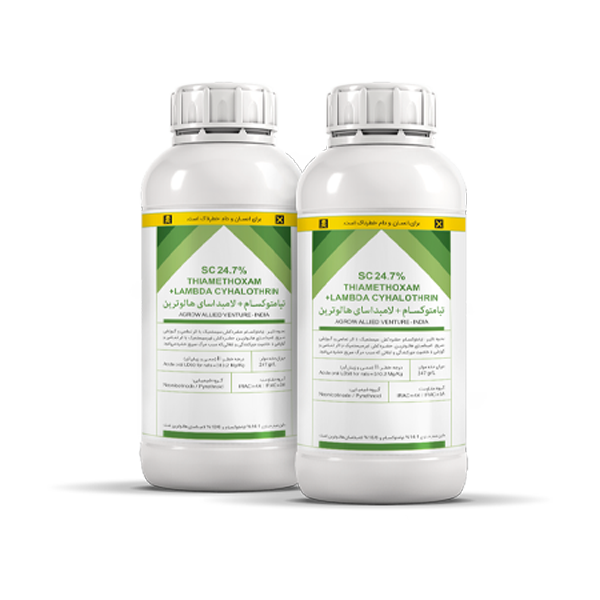
- Thiamethoxam+Lambdacyhalothrin SC24.7%
- Manufacturer: AGROW ALLIED VENTURE-INDIA
- Importer: Zarrin Daneh AmertatPackaging
- Packaging: 250 ml
- A combination of Thiamethoxam+Lambdacyhalothrin is one of the advanced and multipurpose insecticides used in agriculture and horticulture as a powerful tool to control a wide range of pests. This poison is supplied in the form of a concentrated suspension and with a formulation of 24.7% active ingredient, which includes about 14.1% thiamethoxam and 10.6% halothrin lambdasai.
- Thiamethoxam is a neonicotinoid that acts as a systemic insecticide. It is rapidly absorbed through the leaves and roots and moves inside the plant; its mechanism of action is on the nicotinic acetylcholine receptors in the central nervous system of the insect, which disrupts the transmission of nerve messages, causing paralysis and ultimately death of the insect. On the other hand, Thiamethoxam+Lambdacyhalothrin belongs to the pyrethroid family, which has non-systemic, contact and digestive insecticides. This compound penetrates nerve cells, increases the release of gamma-aminobutyric acid (GABA) and disrupts cellular sodium channels, which causes muscle paralysis and rapid death of the target insects.
- This combination insecticide is capable of controlling a variety of pests including sucking insects such as aphids, whiteflies, and thrips, as well as rodents such as aphids, fleas, beetles, and flies.
- The main applications include the protection of agricultural and horticultural crops such as greenhouse cucumbers, pistachios, cotton, tomatoes, potatoes, soybeans, peaches, and ornamental plants. Halothrin lambda is also used as an effective ectoparasite agent for livestock and poultry. Systemic and contact effect, rapid digestion: The combination of these two ingredients has made the poison have a rapid impact function and quickly kill insects.
- High efficiency with low dose: Low consumption of poison per unit area reduces costs and increases the efficiency of pest control. Simultaneous control of sucking and chewing pests: This property allows the poison to be effective against a wider range of insects.
- Delaying resistance: The combination of two substances with different mechanisms of action helps to slow the emergence of resistance in the pest population. Anti-feeding and repellent properties: In addition to being lethal, this poison reduces the feeding of pests on the plant and provides a double protective effect.