Weight

100gr

Behavaran

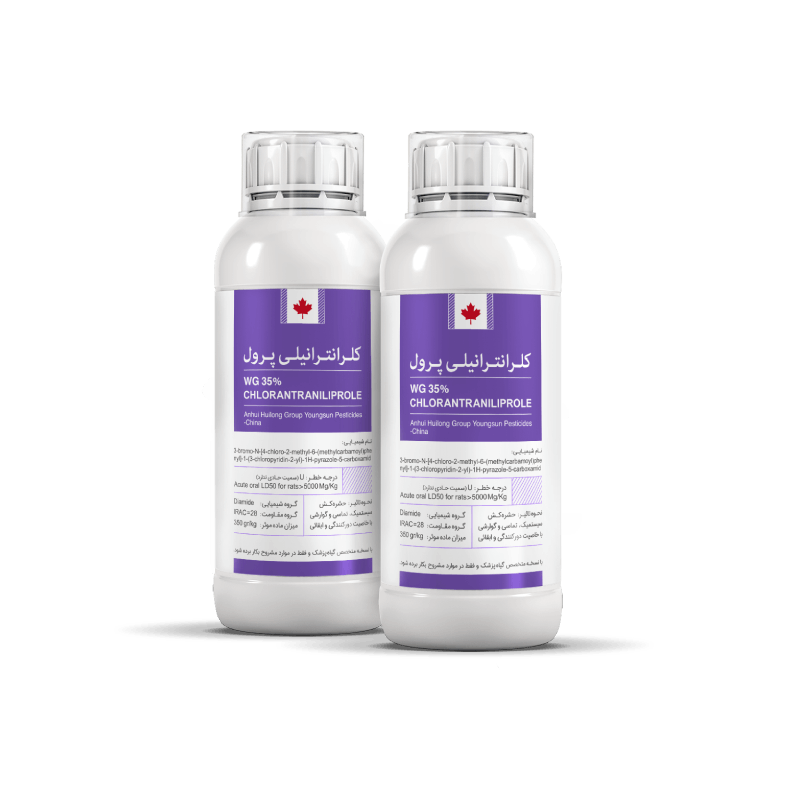
Resistance group: IRAC=28
WG35%

Chlorantraniliprole WG35%

WG35%

Zarrin Daneh Emertat

Chlorantraniliprole 35% WG, as a modern and low-risk insecticide, is an effective option for controlling important pests of fruit trees, especially walnuts. Correct and timely use of this pesticide can play an important role in reducing pest damage and increasing agricultural yields.
  • Chlorantraniliprole WG35%
 
  • Manufacturer: Anhui Huilong Group Yeungsun Pesticide-CHINA
 
  • Importer: Zarrin Daneh Amertat Company
 
  • Packaging: 100 gr
 
  • Chlorantraniliprole 35% WG is a highly effective systemic, contact and digestive insecticide from the Anthranilic Diamides group, which is widely used to control leaf-eating pests and butterfly larvae (Lepidoptera) in horticultural and agricultural crops. This poison is known as one of the best options in Integrated Pest Management (IPM) programs due to its high selective effect, good persistence and low toxicity to beneficial insects.
  • This pesticide is known as one of the best options in integrated pest management (IPM) programs due to its high selectivity, good persistence and low toxicity to beneficial insects.
  • Chlorantraniliprole is available in WG (water soluble granule) formulation and acts on pests through contact and ingestion. This fast-acting insecticide stops the pest from feeding shortly after consumption and ultimately leads to paralysis and death of the larvae.
  • Karnes period: 1 day for zucchini and 7 days for cabbage
Applications and Scope
  • This pesticide is used to control a wide range of pests, especially butterfly larvae, in the following crops: Fruit trees (such as walnuts, apples, citrus fruits) Vegetables and vegetables (tomatoes, peppers, eggplants) Crops (rice, corn, soybeans) Cotton and greenhouse crops Target pests: Appleworm- Stemworm -Leafworm Early larval stages of borers Moths Minnows
  • Activation of Ryanodine Receptors This poison, by affecting the insect’s muscular system, causes uncontrolled release of calcium in muscle cells, causing muscle contraction disorders, cessation of feeding, paralysis, and ultimately death of the pest.
Method of application  
  • The amount of application varies depending on the type of crop and pest. 0.2 to 0.3 kg/ha in crops 20 to 30 g/100 liters of water in fruit trees Spraying should be done in the early stages of pest emergence (especially the larval stage) to achieve maximum efficiency. Repeating application is recommended if necessary and with the advice of a plant protection expert.

Crops Diseases Amount of use
Fruit Trees Fruit worm 20 to 30 g/100 liters of water
Crops Tuta, Minose and Fruit worm 0.2 to 0.3 kg/ha

Additional information

Weight

100gr

Formulation

WG35%

Resistance group

IRAC=28

Chemical group

Diamide

Amount of active ingredient

350 gr/kg

  • Avoid using more than the recommended dose.
  • Wear protective clothing, gloves, a mask, and goggles when spraying.
  • Avoid direct contact of the poison with skin and eyes. Keep out of reach of children and livestock.
  • Avoid mixing with alkaline poisons.
  • Low toxicity to beneficial insects such as honeybees if used properly Low risk to mammals and birds Prevent contamination of water sources (rivers, wells, pools).
  • The residue of the toxin in the soil is biodegradable and has a low risk of bioaccumulation.

Related products