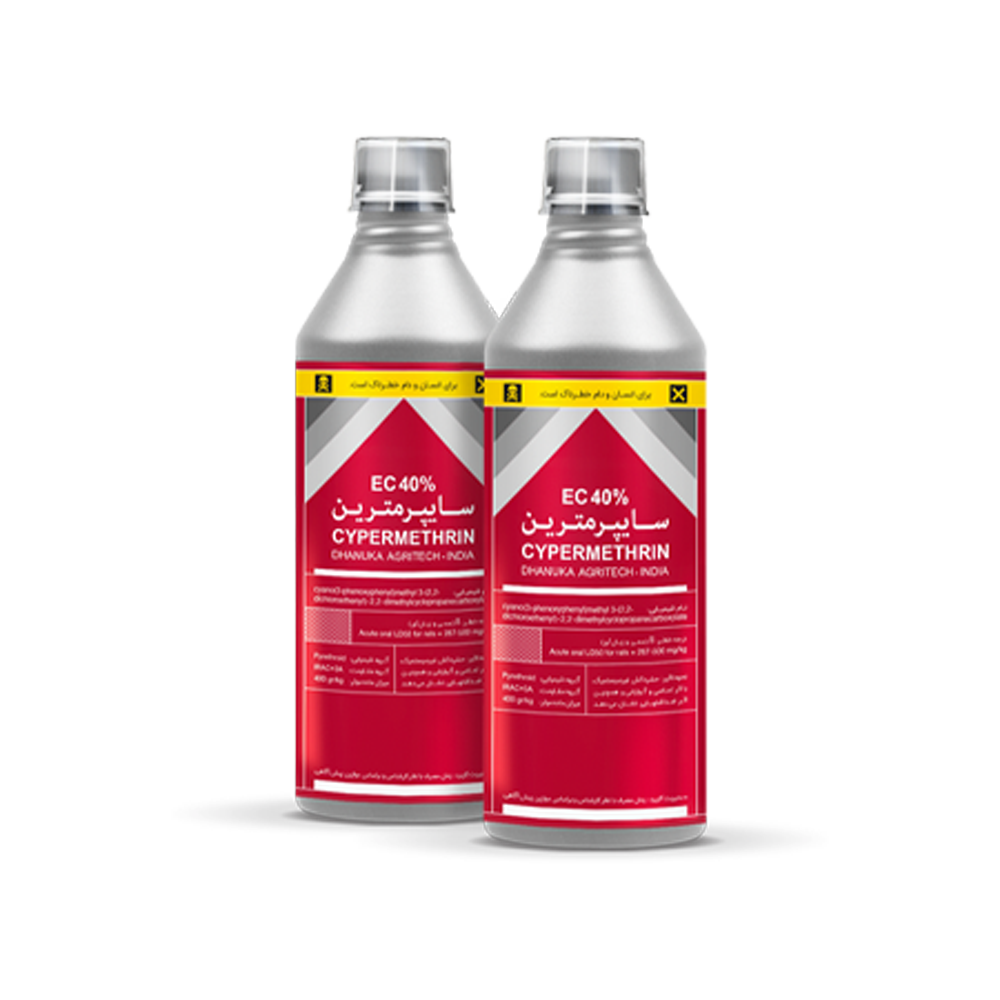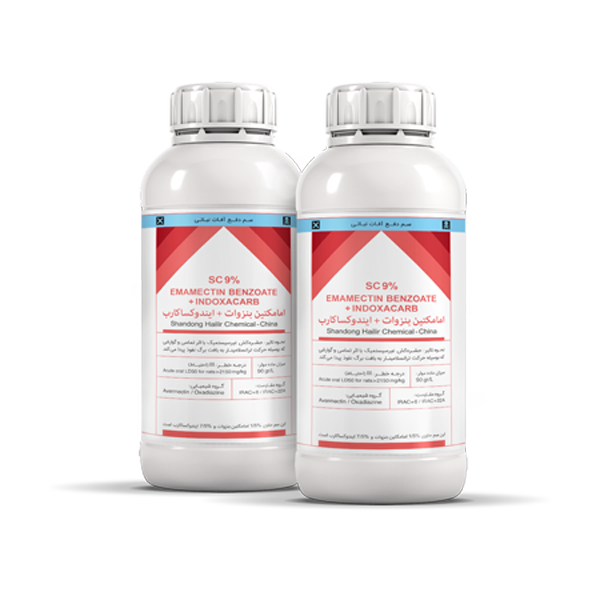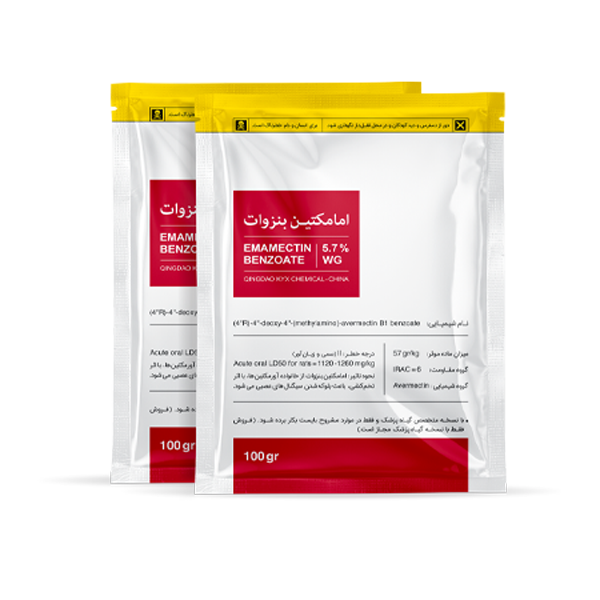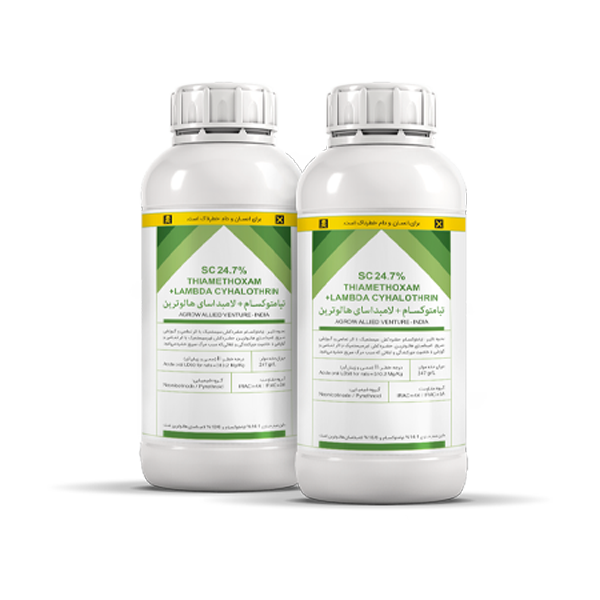
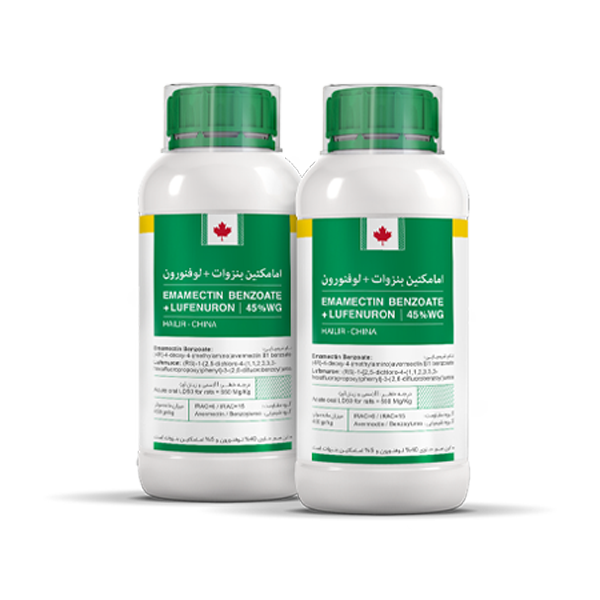
Emamectin Benzoate + Lufenuron WG45%
Manufacturer: SHANDONG HAILIR CHEMICAL- CHINA
Importer: Zarrin Daneh Amertat
Packaging 100 grams
- Emamectin Benzoate + Lufenuron is a combination of two strong insecticides with different mechanisms, which is supplied in the form of water-soluble granules (WG) and with an active ingredient percentage of about 45 to 50 percent in domestic and foreign markets. This combination effectively controls the damaging larvae of many butterflies (moths) and some other leaf-eating pests and has wide application in agriculture and horticulture.
- The insecticide emamectin benzoate is from the Avermectin family, which is extracted from the fermentation process of the bacterium Streptomyces avermitilis. By binding to gamma-aminobutyric acid (GABA) receptors and glutamate-chlorine receptors in the insect nervous system, it blocks nerve signals, gradually paralyzes and ultimately kills pests.
- Emamectin benzoate has a contact and digestive effect, its effect is relatively rapid and penetrates the plant in a limited systemic way. On the other hand, lufenuron is an insect growth regulator (IGR) from the benzoyl urea group that inhibits chitin synthesis in insect larvae, preventing molting (larva to pupa) and the normal development of pests.
- This mechanism causes the gradual death of pests and also has oviparous properties; thus, it stops the life cycle of the pest and controls its population. Lufenuron is also capable of controlling pests resistant to phosphorus, carbamate, and pyrethroid pesticides. Uses This pesticide is particularly effective in controlling leaf-eating pests and damaging butterflies such as the cabbage moth (Plutella xylostella), various moths, leafminers, cocoon worms, root-eating insects, and some mites. It is also used in many crops including cabbage, tomatoes, strawberries, potatoes, and other vegetables, fruit trees, and other garden plants.
- The time of application is usually early in the pest larval period and before the pest population surges. The time interval between two sprayings is at least 7 days, and more than 3 applications per growing season are not recommended.
- The best time to spray is often in the evening or early morning to protect the effect of the poison and prevent contact with honeybees and beneficial insects.