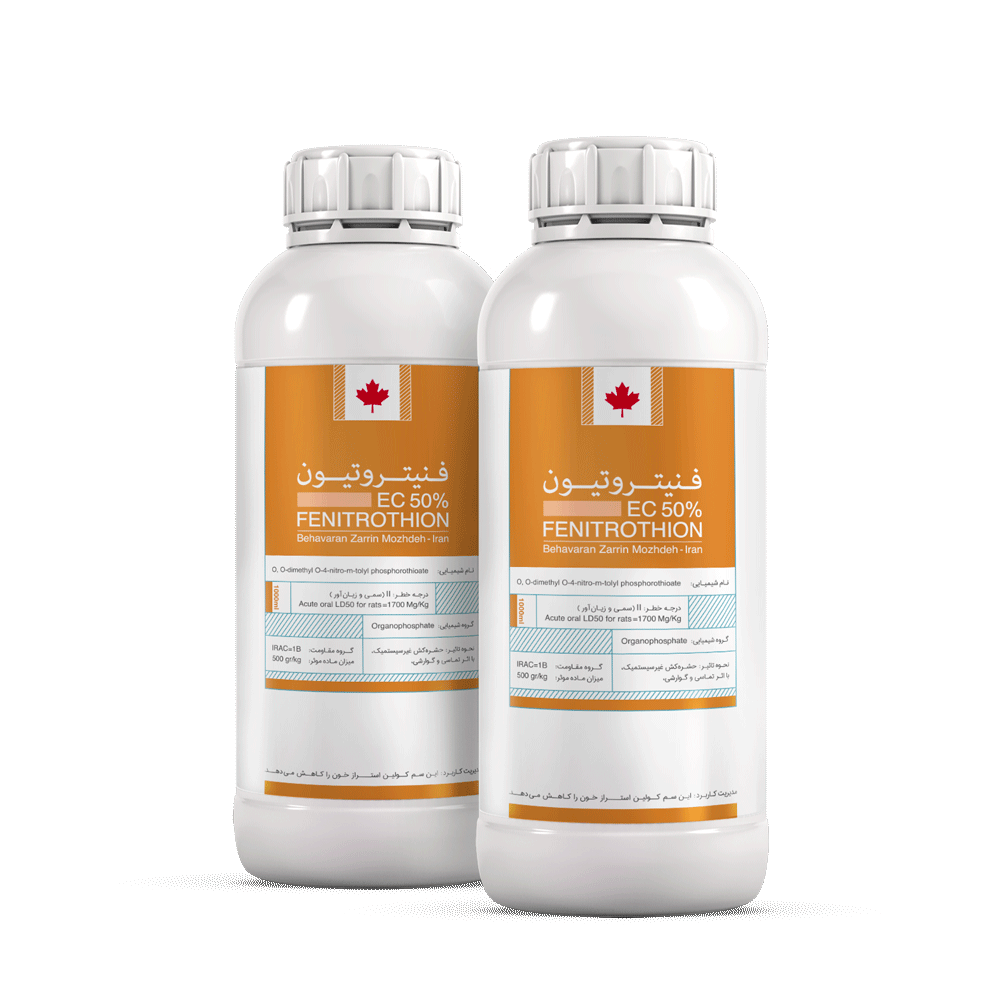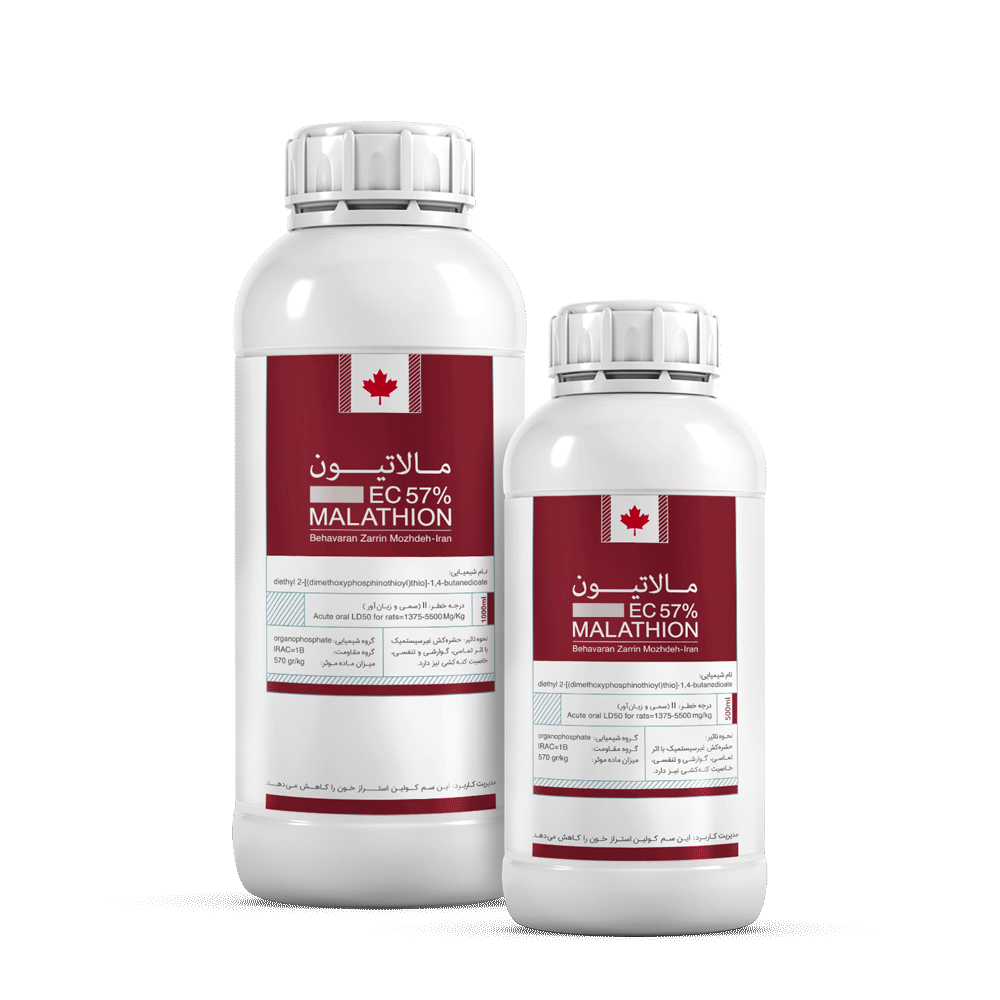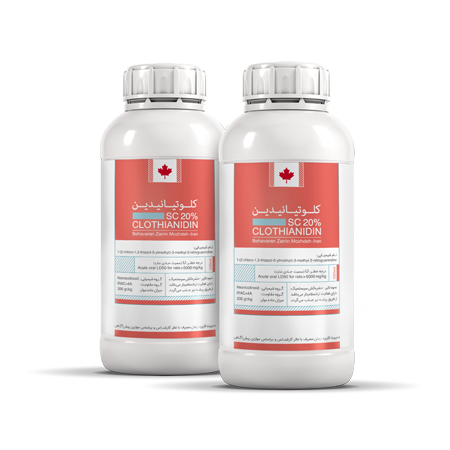
Clothianidin is a systemic insecticide from the neonicotinoid group. With both contact and stomach action, it effectively controls sucking pests such as aphids, psyllids, and whiteflies, and is widely used in modern agriculture.
Clothianidin is a systemic insecticide from the neonicotinoid group. With both contact and stomach action, it effectively controls sucking pests such as aphids, psyllids, and whiteflies, and is widely used in modern agriculture.
Thiodicarb (Carovin) – Behavaran | 1-Liter Packaging
Thiodicarb 53% is a well-known insecticide and molluscicide from the oxime carbamate group, widely used in professional agriculture to control a broad range of leaf-feeding and stem-boring pests.
This product acts through a dual mode of action (contact and ingestion) and is commonly applied in various pest management programs.
Target Pests and Crops
| Product | Pests | Consumption rate |
|---|---|---|
| Cotton | Cotton Bollworm | 1.5 liters per hectare |
| Weight | 1000ml |
|---|---|
| Formulation | SC53% |
| Resistance group | IRAC=1A |
| Chemical group | Oxime Carbamate |
| Amount of active ingredient | 530gr/L |