Introduction to Humic Acid in Agriculture
Modern agriculture increasingly depends on solutions that improve nutrient efficiency, support soil health and help crops perform under challenging growing conditions. One of the most widely used natural soil-enhancing inputs is humic acid. Farmers, growers and agricultural professionals use humic-based products to improve root activity, increase nutrient availability and support more balanced plant development.
The growing interest in humic acid benefits is closely connected to the need for more efficient fertilizer programs. Conventional fertilizers supply essential nutrients, but their performance depends heavily on soil conditions, water quality, root health and nutrient availability. Humic acid for plants can help improve the root-zone environment, allowing crops to use applied nutrients more effectively.
The main benefits of humic acid are not limited to one specific crop or production system. Humic substances may be used in field crops, orchards, vegetables, greenhouses and horticultural production. Their value is especially noticeable in soils with low organic matter, weak structure, poor water retention or limited nutrient availability.
In practical agriculture, humic acid for soil is commonly applied through fertigation, soil treatment, irrigation systems, seed treatment or root-zone applications. Depending on the formulation, crop and production system, it may also be incorporated into fertilizer programs to support stronger roots and more efficient nutrient management.
However, humic acid fertilizer should not be viewed as a complete replacement for NPK fertilizers or micronutrients. Its main role is to improve the soil environment and support the plant’s ability to access and use nutrients already present in the soil or supplied through fertilization.
What Is Humic Acid?
Humic acid is a group of naturally occurring organic compounds formed during the long-term decomposition of plant and microbial residues. It is one of the major components of humic substances found in soil organic matter, peat, lignite and materials such as leonardite.
Unlike simple fertilizers that directly provide a defined amount of nitrogen, phosphorus or potassium, humic acid mainly works by influencing the chemical, physical and biological properties of soil. It can interact with minerals, nutrients, water and soil particles, creating a more favorable environment for plant roots.
From an agricultural perspective, humic acid for plants is valued because it may help improve nutrient availability, root development and soil productivity. Its complex molecular structure contains functional groups capable of binding nutrients and interacting with soil particles.
The quality and performance of a humic acid fertilizer can vary depending on:
- The source of the raw material
- The concentration of humic substances
- The extraction method
- The percentage of soluble humates
- The presence of fulvic acid
- The final product formulation
- The pH and solubility of the product
For this reason, growers should evaluate product specifications rather than choosing a product only because the label includes the term humic acid.
How Humic Acid Is Formed
Humic acid is formed through a natural process called humification. During this process, plant residues, roots, leaves and microbial materials gradually decompose in the soil. Microorganisms break down these organic materials and transform them into increasingly stable organic compounds.
Over time, this process produces a complex mixture of humic substances. These substances are more resistant to rapid decomposition than fresh organic matter, which allows them to remain active in the soil for longer periods.
The formation process generally includes:
- Breakdown of fresh plant and microbial residues
- Microbial decomposition of organic compounds
- Transformation of simple molecules into complex organic structures
- Stabilization of humic substances in the soil
Some commercial humic acid fertilizer products are extracted from leonardite, a naturally oxidized form of lignite that is rich in humic substances. Leonardite-based materials are often used because they can contain relatively high concentrations of humic compounds.
The effectiveness of commercial products depends not only on their source but also on how the material is processed. A high-quality product should have appropriate solubility and should be suitable for the intended application method, especially when used through drip irrigation or fertigation systems.

Humic Acid, Fulvic Acid and Humins
Humic substances are commonly divided into three main groups:
- Humic acid
- Fulvic acid
- Humins
These groups differ mainly in molecular size, solubility and behavior in soil.
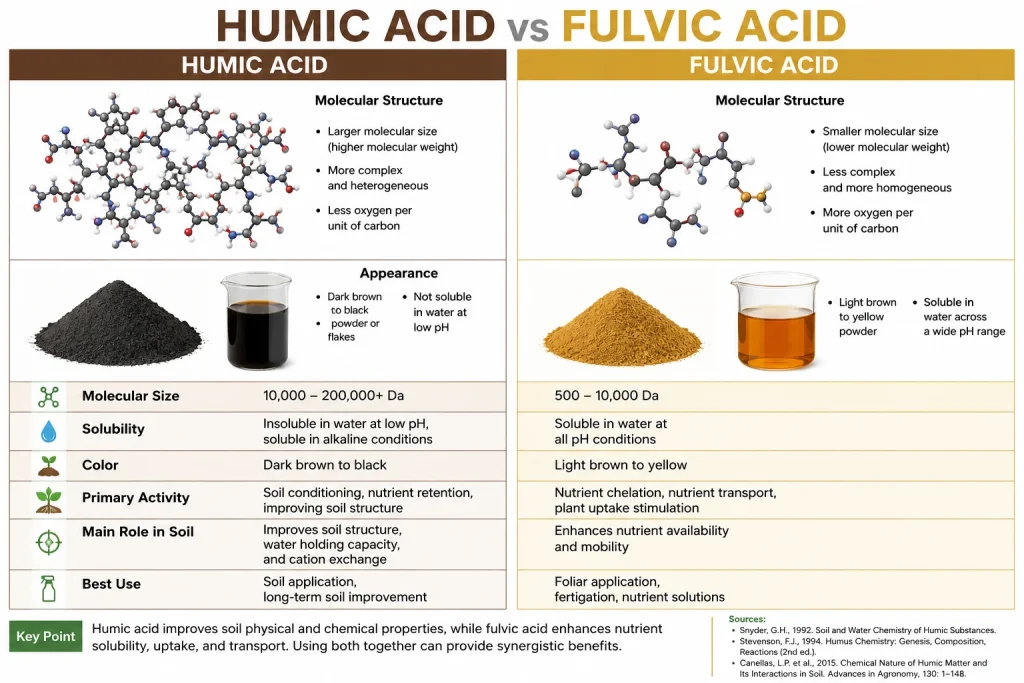
Humic acid generally has a larger molecular structure than fulvic acid. It is soluble under alkaline conditions but becomes less soluble in strongly acidic conditions. Its main agricultural value is closely connected to soil conditioning, nutrient retention and root-zone improvement.
Fulvic acid usually has a smaller molecular size and remains soluble across a wider pH range. Because of its smaller molecular structure, it may move more easily in soil water and can interact effectively with certain nutrients.
Humins are the most stable and least soluble fraction of humic substances. They remain closely associated with soil particles and contribute to long-term soil organic matter.
The difference between humic acid vs fulvic acid is important when selecting a product. Humic acid is often emphasized for soil improvement and root-zone management, while fulvic acid is frequently used where greater solubility and nutrient mobility are desired.
In many agricultural products, humic acid and fulvic acid are combined. This combination may provide both soil-conditioning effects and improved nutrient availability. However, the actual result depends on product quality, concentration, application method and field conditions.
Is Humic Acid a Fertilizer or a Soil Conditioner?
Humic acid is often marketed as a fertilizer, but technically it functions more accurately as a soil conditioner, nutrient enhancer or biostimulant-related input. It does not usually supply enough primary nutrients to replace a complete fertilization program.
A conventional fertilizer supplies measurable amounts of nutrients such as:
- Nitrogen
- Phosphorus
- Potassium
- Calcium
- Magnesium
- Micronutrients
By contrast, humic acid fertilizer mainly improves the conditions that influence how these nutrients behave in the soil and how efficiently roots absorb them.
Therefore, the answer is:
Humic acid can be included in a fertilizer program, but its primary role is to improve soil conditions and nutrient-use efficiency rather than replace essential fertilizers.
The most effective use of humic acid for plants is usually as part of an integrated nutrition program. It may be applied alongside NPK fertilizers, micronutrients, organic fertilizers and irrigation management.
This distinction is important because unrealistic expectations can lead to poor results. Humic acid benefits are usually greatest when the product is used correctly, at the proper growth stage and in combination with a balanced crop nutrition plan.
How Does Humic Acid Work in Soil and Plants?
The effects of humic acid are based on several connected processes in the soil–root system. Rather than working through one single mechanism, humic substances influence soil structure, nutrient chemistry, water behavior, microbial activity and root development.
The main mechanisms behind humic acid benefits for plants include:
- Interaction with soil particles
- Chelation and complexation of nutrients
- Improvement of nutrient availability
- Support for root growth
- Better root-zone moisture conditions
- Increased activity of beneficial soil microorganisms
- Improved fertilizer-use efficiency
The response can vary depending on soil type, crop, climate, irrigation system and product quality.
Interaction with Soil Particles
One of the most important humic acid benefits for soil is its interaction with clay minerals, organic matter and soil aggregates. Humic molecules contain charged functional groups that can bind to soil particles and influence soil structure.
In some soils, this interaction may help improve aggregation. Better soil aggregation can create a more stable arrangement of soil particles, which may support:
- Better aeration
- Improved water infiltration
- Reduced surface crusting
- More favorable root penetration
- Lower compaction risk
- Better moisture distribution
In sandy soils, humic acid for soil may help improve nutrient retention and water-holding capacity. Sandy soils often lose nutrients quickly because of their low cation exchange capacity and weak structure.
In clay soils, humic substances may help improve aggregation and porosity, although results depend on soil composition and management. Humic acid does not instantly change soil texture, but it can support gradual improvements in the root-zone environment.
These effects are especially relevant in intensively cultivated soils where organic matter is low and repeated fertilizer applications have not been accompanied by sufficient organic inputs.
Nutrient Chelation and Availability
Another major mechanism behind humic acid benefits is its ability to interact with mineral nutrients. Humic molecules contain functional groups that can bind certain nutrient ions and form soluble or semi-stable complexes.
This process is often referred to as chelation or complexation.
Through these interactions, humic acid for plants may help improve the availability of nutrients such as:
- Iron
- Zinc
- Manganese
- Copper
- Calcium
- Magnesium
- Phosphorus-related compounds
This does not mean humic acid creates nutrients. Instead, it may help keep some nutrients in forms that are more accessible to plant roots or less likely to become unavailable.
For example, in certain alkaline soils, micronutrients such as iron and zinc may become difficult for plants to absorb. Humic substances may support nutrient mobility and availability, although severe deficiencies may still require specific chelated fertilizers.
Humic acid for nutrient uptake is particularly valuable when combined with an appropriate fertilization program. By supporting nutrient retention and root activity, humic acid may improve fertilizer-use efficiency and reduce avoidable nutrient losses.
However, chelation performance depends on several factors:
- Soil pH
- Water pH
- Nutrient form
- Humic acid concentration
- Product quality
- Application timing
- Compatibility with other fertilizers
For this reason, tank-mix compatibility and small-scale testing are recommended before combining humic acid with concentrated fertilizers.
Effects on Plant Roots and Metabolism
The most visible response to humic acid for plants is often improved root development. Humic substances may influence root elongation, root branching and the formation of fine feeder roots.
A stronger root system provides the plant with a larger effective area for absorbing:
- Water
- Nitrogen
- Phosphorus
- Potassium
- Micronutrients
The relationship between humic acid and root growth is one of the main reasons growers apply humic products during transplanting, seedling establishment and early vegetative development.
Humic substances may also influence certain physiological and metabolic processes in plants. Research has associated humic substances with changes in enzyme activity, membrane transport and root-cell activity. However, the size of the response depends on crop species, concentration and environmental conditions.
Excessive application does not necessarily produce stronger results. A product should be used according to its formulation, label recommendations and crop requirements.
The key practical effect is that healthier roots may support more balanced shoot development. For this reason, humic acid for plant growth should be understood as a root-zone support tool rather than a direct growth hormone or a substitute for balanced fertilization.
Main Humic Acid Benefits for Plants
The main humic acid benefits for plants are connected to root growth, nutrient use, establishment and overall plant vigor. These advantages are most likely when humic acid is used in soils or production systems where root activity or nutrient availability is limited.
Improved Root Development
Humic acid for root growth is one of the most important agricultural applications of humic products. It may promote the development of a more extensive root system, including a greater number of fine roots and root hairs.
A well-developed root system can help plants:
- Explore a larger soil volume
- Absorb nutrients more efficiently
- Access water more effectively
- Establish faster after transplanting
- Recover better from root-zone stress
- Support stronger vegetative growth
This benefit is particularly important during early crop establishment. Seedlings and transplants with limited root systems are more vulnerable to drought, salinity and nutrient stress.
Applying humic acid for plants near the root zone may help create more favorable conditions for root development. In drip-irrigated systems, humic acid is often delivered through fertigation to concentrate its effects around the active root zone.
However, root response depends on product concentration and correct application. Extremely high concentrations may not improve results and could create compatibility or salinity problems in certain formulations.
Better Nutrient Uptake
One of the most commercially important benefits of humic acid is improved nutrient-use efficiency. Humic acid may help nutrients remain available in the root zone and may support stronger root absorption.
This can be particularly useful for nutrients that are easily fixed, leached or made unavailable under unfavorable soil conditions.
Better nutrient uptake may result from:
- Improved root development
- Greater root surface area
- Better nutrient mobility
- Chelation of certain micronutrients
- Improved soil cation exchange capacity
- Reduced nutrient losses
- Increased microbial activity
The use of humic acid for nutrient uptake does not eliminate the need for soil testing or crop-specific fertilization. Instead, it may improve the efficiency of an existing nutrition program.
For example, combining humic acid with NPK fertilizers may help plants make more effective use of applied nutrients. The exact response depends on soil fertility, irrigation water and the nutrient formulation.
Growers should avoid the assumption that humic acid automatically corrects every deficiency. A diagnosed iron, zinc or nitrogen deficiency may still require a targeted fertilizer.
Enhanced Plant Growth and Vigor
Improved root development and nutrient uptake can contribute to stronger overall crop performance. Humic acid for plant growth may support more uniform vegetative development, better leaf formation and improved plant vigor.
Possible visible responses include:
- Faster crop establishment
- More uniform growth
- Improved leaf color
- Stronger stems
- Greater canopy development
- Better recovery after stress
These effects are indirect and depend on the plant receiving adequate water, nutrients and appropriate environmental conditions.
The humic acid benefits for plants are therefore best understood as support for natural plant processes. Humic acid does not force growth independently; it improves the conditions that allow the plant to grow more efficiently.
In commercial production, improved uniformity can be especially valuable. A more uniform crop stand can simplify irrigation, fertilization, crop protection and harvest management.
Improved Seed Germination and Early Growth
Humic substances may also support seed germination and early seedling development. Applications may be made through seed treatment, soil incorporation, irrigation or root-zone treatment, depending on the crop and formulation.
The potential benefits include:
- Faster or more uniform emergence
- Improved early root formation
- Stronger seedling establishment
- Better early nutrient uptake
- Increased tolerance to mild establishment stress
The use of humic acid for plants during early growth can be especially useful in soils with low organic matter or weak biological activity.
However, germination results depend strongly on concentration. Seed treatment solutions that are too concentrated may negatively affect germination or create salt-related stress. Application rates should therefore follow product instructions and crop-specific recommendations.
In practical crop management, humic acid is most effective when combined with:
- High-quality seed
- Suitable soil moisture
- Proper planting depth
- Balanced starter nutrition
- Good soil temperature
- Appropriate disease management
For this reason, humic acid benefits should be viewed as part of a complete crop establishment strategy rather than a stand-alone solution.
Increased Chlorophyll Formation and Photosynthesis
One of the important humic acid benefits for plants is its potential to support chlorophyll formation and photosynthetic activity. Chlorophyll is essential for capturing light energy and converting it into chemical energy that plants use for growth.
By improving nutrient availability and root activity, humic acid for plants may indirectly support the uptake of elements involved in chlorophyll synthesis, particularly nitrogen, magnesium and iron. When these nutrients are more available to the root system, leaves may maintain better color and stronger physiological activity.
Improved chlorophyll status can contribute to:
- Better light capture
- More active photosynthesis
- Stronger vegetative growth
- Improved carbohydrate production
- Better energy supply for flowering and fruit development
The effect of humic acid on photosynthesis is usually connected to the broader improvement of root-zone conditions. Humic substances may also influence certain metabolic and enzymatic processes involved in plant growth, although the response varies according to crop species, product concentration and environmental conditions.
For this reason, humic acid for plant growth should be used as part of a balanced nutrition program rather than as a replacement for essential nutrients.
Better Flowering, Fruit Set and Crop Quality
Strong root development and efficient nutrient uptake during the vegetative stage can have important effects later in the crop cycle. One of the practical benefits of humic acid is its potential to support flowering, fruit set and final crop quality.
Plants with healthy roots and balanced nutrition are generally better prepared to support the high nutrient demand associated with flowering and fruit development. Humic acid for plants may help by improving nutrient-use efficiency and maintaining stronger root activity during these critical stages.
Potential benefits may include:
- More uniform flowering
- Better fruit set under suitable growing conditions
- Improved fruit development
- Better crop uniformity
- Improved size and marketable quality
- More efficient nutrient use during reproductive growth
However, humic acid should not be considered a direct flowering stimulant. Flowering and fruit set are influenced by genetics, temperature, irrigation, pollination, nutrient balance and crop management.
The most reliable way to use a humic acid fertilizer is to include it in a complete fertility program that also provides adequate phosphorus, potassium, calcium, boron and other nutrients required for reproductive development.
Humic Acid Benefits for Soil Health
The humic acid benefits for soil are among the main reasons humic substances are widely used in commercial agriculture. Healthy soil must provide not only nutrients, but also suitable structure, aeration, moisture and biological activity.
Humic acid for soil can influence several physical, chemical and biological properties at the same time. These effects can improve the root-zone environment and help crops use water and nutrients more efficiently.
Improved Soil Structure and Aggregation
One of the major humic acid benefits for soil is improved aggregation. Soil aggregates are groups of mineral particles and organic materials that bind together to form stable structural units.
Humic substances can interact with clay particles, organic matter and mineral surfaces, helping form more stable aggregates. Better aggregation can improve:
- Soil porosity
- Root penetration
- Water infiltration
- Air movement
- Resistance to crust formation
- Soil workability
In compacted or poorly structured soils, improved aggregation can create a more favorable environment for root growth.
Humic acid for soil structure does not change soil texture itself. A clay soil remains clay, and a sandy soil remains sandy. Instead, humic substances may improve how soil particles are arranged and how the root zone functions.
Increased Water-Holding Capacity
Another valuable humic acid benefit is improved moisture retention in the root zone.
Humic substances contain many functional groups that can interact with water and soil particles. This can help the soil hold more plant-available moisture, particularly in soils with low organic matter.
Humic acid for water retention can be especially useful in:
- Sandy soils
- Dryland farming
- Arid and semi-arid regions
- High-temperature production systems
- Crops with frequent irrigation cycles
Better water-holding capacity can reduce rapid drying of the root zone and may help plants maintain more stable water availability between irrigation events.
However, humic acid cannot replace irrigation. Its role is to improve soil-water management, not to eliminate the plant’s water requirement.
Improved Cation Exchange Capacity
Cation exchange capacity, or CEC, refers to the ability of soil to retain positively charged nutrients such as potassium, calcium, magnesium and ammonium.
Organic matter has a strong influence on CEC, and humic substances contain many negatively charged functional groups that can interact with nutrient cations.
One of the important humic acid benefits for soil is therefore improved nutrient retention.
Higher effective nutrient retention can help keep nutrients in the root zone and make them more available for plant uptake.
This is particularly important in sandy soils, which generally have lower nutrient-holding capacity and are more vulnerable to nutrient losses.
By supporting CEC, humic acid fertilizer may improve the efficiency of fertilization programs and reduce the risk of some nutrients moving rapidly below the active root zone.
Reduced Nutrient Leaching
Nutrient leaching is a major problem in many agricultural systems, particularly where soils are sandy, irrigation is intensive or rainfall is high.
Nutrients such as nitrate, potassium and certain micronutrients may move below the root zone before plants can use them.
Through its effects on soil structure, nutrient binding and cation exchange, humic acid for soil may help reduce some nutrient losses.
The potential benefits include:
- Better nutrient retention
- Improved fertilizer-use efficiency
- More stable nutrient availability
- Reduced movement of certain nutrients through the soil profile
This does not mean humic acid fertilizer completely prevents leaching. Proper irrigation scheduling, split fertilizer applications and soil testing remain essential.
Humic acid works best as part of an integrated nutrient-management system.
Increased Soil Microbial Activity
Healthy agricultural soils contain complex populations of bacteria, fungi and other microorganisms that contribute to nutrient cycling, organic matter decomposition and root-zone health.
One of the biological benefits of humic acid is its ability to support a more active soil environment.
Humic substances may provide carbon compounds and improve soil conditions that are favorable for beneficial microorganisms.
Increased microbial activity may support:
- Organic matter decomposition
- Nutrient mineralization
- Phosphorus availability
- Root-microbe interactions
- Soil biological diversity
The response depends strongly on soil temperature, moisture, organic matter content and management practices.
Humic acid for soil health is therefore especially useful when combined with practices such as compost application, crop residues, cover crops and reduced soil disturbance.
Benefits in Sandy, Clay and Saline Soils
The humic acid benefits for soil vary according to soil type.
In sandy soils, the main benefits are usually related to:
- Better moisture retention
- Improved nutrient-holding capacity
- Reduced nutrient losses
- Improved root-zone stability
In clay soils, humic acid for soil may support:
- Better aggregation
- Improved aeration
- Increased porosity
- Better water infiltration
- Easier root penetration
In saline soils, humic substances may help improve the root-zone environment and nutrient balance, but their role should not be overstated.
Humic acid for saline soil may support root growth and nutrient availability under moderate salinity stress, especially when combined with suitable irrigation and soil-management practices.
It does not remove salts from the soil. Where salinity is severe, proper drainage, water-quality management and leaching of soluble salts remain essential.
Humic Acid and Plant Stress Tolerance
Another major area of interest is the relationship between humic acid and plant stress tolerance.
Plants frequently face environmental and nutritional stresses that reduce root activity, photosynthesis and yield. Humic substances may help plants maintain better physiological performance under some of these conditions.
The most commonly discussed areas include drought, heat, salinity, transplanting stress and nutrient deficiency.
Drought and Heat Stress
Drought and high temperatures can reduce cell expansion, photosynthesis, nutrient uptake and root activity.
One of the potential humic acid benefits for plants is improved performance under water-limited conditions.
This effect may be linked to:
- Stronger root systems
- Greater soil water retention
- Improved nutrient uptake
- Better root-zone conditions
- More efficient water use
Humic acid for drought stress may help plants tolerate moderate stress more effectively, particularly when applied before severe stress develops.
However, humic acid cannot compensate for prolonged water shortage or extreme heat. Irrigation management remains the most important tool for preventing drought damage.
Salinity Stress
High salt concentrations in soil or irrigation water can interfere with water absorption and nutrient balance.
Humic acid for saline soil may support plants by improving root activity and helping maintain nutrient availability under stressful conditions.
Potential benefits include:
- Better root development
- Improved potassium and micronutrient uptake
- More balanced nutrient availability
- Improved soil aggregation
- Better moisture conditions around roots
Humic substances may also help reduce some of the secondary effects of salinity, but they do not physically remove sodium or salts from the soil.
Salinity management should also include drainage, irrigation-water analysis, appropriate leaching and crop selection.
Transplanting and Root Stress
Transplanting can temporarily damage roots and reduce the plant’s ability to absorb water and nutrients.
For this reason, humic acid for root growth is often used during transplant establishment in vegetables, orchards and greenhouse crops.
Application around the root zone may help support:
- Faster root regeneration
- Development of new feeder roots
- Improved nutrient uptake
- Better early establishment
- Reduced recovery time after transplanting
Humic acid may be applied through irrigation, fertigation or root-zone drenching, depending on the product formulation.
Correct concentration is important because newly transplanted plants can be sensitive to high salt levels or concentrated fertilizer solutions.
Nutrient Deficiency Stress
Nutrient deficiencies often develop because nutrients are either absent from the soil or present in forms that plants cannot easily absorb.
Humic acid for nutrient uptake may help in situations where nutrient availability is limited by soil chemistry or poor root development.
Potential advantages include:
- Improved micronutrient availability
- Better root exploration
- Increased nutrient retention
- Improved fertilizer efficiency
- Greater root membrane activity
However, humic acid cannot replace a deficient nutrient.
For example, if soil testing confirms a severe zinc deficiency, a zinc fertilizer is still required. Humic substances may help improve the efficiency of that fertilizer, but they are not a substitute for it.
Humic Acid Benefits for Different Crops
The humic acid benefits for plants are relevant across a wide range of crops, but the practical effects depend on the crop, growth stage, soil and application method.
Humic Acid for Field Crops
Humic acid for field crops can be used in cereals, maize, soybean, cotton, sugar beet and many other large-scale crops.
Common objectives include:
- Stronger early root development
- More uniform crop establishment
- Improved nutrient-use efficiency
- Better drought tolerance
- Improved soil condition
In field crops, humic acid may be applied as a seed treatment, starter application, soil treatment or through irrigation where fertigation systems are available.
It is often combined with NPK fertilization to improve the overall efficiency of the nutrition program.
Humic Acid for Fruit Trees and Orchards
Perennial crops can benefit significantly from improved root-zone conditions.
Humic acid for fruit trees may be used in orchards to support:
- New root growth
- Nutrient availability
- Soil structure
- Moisture retention
- Tree establishment
- Fruit development
It may be particularly valuable in mature orchards with low soil organic matter or compacted root zones.
Applications are commonly made through drip irrigation, soil drenching or fertigation.
For fruit trees, humic acid should be integrated with calcium, potassium, micronutrients and balanced seasonal fertilization.
Humic Acid for Vegetables
Vegetable crops often have high nutrient demand and short production cycles.
Humic acid for vegetables may help improve early establishment, root activity and nutrient uptake.
Possible benefits include:
- Stronger seedlings
- Faster establishment
- Improved root growth
- More uniform vegetative development
- Better nutrient efficiency
- Improved tolerance to mild environmental stress
Vegetables grown under intensive fertigation programs can especially benefit from products that improve root-zone nutrient management.
Humic Acid for Greenhouse Crops
Greenhouse crops are commonly grown under intensive irrigation and fertilization, which makes nutrient efficiency and root health especially important.
Humic acid for greenhouse crops may be used in tomatoes, cucumbers, peppers, strawberries and other protected crops.
Potential benefits include:
- Improved root-zone activity
- More efficient fertigation
- Better micronutrient availability
- Stronger transplant establishment
- Improved plant vigor
- Better crop uniformity
Because greenhouse systems often use drip irrigation, product solubility is particularly important. Poorly soluble humic products may clog emitters or create sediment.
For this reason, growers should select formulations specifically suitable for fertigation.
Humic Acid for Turf and Ornamental Plants
Humic acid for plants is also widely used in turfgrass, nurseries, landscaping and ornamental production.
In these systems, humic acid may support:
- Root density
- Soil structure
- Water retention
- Nutrient efficiency
- Improved plant color
- Recovery from heat or drought stress
For turf, better soil structure and moisture retention can help maintain more uniform growth and reduce stress between irrigation cycles.
For ornamental plants and nursery production, humic acid may support stronger root development and transplant establishment.
Liquid vs Powder Humic Acid
Choosing between liquid humic acid and powder humic acid depends on the application method, crop system, water quality and the concentration required by the grower.
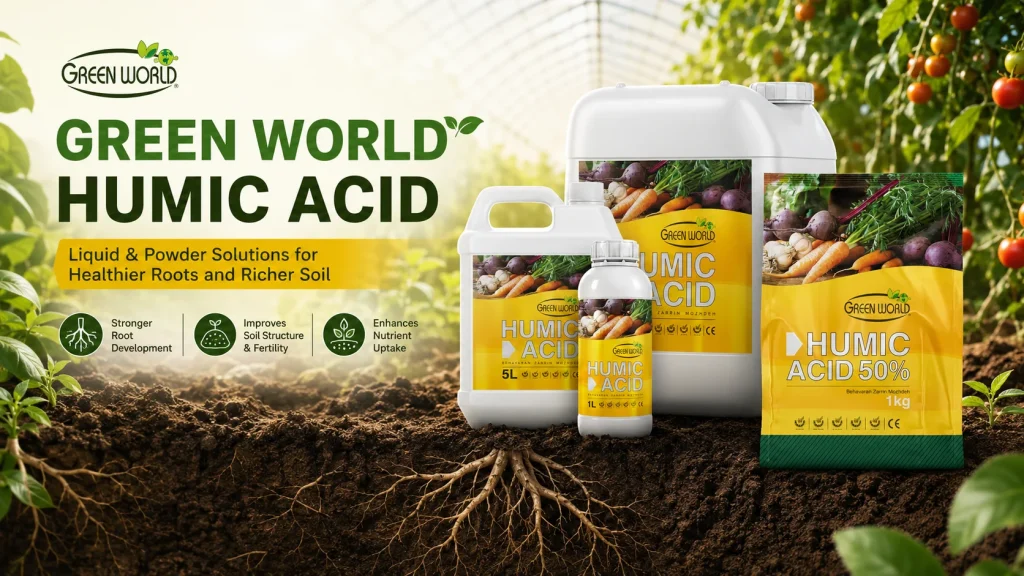
Liquid humic acid is generally convenient for fertigation, drip irrigation, root-zone application and commercial programs where easy dosing is important. Because it is already in liquid form, it can often be incorporated into irrigation systems more easily than dry materials, provided that the product is sufficiently soluble and compatible with the water and fertilizers being used.
Common advantages of liquid products include:
- Easy handling and measuring
- Fast incorporation into irrigation water
- Suitable use in fertigation systems
- Convenient application in orchards and greenhouses
- Easier distribution around the active root zone
Powder humic acid, on the other hand, is typically more concentrated and can be practical for transport, storage and large-scale agricultural use. Depending on the formulation, it may need to be dissolved or suspended before application.
Possible advantages include:
- Higher concentration in some formulations
- Lower transportation volume
- Longer storage convenience
- Flexibility for preparing different application concentrations
- Suitability for bulk agricultural use
When comparing liquid vs powder humic acid, concentration alone should not determine product quality. Solubility, humic content, raw material source, pH and intended use are also important.
For drip irrigation, highly soluble products are generally preferable. For soil incorporation or bulk field applications, dry formulations may also be practical.
How to Use Humic Acid in Agriculture
Understanding how to use humic acid in agriculture is important because application method directly influences how effectively the product reaches the root zone.
Humic acid can be applied through several methods depending on the crop and production system.
Soil Application
Soil application is one of the most common ways to use humic acid for soil.
The product may be incorporated before planting or applied around the root zone during the growing season. The main purpose is to improve the interaction between soil, nutrients, water and plant roots.
Soil application may support:
- Root development
- Nutrient retention
- Improved soil aggregation
- Moisture management
- Better fertilizer efficiency
In field crops, humic products can be incorporated into soil before planting or applied with irrigation.
In orchards, they can be applied in the wetted area beneath the tree canopy or through irrigation lines.
Fertigation and Drip Irrigation
Humic acid through drip irrigation is widely used in intensive agriculture because it allows the material to be delivered directly to the active root zone.
This approach is particularly useful in:
- Orchards
- Greenhouses
- Vegetable production
- High-value field crops
- Drip-irrigated systems
When using humic acid in fertigation, product solubility is critical. Materials containing insoluble particles may cause sediment or increase the risk of emitter blockage.
Growers should also consider water pH, hardness and fertilizer compatibility.
Applying humic acid in smaller repeated doses can sometimes be more practical than applying the entire seasonal amount at once, although the exact schedule should follow the product label and crop program.
Foliar Application
Some humic or humic-fulvic formulations are also marketed for foliar use.
Foliar application of humic acid may be used to complement soil and root-zone applications, particularly when highly soluble formulations are available.
However, humic acid is generally associated more strongly with root-zone and soil effects than with foliar nutrition.
When applied to foliage, growers should consider:
- Product solubility
- Concentration
- Leaf sensitivity
- Water quality
- Spray pH
- Compatibility with pesticides and fertilizers
A small compatibility test should be performed before including humic products in complex spray programs.
Seed Treatment and Root Dipping
Humic acid for seed treatment may support early root growth and seedling establishment when appropriate formulations and concentrations are used.
It may be applied as:
- Seed coating
- Seed soaking
- Nursery root treatment
- Root dipping before transplanting
- Root-zone drenching after transplanting
This method is especially relevant where early establishment and humic acid for root growth are priorities.
For transplants, root dipping may help expose the young root system directly to humic substances before planting.
However, excessive concentrations should be avoided, especially on sensitive seeds or young roots.
Mixing Humic Acid with Fertilizers
Humic acid fertilizer is commonly used alongside conventional fertilizers rather than as a replacement for them.
It may be combined with selected:
- NPK fertilizers
- Micronutrients
- Organic fertilizers
- Water-soluble fertilizers
- Fertigation products
The objective is to improve nutrient availability and support more efficient root uptake.
Compatibility varies between products, so concentrated materials should not automatically be mixed together without testing.
When Is the Best Time to Apply Humic Acid?
The best time to apply humic acid depends on the crop, growth stage and the objective of application.
In many cropping systems, humic acid is especially useful during periods when root development and nutrient uptake are important.
Common application timings include:
Before planting:
Humic acid can be incorporated into soil to improve root-zone conditions before seedling establishment.
At planting or transplanting:
This is an important stage for humic acid for root growth, because young plants must quickly establish an active root system.
During early vegetative growth:
Applications may support nutrient uptake and stronger crop development.
Before flowering:
Humic acid may be included in the fertility program before reproductive growth to support nutrient availability.
During fruit development:
Where permitted by the product program, applications may support nutrient-use efficiency during periods of high crop demand.
Before predictable stress periods:
Applying humic acid before moderate heat, drought or salinity stress may help support the root system and improve growing conditions.
In long-season crops, repeated applications may provide more consistent root-zone support than a single treatment.
Recommended Humic Acid Application Rates
There is no universal humic acid application rate that is appropriate for every product and crop.
The recommended amount depends on:
- Humic acid concentration
- Product formulation
- Crop species
- Growth stage
- Soil type
- Organic matter content
- Application method
- Irrigation system
- Frequency of application
For this reason, application rates should follow the manufacturer’s product label and technical recommendations.
A practical article table can be structured like this:
| Application Method | Typical Purpose | Important Considerations |
|---|---|---|
| Soil application | Soil conditioning and root development | Adjust to soil type and product concentration |
| Fertigation | Root-zone delivery and nutrient efficiency | Use soluble formulations |
| Drip irrigation | Repeated root-zone application | Check emitter compatibility |
| Root dipping | Transplant establishment | Avoid excessive concentration |
| Seed treatment | Early root and seedling support | Crop-specific testing is important |
| Foliar application | Supplemental use | Use only suitable formulations |
For commercial buyers, the product specification should clearly state the concentration and recommended agricultural application range.
Can Humic Acid Be Combined with NPK Fertilizers?
Yes, humic acid with NPK fertilizers is commonly used in crop nutrition programs.
The purpose of this combination is not to replace NPK but to support nutrient retention, availability and root uptake.
Humic Acid with Nitrogen Fertilizers
Humic acid with nitrogen fertilizer may support nitrogen-use efficiency by improving root activity and nutrient retention in the root zone.
Nitrogen is highly important for vegetative growth, chlorophyll and protein synthesis, but certain nitrogen forms can be lost through leaching or other processes.
Humic substances may help improve the soil environment in which nitrogen fertilizers are used.
Potential advantages include:
- Better root access to nitrogen
- Improved nutrient retention
- More balanced crop growth
- Better fertilizer-use efficiency
However, nitrogen rates should still be based on crop demand and soil testing.
Humic Acid with Phosphorus and Potassium
Humic acid with phosphorus and potassium can also be incorporated into fertilizer programs.
Phosphorus is important for root growth, energy transfer and early plant establishment, while potassium contributes to water regulation, crop quality and stress tolerance.
Humic acid may help maintain a more favorable root-zone environment and support nutrient availability.
This can be particularly useful in soils where phosphorus becomes strongly fixed or where potassium availability is limited by soil conditions.
Humic Acid with Micronutrients
Humic acid with micronutrients may improve the behavior of certain elements in soil solution.
Humic substances can interact with micronutrients such as:
- Iron
- Zinc
- Manganese
- Copper
These interactions may help maintain nutrient availability around the root zone.
Still, specific deficiencies may require dedicated micronutrient fertilizers.
Compatibility and Jar Testing
Before mixing humic acid with fertilizers, a jar test is a practical precaution.
A small-scale compatibility test can help identify:
- Precipitation
- Sediment formation
- Separation
- Excessive foaming
- Changes in solution stability
This is especially important when mixing humic products with concentrated fertilizers or hard irrigation water.
Humic Acid vs Fulvic Acid
The comparison humic acid vs fulvic acid is common because both substances are derived from humic materials but behave differently.
Both can support nutrient management and plant development, but their solubility, molecular characteristics and practical uses differ.
Differences in Molecular Size and Solubility
Humic acid generally contains larger and more complex molecular fractions than fulvic acid.
Fulvic acid contains smaller molecular fractions and remains soluble over a broader range of pH conditions.
This difference influences how they behave in soil and in irrigation systems.
In practical terms:
Humic acid is often associated with:
- Soil conditioning
- Nutrient retention
- Root-zone improvement
- Soil structure
- Cation exchange
Fulvic acid is often associated with:
- High solubility
- Nutrient mobility
- Micronutrient transport
- Foliar and fertigation compatibility
Differences in Soil and Plant Activity
Humic acid for soil tends to have a stronger role in improving root-zone conditions and soil properties.
Fulvic acid for plants is commonly used where mobility and nutrient transport are important.
Humic acid can be more useful when the goal is to:
- Improve soil condition
- Support root development
- Retain nutrients
- Improve moisture management
Fulvic acid may be more suitable where the goal is to:
- Improve micronutrient mobility
- Use foliar nutrition
- Improve solution compatibility
- Support rapid nutrient transport
When to Use Humic Acid or Fulvic Acid
Use humic acid when the main goal is soil improvement, root development and nutrient retention.
Use fulvic acid when high solubility and nutrient mobility are the priority.
In many modern fertilizer programs, both are used together because they complement one another.
Factors That Affect Humic Acid Performance
The effectiveness of humic acid for plants depends on more than simply applying the product.
Several factors influence performance.
Product Quality and Humic Content
Product quality is one of the most important factors.
Buyers should evaluate:
- Humic acid percentage
- Fulvic acid percentage
- Solubility
- Raw material source
- pH
- Formulation quality
- Presence of insoluble material
- Technical documentation
A higher concentration does not automatically mean better performance if the product has poor solubility or unsuitable formulation characteristics.
Soil pH and Organic Matter
Soil conditions strongly influence humic acid benefits for soil.
Soils with low organic matter may respond differently from soils already rich in stable organic matter.
Soil pH also affects nutrient chemistry and the interaction between humic substances and minerals.
For this reason, humic products should be integrated into a broader soil fertility program rather than used independently.
Application Method and Timing
The same product may perform differently depending on how and when it is applied.
For example:
- Soil application emphasizes root-zone effects.
- Fertigation improves distribution in irrigated systems.
- Root dipping targets transplant establishment.
- Repeated applications may provide more consistent exposure.
Correct timing can increase the practical value of humic acid benefits for plants.
Water Quality and Fertilizer Compatibility
Water quality is especially important in fertigation systems.
Factors such as:
- pH
- Hardness
- Bicarbonates
- Salinity
- Dissolved minerals
can affect the stability of humic solutions.
Compatibility should always be checked before mixing with highly concentrated fertilizers.
Common Mistakes When Using Humic Acid
Using humic acid correctly is essential to achieving consistent results.
Several common mistakes can reduce its effectiveness.
Applying Excessive Amounts
More humic acid does not necessarily produce better results.
Excessive concentrations can create unnecessary costs and may cause compatibility problems in irrigation or fertilizer systems.
Application should follow product specifications and crop requirements.
Expecting Humic Acid to Replace All Fertilizers
One of the most common misunderstandings is assuming that humic acid fertilizer can replace NPK and micronutrient fertilizers.
Humic acid primarily supports the soil-root environment and nutrient-use efficiency.
Plants still require essential nutrients in adequate quantities.
The best approach is to use humic acid as a complementary component of a balanced fertilizer program.
Using Incompatible Tank Mixtures
Humic substances may react with certain fertilizers or highly concentrated mineral solutions.
Mixing incompatible materials can cause:
- Precipitation
- Sediment
- Blocked irrigation lines
- Reduced nutrient availability
- Unstable spray mixtures
This is why compatibility testing is important.
Ignoring Soil and Water Conditions
Applying the same humic acid program to every farm can lead to inconsistent results.
Soil texture, organic matter, salinity, pH and irrigation water quality should all be considered.
For example, the purpose of humic acid for sandy soil may be nutrient and water retention, while in clay soil the emphasis may be aggregation and root-zone aeration.
In saline soils, humic acid may support root-zone performance but should be combined with proper drainage and salinity management.
The most effective use of humic acid in agriculture therefore comes from matching the product, application method and timing to actual field conditions.

How to Choose a High-Quality Humic Acid Product
Choosing a high-quality humic acid fertilizer requires more than checking the product name or concentration on the label. Product performance depends on formulation quality, solubility, raw material source, humic content and suitability for the intended agricultural application.
When comparing different products, buyers should evaluate several key factors:
- Humic acid concentration
- Fulvic acid content, where applicable
- Solubility
- Product pH
- Raw material source
- Formulation type
- Compatibility with irrigation systems
- Technical specifications
- Packaging quality
- Manufacturer reliability
For liquid products, stability and uniformity are especially important. A high-quality liquid humic acid should be easy to handle and suitable for the recommended irrigation or fertigation system.
For dry products, powder humic acid should have suitable solubility or dispersibility for its intended use. Particle quality, moisture control and storage stability are also important for commercial buyers.
The ideal product is not necessarily the one with the highest stated percentage. A reliable agricultural humic product should combine appropriate concentration with good formulation performance, consistent manufacturing and clear technical documentation.
Growers and distributors should also consider whether the manufacturer can supply the product consistently and provide suitable packaging, technical support and export documentation.
Humic Acid Fertilizer Manufacturer and Supplier
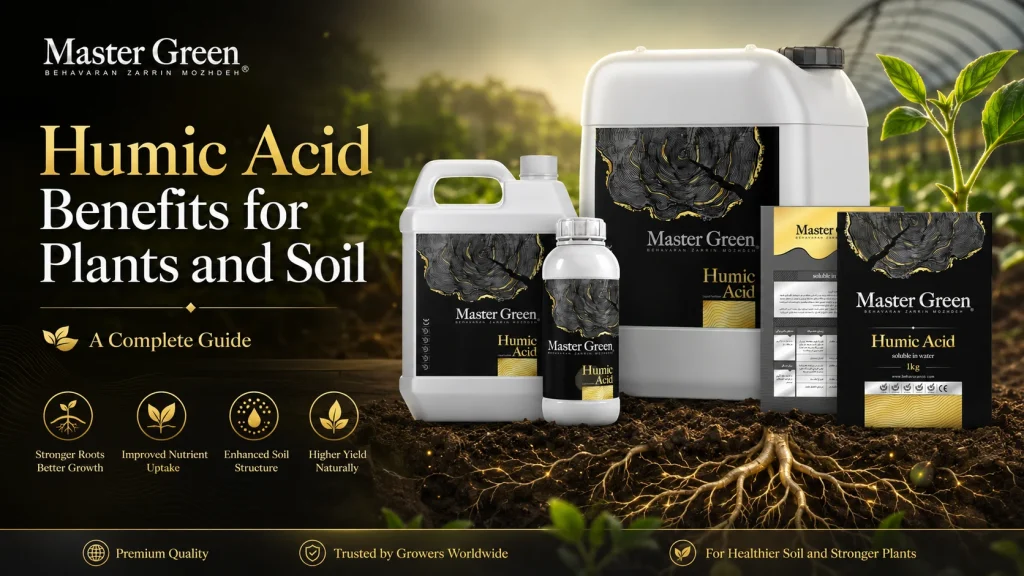
Behavaran Zarrin Mozhdeh manufactures humic acid fertilizer under the Master Green brand for agricultural use.
The Master Green humic acid line is produced in two formulations:
- Liquid Humic Acid
- Powder Humic Acid
These two formulations allow growers, distributors and agricultural input companies to select a product format according to their application method, market requirements and farming system.
The liquid formulation is suitable for agricultural programs where convenient dosing and irrigation-based application are important, while the powder formulation provides a dry product option for different distribution and agricultural use requirements.
As a humic acid fertilizer manufacturer and supplier, Behavaran Zarrin Mozhdeh can position the Master Green range for both domestic agricultural use and international distribution.
Bulk Humic Acid Supply for Agricultural Markets
Behavaran Zarrin Mozhdeh can supply Master Green humic acid fertilizer for agricultural markets where distributors, importers and agricultural input companies require larger commercial quantities.
Bulk supply is particularly relevant for:
- Agricultural distributors
- Fertilizer wholesalers
- Import companies
- Farming groups
- Agricultural input retailers
- Regional distributors
Both liquid and powder formulations give buyers greater flexibility when selecting products for different markets.
The liquid humic acid format can be suitable for markets focused on fertigation, drip irrigation and intensive crop nutrition programs.
The powder humic acid format can be useful where buyers prefer concentrated dry products, easier storage or different packaging formats.
For commercial orders, product specifications, packaging options and supply conditions should be confirmed directly with Behavaran Zarrin Mozhdeh according to the destination market and order requirements.
OEM and Private Label Humic Acid Fertilizer
For international buyers looking to develop their own agricultural fertilizer brand, OEM and private label humic acid fertilizer can be an important purchasing option.
Behavaran Zarrin Mozhdeh can support business discussions for humic acid products based on buyer requirements, market specifications and available manufacturing options.
Private label projects may include areas such as:
- Buyer-specific branding
- Custom label design
- Market-specific packaging
- Commercial carton design
- Product documentation
- Different order volumes
The availability of both liquid and powder humic acid gives importers and distributors greater flexibility when building a product range.
The existing Master Green humic acid line can also serve buyers who prefer to distribute an established Behavaran Zarrin Mozhdeh fertilizer brand rather than developing a private label product.
Custom Packaging and Product Formulation
Packaging requirements can vary significantly between markets.
Retail agricultural stores may require smaller consumer-friendly packs, while professional growers and distributors may prefer larger commercial packaging.
Behavaran Zarrin Mozhdeh can discuss packaging requirements for Master Green liquid and powder humic acid according to the intended market and order size.
Important packaging considerations include:
- Product form: liquid or powder
- Package size
- Label language
- Distributor information
- Export carton requirements
- Storage and transport conditions
Product formulation requirements should also be evaluated before production. Concentration, physical properties and intended method of application can influence the most appropriate formulation for a particular market.
Any customized formulation should be confirmed through technical and commercial evaluation rather than assumed to be available in every requested specification.

Export Documentation and Registration Support
International fertilizer trade often requires technical and commercial documentation before products can be imported, registered or distributed.
Depending on the product and destination market, buyers may require documents such as:
- Product specifications
- Technical Data Sheet
- Safety Data Sheet
- Certificate of Analysis
- Product label information
- Manufacturer information
- Packaging details
- Commercial export documents
Behavaran Zarrin Mozhdeh can provide available technical information for Master Green humic acid fertilizer and work with buyers to identify documentation requirements for their target market.
Registration requirements vary between countries, so importers should confirm local fertilizer regulations before placing commercial orders.
For markets requiring registration support, technical coordination between the manufacturer, importer and local registration authority can help simplify the process.
Why Choose Behavaran Zarrin Mozhdeh?
Selecting the right humic acid supplier is not only about price. International buyers also need reliable product quality, supply consistency, technical communication and packaging suitable for their market.
Behavaran Zarrin Mozhdeh offers Master Green humic acid fertilizer in both liquid and powder formulations, allowing agricultural buyers to choose between two practical product formats.
Agricultural Fertilizer Manufacturing Experience
Behavaran Zarrin Mozhdeh operates in the agricultural input sector and manufactures fertilizers for crop nutrition and soil management.
The Master Green humic acid range is part of the company’s agricultural fertilizer portfolio.
Manufacturing both liquid humic acid and powder humic acid enables the company to serve different crop-production systems and commercial markets.
This flexibility is valuable for importers and distributors that may require different product types for greenhouse production, field crops, orchards or retail agricultural markets.
Quality Control and Technical Support
Consistency is essential in agricultural fertilizer supply.
For commercial humic acid products, important quality parameters may include:
- Humic content
- Physical appearance
- Solubility
- Product stability
- pH
- Packaging integrity
- Batch consistency
Behavaran Zarrin Mozhdeh can provide technical product information for the Master Green humic acid range to support distributors and agricultural buyers.
Technical support can also help buyers understand the appropriate product form and application method for their target customers.
For example, buyers focused on fertigation may prioritize the liquid formulation, while other markets may prefer powder products for storage, distribution or field application.
Flexible Packaging for Importers and Distributors
Different export markets require different packaging strategies.
Behavaran Zarrin Mozhdeh can discuss packaging options for Master Green humic acid fertilizer based on order volume, distribution channel and destination-market requirements.
Flexible packaging can help serve:
- Agricultural retailers
- Large farms
- Fertilizer wholesalers
- Regional distributors
- Import companies
Packaging, labeling and carton specifications should be finalized during the quotation and order process.
International Supply and Export Services
For international buyers, product supply is only one part of the purchasing process.
Behavaran Zarrin Mozhdeh can support commercial discussions related to:
- Humic acid fertilizer export
- Bulk agricultural orders
- Distributor supply
- OEM projects
- Private label inquiries
- Packaging requirements
- Technical documentation
- Export coordination
The availability of Master Green liquid humic acid and Master Green powder humic acid allows buyers to select a product type that fits their agricultural market.