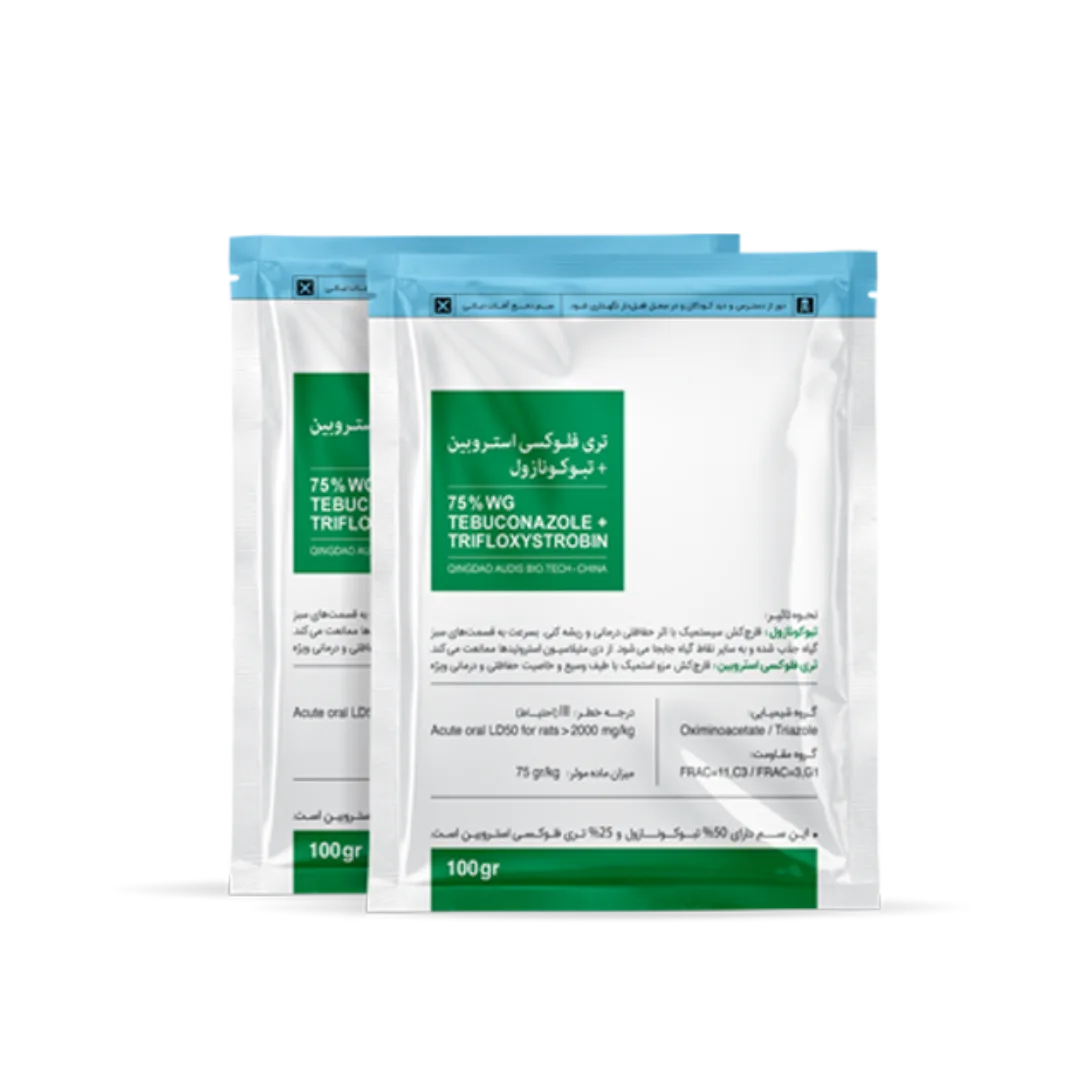
Trifloxystrobin + Tebuconazole is a broad-spectrum combination fungicide providing preventive, systemic, and curative activity against important fungal diseases in agricultural and horticultural crops.
Trifloxystrobin + Tebuconazole is a broad-spectrum combination fungicide designed for the preventive, curative, and long-lasting management of important fungal diseases in agricultural and horticultural crops.
The formulation combines two complementary active ingredients from different fungicide groups. Trifloxystrobin provides strong preventive and surface protection with translaminar activity, while tebuconazole delivers systemic activity and curative protection within plant tissues.
This complementary mode of action makes the combination suitable for integrated fungal disease management programs in crops such as cereals, rice, grapes, apples, strawberries, vegetables, and other horticultural crops, subject to local registration and label recommendations.
Trifloxystrobin + Tebuconazole provides a combination of preventive and systemic activity that makes it useful in comprehensive disease management programs.
Main advantages include:
Trifloxystrobin belongs to the strobilurin fungicide group. It acts primarily by inhibiting mitochondrial respiration in fungal cells.
The active ingredient interferes with electron transfer at the cytochrome bc1 complex, reducing the fungus’s ability to produce the energy required for spore germination, fungal growth, and disease development.
Trifloxystrobin also has strong affinity for the waxy layer of plant leaves. After application, part of the active ingredient remains associated with the leaf surface while another portion moves across the leaf tissue, providing translaminar protection.
Its characteristics make trifloxystrobin particularly valuable for preventive disease management.
Tebuconazole belongs to the triazole group of fungicides and provides systemic activity.
It inhibits the biosynthesis of ergosterol, an essential component of fungal cell membranes. Interference with ergosterol production disrupts normal fungal growth and development.
After application, tebuconazole is absorbed into green plant tissues and moves within the treated parts of the plant. In addition to preventive activity, it can provide curative activity against susceptible fungal pathogens when applied at the appropriate stage of disease development.
Combining trifloxystrobin and tebuconazole provides two complementary modes of action in a single fungicide.
Trifloxystrobin contributes strong preventive protection and inhibition of fungal respiration, while tebuconazole provides systemic and curative activity through inhibition of sterol biosynthesis.
This combination can provide more comprehensive disease protection than relying on a single mode of action and can form part of an effective resistance-management strategy when alternated appropriately with fungicides from other mode-of-action groups.
Depending on crop registration and local label recommendations, Trifloxystrobin + Tebuconazole may be used against important fungal diseases such as:
Always follow the registered product label for the approved crop, disease, application rate, spray interval, and pre-harvest interval in each market.
Where registered, Trifloxystrobin + Tebuconazole may be used in disease-management programs for crops including:
Crop registrations can vary between countries, so professional users, distributors, and importers should refer to local pesticide registration requirements before use or distribution.
One of the major advantages of the Trifloxystrobin + Tebuconazole combination is the integration of different disease-control characteristics.
Trifloxystrobin is particularly valuable during the early stages of disease prevention because it can inhibit spore germination and early fungal development.
Tebuconazole provides systemic activity and can suppress susceptible fungal infections that have already started developing within plant tissues.
For the best performance, fungicides should generally be integrated into a complete disease-management program rather than being relied upon after severe disease establishment.
Repeated application of fungicides with the same mode of action may increase the risk of fungicide resistance.
Trifloxystrobin and tebuconazole belong to different fungicide groups, which provides an advantage when the combination is incorporated into a well-designed resistance-management program.
For sustainable disease control:
For effective fungal disease management, spray timing is highly important.
Applications should be made according to crop growth stage, disease risk, environmental conditions, and local recommendations. Good spray coverage is particularly important for protecting susceptible plant tissues.
Application rates, spray intervals, maximum number of applications, compatibility, and pre-harvest intervals must be determined according to the officially registered product label.
This product is intended for professional agricultural use.
Users should wear appropriate personal protective equipment and follow all safety instructions stated on the product label. Avoid contamination of water sources and follow national regulations concerning pesticide storage, transport, application, and disposal.
Do not use the product on crops or against diseases that are not included in the applicable registered label.
Zarrin Daneh Emertat supplies agricultural crop-protection products for professional agricultural markets.
For information about Trifloxystrobin + Tebuconazole fungicide, available packaging, technical documentation, bulk orders, distribution cooperation, or export inquiries, contact our commercial team.
For wholesale, import, and distribution inquiries, contact us for product specifications and commercial information.| Product | Diseases | Consumption rate |
|---|---|---|
| Rice | blast and sheet blight | 160 g/ha |
| Apple | powdery mildew and black spot | 200 to 300 g/ha |
| Sugar beet | powdery mildew | 200 g/ha |
| Packaging | 100gr |
|---|---|
| Formulation | WG75% |
| Resistance group | FRAC=11,C3, FRAC=3,G1 |
| Chemical group | Oximinoacetate, Triazole |
| Amount of active ingredient | 750gr/Kg |