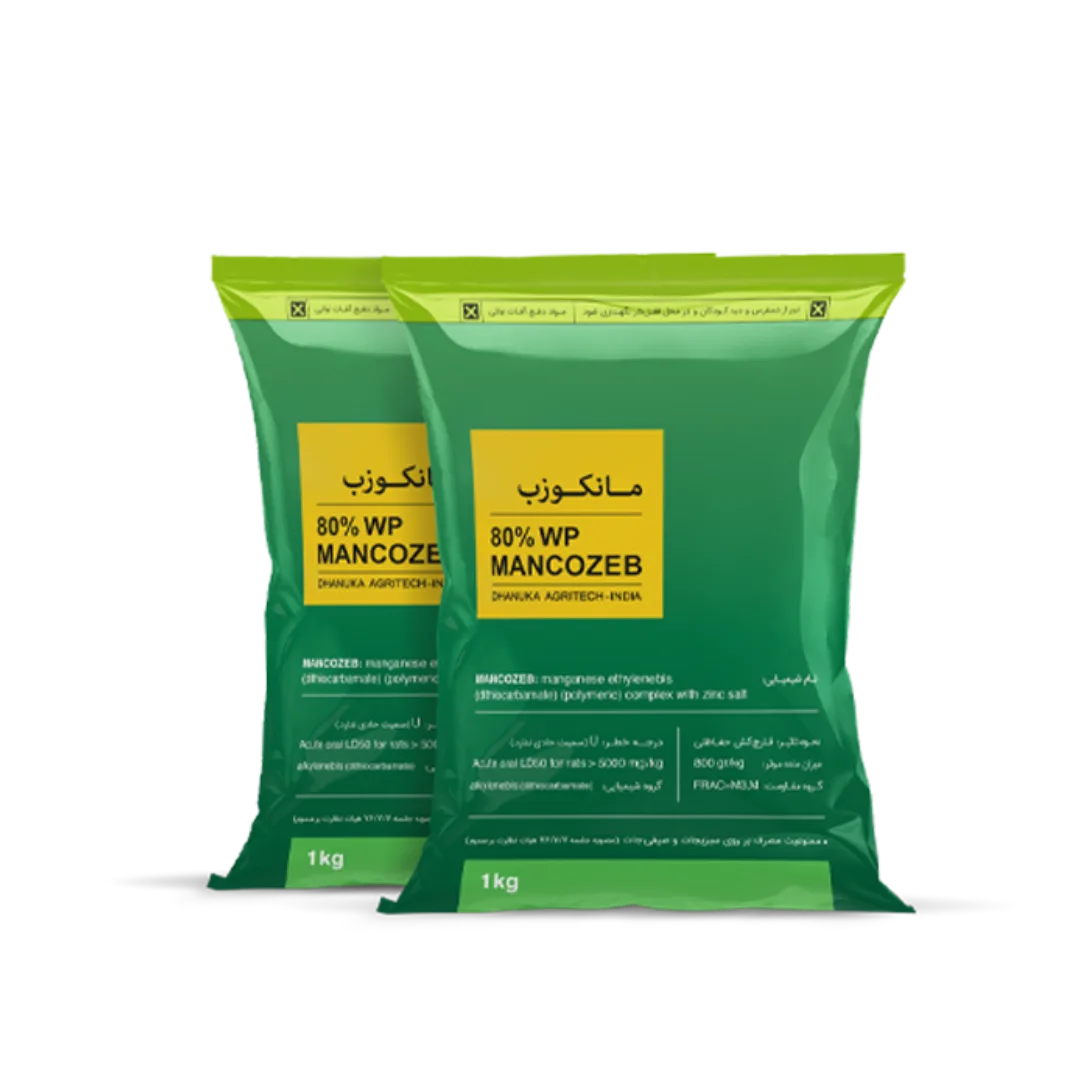
Mancozeb 80 WP Fungicide
Mancozeb is a broad-spectrum protective fungicide widely used in agricultural disease-management programs.
Mancozeb 80 WP is formulated as a wettable powder containing Mancozeb as the active ingredient.
Mancozeb belongs to the
dithiocarbamate group of fungicides and acts mainly as a
contact and preventive fungicide. It remains on the treated plant surface and helps protect crops against infection by susceptible fungal pathogens.
Because of its multi-site mode of action, Mancozeb is commonly incorporated into integrated disease-management and fungicide resistance-management programs.
What Is Mancozeb?
Mancozeb is a non-systemic fungicide with protective activity.
Unlike systemic fungicides that move through plant tissues, Mancozeb primarily remains on the plant surface after application. It creates a protective barrier that interferes with several essential metabolic processes in susceptible fungi.
For this reason, Mancozeb is most effective when applied
preventively or during the early stages of disease development.
Mancozeb Mode of Action
Mancozeb acts at multiple biochemical sites within fungal cells.
Its multi-site activity interferes with several enzyme systems and metabolic processes required for normal fungal growth and development.
This broad mode of action is one reason Mancozeb is frequently used in resistance-management programs alongside fungicides with more specific modes of action.
Main Benefits of Mancozeb
Mancozeb offers several advantages in crop protection:
- broad-spectrum fungicidal activity
- protective contact action
- multi-site mode of action
- useful in preventive disease-management programs
- suitable for use in resistance-management strategies
- application on a wide range of registered crops
- useful as a partner with other fungicides where label-approved
Mancozeb for Plant Disease Management
Mancozeb is used internationally in programs for the management of a range of susceptible fungal diseases.
Depending on crop registration and local recommendations, these may include diseases such as:
- late blight
- early blight
- downy mildew
- leaf spots
- anthracnose
- rust diseases
- other susceptible fungal infections
The exact crop, disease, rate and application interval must follow the registered product label.
Mancozeb for Potato and Tomato Diseases
Mancozeb is widely known as a protective fungicide in disease-management programs for crops such as
potato and tomato.
Preventive applications may help protect foliage against susceptible diseases, especially when environmental conditions favor disease development.
Good spray coverage is important because Mancozeb works mainly on the treated plant surface.
Mancozeb for Fruit and Vegetable Crops
Depending on local registration,
Mancozeb may also be used in disease-management programs for various fruit and vegetable crops.
Its protective action makes correct timing particularly important. Treatments are generally more effective before severe infection has become established.
Always follow the crop-specific label for application rate, interval and pre-harvest requirements.
Wettable Powder Formulation
The
WP designation means
Wettable Powder.
Mancozeb 80 WP is formulated as a powder designed to be mixed with water before application.
For effective use:
- measure the required amount accurately
- prepare the spray solution according to label directions
- maintain adequate agitation where required
- ensure thorough plant coverage
- avoid application under unsuitable weather conditions
Mancozeb in Integrated Disease Management
Mancozeb can be incorporated into an
Integrated Disease Management (IDM) program.
A comprehensive program may include:
- use of healthy planting material
- removal of infected crop residues
- crop rotation where appropriate
- good field sanitation
- proper irrigation management
- improved canopy ventilation
- disease monitoring
- timely fungicide applications
Combining chemical and non-chemical approaches can help improve long-term disease management.
Resistance Management
One of the important characteristics of
Mancozeb is its multi-site mode of action.
This makes it useful as part of fungicide resistance-management strategies.
Recommended practices include:
- avoiding unnecessary fungicide applications
- following registered rates
- rotating or combining fungicides according to approved resistance-management recommendations
- using Mancozeb preventively where appropriate
- integrating fungicides with cultural disease-management measures
Compatibility
Before mixing Mancozeb with other pesticides or fertilizers, check the approved product label and local recommendations.
Where necessary, perform a small compatibility test before preparing a full spray tank.
Safety and Handling
Mancozeb should be handled and applied according to the registered product label.
During preparation and application:
- wear suitable personal protective equipment
- avoid inhalation of dust or spray mist
- avoid contact with skin and eyes
- prevent contamination of water sources
- keep away from food and animal feed
- store in the original container in a cool, dry location
Frequently Asked Questions About Mancozeb
What is Mancozeb?
Mancozeb is a broad-spectrum, non-systemic fungicide from the dithiocarbamate group.
Is Mancozeb systemic?
No. Mancozeb mainly acts as a
contact and protective fungicide on treated plant surfaces.
What does Mancozeb 80 WP mean?
It indicates a wettable-powder formulation containing Mancozeb at the specified formulation concentration.
What diseases is Mancozeb used for?
Depending on registration, Mancozeb is used in programs against diseases such as late blight, early blight, downy mildew, leaf spots and other susceptible fungal diseases.
Is Mancozeb useful for resistance management?
Yes. Its multi-site mode of action makes it useful in fungicide resistance-management programs when used according to label recommendations.