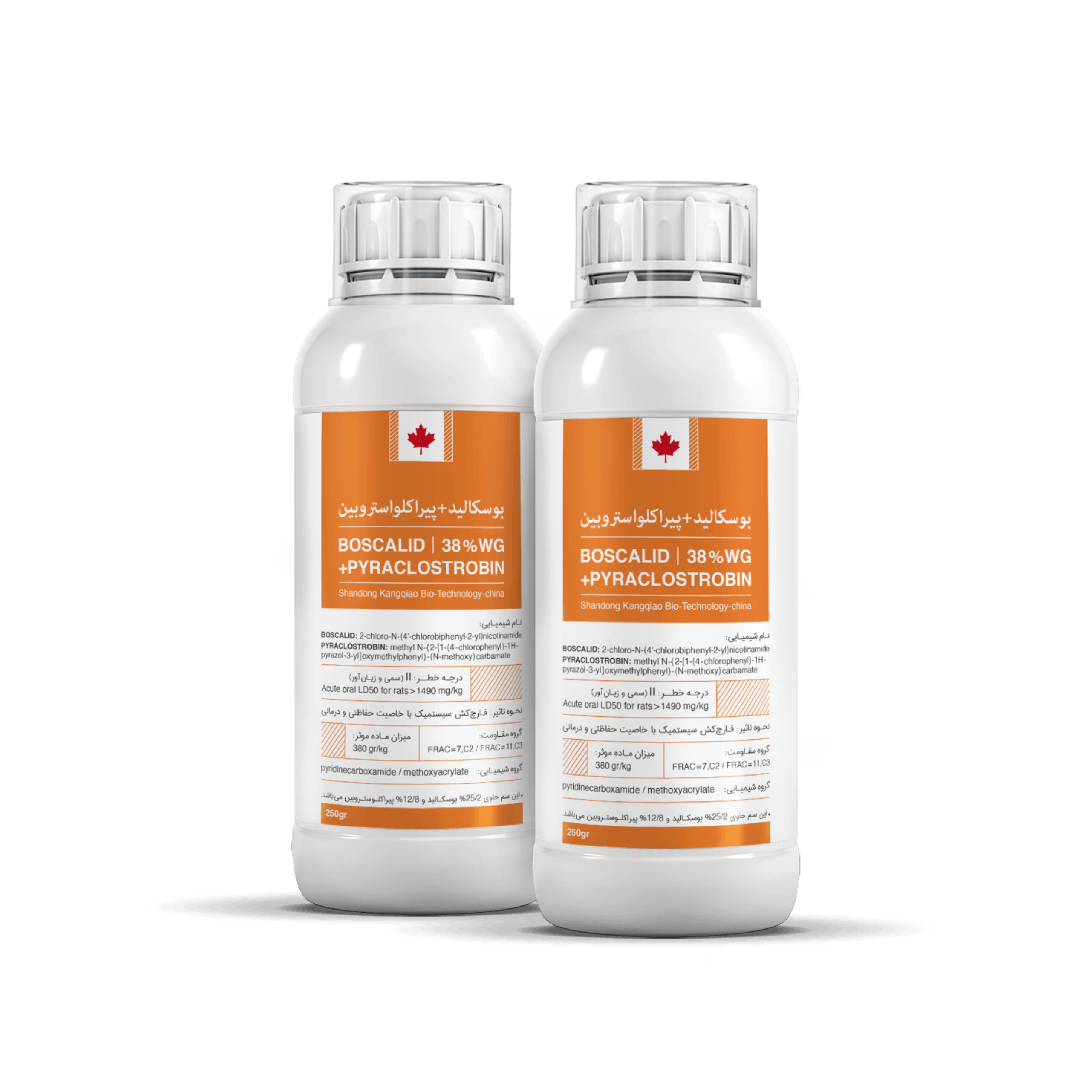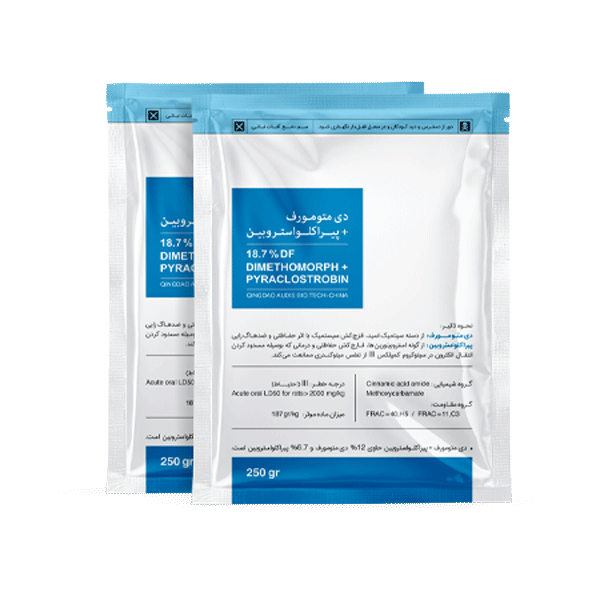
Weight

250gr

Behavaran

Resistance group: FRAC=11-FRAC=7
WG38%

Pyraclostrobin+Boscalid

WG38%

Zarrin Daneh Emertat

Fungicide Boscalid + Pyraclostrobin Dosage, Price, Application Training “The most complete guide to using the fungicide Boscalid + Pyraclostrobin WG 38% ✅ Accurate dosage for wheat, apples, grapes ✅ How to mix ✅ Safety precautions ✅ Current price ✅ Fungal resistance management”

  • Boscalid + Pyraclostrobin
 
  • Production: SHANDONG Gingbo AGROCHEMICAL- CHINA
 
  • Importer: Zarrin Daneh Amertat
 
  • Packaging 250 grams
  Product Description
  • Boscalid + Pyraclostrobin combined fungicide with water-dispersible granule formulation (WG 38%) is a two-component product with systemic and contact effect. Systemic fungicide with protective and curative properties consisting of boscalid from the pyridine carboxamide group and pyraclostrobin from the strobilurin group. This special formulation contains 26% boscalid and 12% pyraclostrobin, which constitutes a total of 38% of the active ingredients.
  • Pyraclostrobin + Boscalid, brand name Bilis, is a systemic fungicide from the pyridine carboxamide + methoxy acrylate family with protective and therapeutic properties. Boscalid in this toxin prevents the synthesis of amino acids and lipids important for fungal cell growth.
  • Features of the WG 38% formulation:
  • Fine and uniform granules with excellent dispersibility in water No dust formation during mixing Requires continuous agitation in the spray tank Rapid absorption by plants and resistance to washing by rain Environmentally friendly formulation compared to some other formulations.
Mechanisms of action
  • Boscalid: Inhibition of succinate dehydrogenase enzyme in mitochondria Pyraclostrobin: Inhibition of electron transfer in mitochondrial complex III Mixing precautions Mixable with: Most insecticides and fungicides Immiscible with: Oil compounds and alkalis Mixing test: Before large-scale use, test on a small scale Use restrictions Minimum distance to water sources: 50 meters Minimum waiting time before harvest (PHI):
Wheat: 35 days

Apple: 14 days

Grapes: 21 days

Tomatoes and potatoes 3 days

Maximum number of applications per season: 3 times
								
Product Diseases Consumption rate
Tomato Powdery mildew 1 in a thousand (maximum twice a year)
Peach and nectarine Powdery mildew 0.7 in a thousand
Apple Powdery mildew 0.7 in a thousand

Additional information

Weight

250gr

Formulation

WG38%

Resistance group

FRAC=11-FRAC=7

Chemical group

pyridine carboxamide, Strobilurins

Amount of active ingredient

380gr/Kg

  • Toxicity Category: II (Moderately Hazardous) according to WHO standards MEL: 0.04 mg/m³
  • Threshold Limit Value (TLV): 0.05 mg/m³
  • Use anti-toxic clothing Use rubber gloves
  • Use a mask with a suitable filter (FFP2)
  • Use protective glasses and rubber boots
  • Half-life in soil: 50-100 days (depending on pH and soil organic matter)
  • Mobility in soil: Low to moderate (Koc: 500-1000) Leaching potential to groundwater: Low (in soils with high organic matter) Bees: Contact toxicity: Low (LD50 > 100 μg/bee) Ingestion toxicity: Low to moderate
  • Recommendation: Spray outside of bee flight hours Earthworms: Low risk (EC50 > 100 mg/kg soil)
  • Negative effect on population with long-term use Birds: Low risk (LD50 > 2000 mg/kg) Cumulative effects in the food chain

Related products