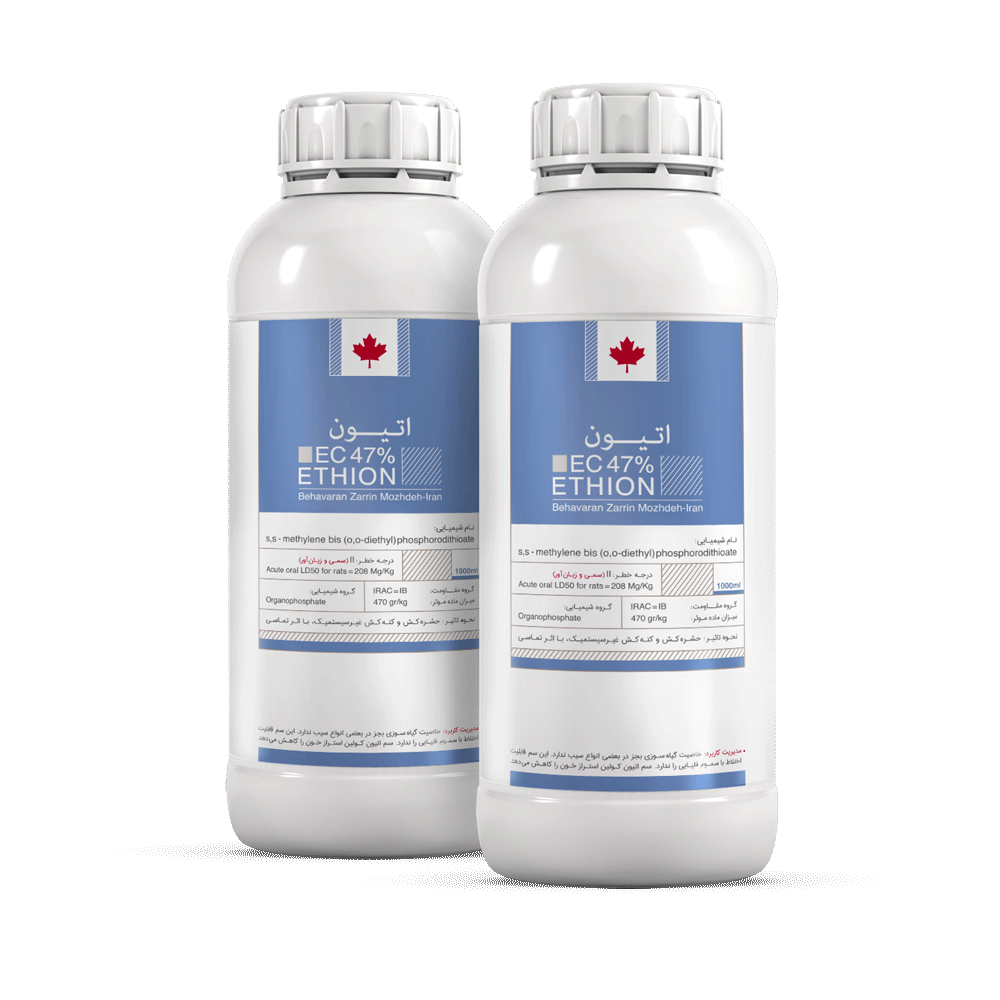
Weight

1000ml

Behavaran

Resistance group: IRAC=1B
EC50

Profenophos

EC50

Profenophos

A non-systemic organophosphate insecticide with contact and ingestion activity, effective against cotton bollworm, chewing larvae, whiteflies, aphids, and mites in cotton, soybean, corn, vegetables, and other major crops. Includes mode of action, crop use information, and environmental guidelines.

Edit Content
1 liter package
  • A non-systemic insecticide and acaricide with both contact and ingestion activity, effective against cotton bollworm and a broad range of agricultural pests.

Mode of Action

  • This organophosphate insecticide has an isomeric structure and acts by inhibiting cholinesterase enzymes in the insect nervous system, leading to paralysis and death. It is absorbed through leaves and other green plant parts, but is non-systemic.

Uses

Used internationally against pests such as:
  • Aphids, leafhoppers, chewing larvae, bollworms, whiteflies, and mites in cotton, corn, sugar beet, soybean, potato, vegetables, and tobacco.
  • Particularly effective against larvae of moths and mites.
  • May cause slight growth inhibition in cotton. Pre-harvest interval: 14 days.
Edit Content
Product Pest Consumption rate
Soybean Cotton bollworm 2.5 L per hectare
Cotton Cotton bollworm 2.5 L per hectare
Edit Content

Additional information

Weight

1000ml

Formulation

EC50

Resistance group

IRAC=1B

Chemical group

Organophosphate

Amount of active ingredient

500gr/L

Edit Content
  • Only trained and licensed professionals should handle and apply this product.
  • Avoid contact with skin, eyes, and inhalation; use appropriate personal protective equipment (PPE).
  • Keep containers tightly closed and stored in a secure location, away from children and unauthorized individuals.
  • Do not eat, drink, or smoke while handling; wash hands and exposed skin thoroughly after use.
  • In case of accidental exposure, seek immediate medical attention and provide the product label.
Edit Content
  • Avoid releasing into waterways, irrigation channels, or natural habitats, as it may harm aquatic organisms and beneficial insects.
  • Limit use to authorized agricultural settings and prevent drift onto non-target areas.
  • Follow local environmental guidelines to minimize ecological impact.
  • Proper handling and disposal are essential to prevent soil and water contamination.

Related products