magnesium sulfate fertilizer,” “Master Green-GREEN WORLD MgSO4,” chlorophyll deficiency, and crop-specific searches in high-pH soils.
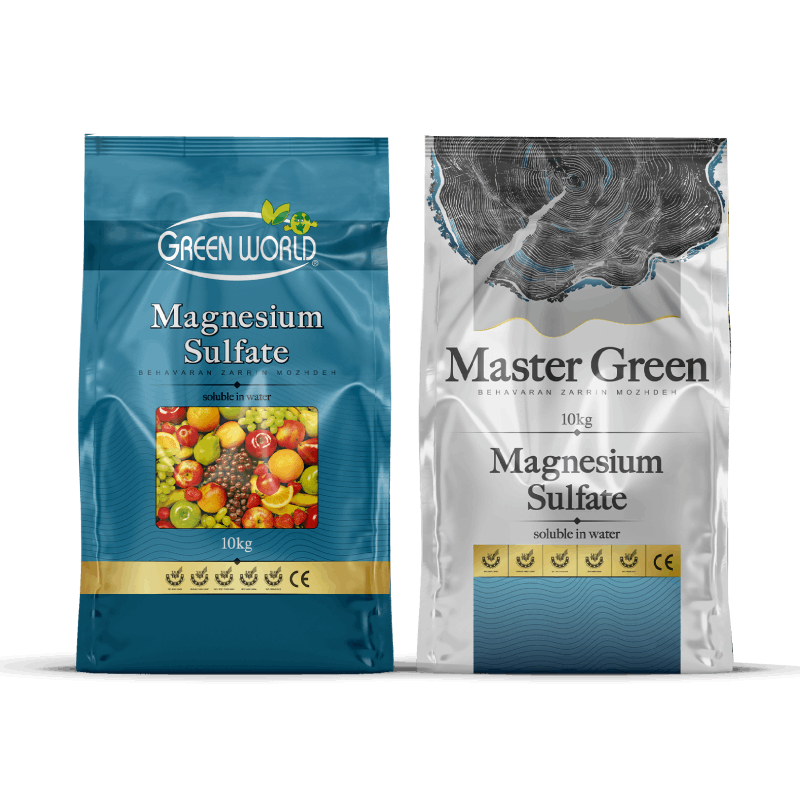
Master Green-GREEN WORLD Magnesium Sulfate, produced by Bahavaran Zarrin Mojdeh Company, contains 9.6% soluble magnesium and 12.6% sulfate. Magnesium plays a vital role in plant growth and production, as it is a mineral element in chlorophyll structure, facilitating energy absorption, photosynthesis, and ultimately growth and yield. Magnesium deficiency causes poor chlorophyll formation, leaf yellowing, and reduced photosynthesis.
Magnesium sulfate improves nitrogen and phosphorus uptake due to its magnesium and sulfur content. It enhances soil acidity, disinfects soil, and reduces fungal diseases. This fertilizer is fully water-soluble with rapid absorption. Like other fertilizers, avoid use during flowering; best foliar application time is early morning, up to 2-3 times during the growth period.
Magnesium sulfate is a vital agricultural input supplying two essential nutrients for plants: magnesium (Mg) and sulfur (S). These nutrients play key roles in plant metabolism, photosynthesis, and overall growth, making magnesium sulfate a cornerstone of balanced crop nutrition.
Key Benefits of Magnesium Sulfate Fertilizer
Boosts Photosynthesis and Chlorophyll Production: Magnesium is the central element in chlorophyll molecules essential for photosynthesis. Application in Mg-deficient soils improves chlorophyll synthesis, leading to greener, healthier plants and higher photosynthetic efficiency.
Activates Vital Enzymes: Magnesium acts as a cofactor for enzymes involved in protein and nucleic acid synthesis, crucial for plant growth. Sulfur supports enzyme production and protein synthesis, aiding robust metabolism.
Improves Nutrient Uptake: Enhances plant ability to absorb other key nutrients like phosphorus and nitrogen, boosting overall nutrient efficiency and crop vigor.
Increases Yield and Quality: Studies show magnesium sulfate application results in larger fruit size, better color, improved disease resistance, and higher yields in crops like tomatoes, peppers, and cereals.
Supports Root Growth and Disease Resistance: Sulfur in magnesium sulfate strengthens root growth and enhances plant defense mechanisms against fungal infections and environmental stresses.
Field and greenhouse crops: 2-3 kg per 1000 liters water (foliar spray) Field and greenhouse crops: 20 kg per hectare (fertigation) Orchard plants: 3-5 kg per 1000 liters water (foliar spray) and 100-300 g per tree with farmyard manure for pit fertilization
| Product | Amount of Consumption | Method of Consumption |
|---|---|---|
| Field and greenhouse crops | 2-3 kg per 1000 liters water | foliar spray |
| Field and greenhouse crops | 20 kg per hectare | fertigation |
| Orchard plants | 100-300 g per tree with farmyard manure | pit fertilization |
| Orchard plants | 3-5 kg per 1000 liters water | foliar spray |
| Packaging | 10 kg |
|---|---|
| Soluble Mg | 9.6% |
| Soluble So4 | 12.6% |