Weight

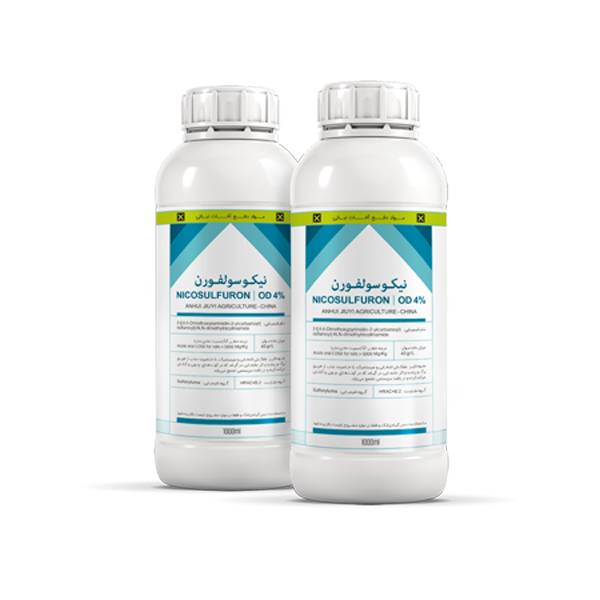
1000ml

Behavaran

Resistance group: HRAC=B,2
OD4%

Nicosulfuron

OD4%

Zarrin Daneh Emertat

Nicosulfuron is a selective, post-emergence herbicide for controlling broadleaf weeds in corn fields that works quickly and precisely by inhibiting the ALS enzyme. With its high efficacy, low dosage, and good safety for corn, this herbicide is a professional choice for weed management.

  • Nicosulfuron OD4%
 
  • Manufactured by: SHANDONG HAILIR CHEMICAL- CHINA
 
  • Imported by: Zarrin Daneh Amertat
 
  • One liter package
 
  • Nicosulfuron is a systemic, selective, and post-emergent herbicide from the sulfonylurea group that is widely used in the control of narrow-leaved weeds in corn fields. This pesticide is known for its low dosage, high efficacy, and good stability in the plant, and is considered one of the most effective selective herbicides for corn due to its rapid absorption and transfer.
How Nicosulfuron works?
  • Nicosulfuron inhibits the ALS enzyme (acetolactate synthase) and disrupts the biosynthesis of essential amino acids including valine, leucine and isoleucine. This disruption stops the growth of meristems and ultimately leads to yellowing, necrosis and, finally, the gradual death of the weed. The toxin is absorbed through the leaves and a small amount through the roots and moves rapidly through the xylem and phloem. Uses
  • Nicosulfuron is primarily used for the control of annual and perennial broadleaf weeds in corn. The most important target weeds include: Echinochloa Foxtail (Setaria spp.) Rice (Lolium spp.) Phalaris Johnsongrass species – seed and rhizome This herbicide is suitable for grain corn, forage corn and some resistant hybrid varieties.
 
Crops Diseases Amount of use
Grain corn narrow-leaf weeds 2 liters per hectare

Additional information

Weight

1000ml

Formulation

OD4%

Resistance group

HRAC=B,2

Chemical group

Sulfonylurea

Amount of active ingredient

40gr/L

  • Do not use in sensitive crops such as wheat, barley, rice, cotton, and summer crops. Do not use in conditions of severe water stress, frost, extreme heat, or wind. Do not mix with potassium or organophosphate herbicides simultaneously, as this increases the risk of plant burn.
  • To prevent resistance, use in the years following replacement of herbicides with other groups.
  • Best time to apply: Corn is 3 to 8 leaves long and grass growth is active. Before foliar spraying, the pH of the water should be between 5 and 7.Do not rain for at least 4 to 6 hours after spraying to ensure complete absorption.
  • In controlling rhizome scab, a higher dose and complete coverage are required. In some hybrids, there is a possibility of slight sensitivity; be sure to check the product label before use.


  • Nicosulfuron has low toxicity to humans and mammals, but is sensitizing to some aquatic plants and non-target plants.
  • It has relatively moderate mobility in soil, but in sandy and alkaline soils there is a
  • possibility of concentration and damage to subsequent plants.
  • It has a moderate half-life and is usually degraded by microbial activity and hydrolysis.
  • Prevent the entry of toxic residues into streams and riverbanks.

Related products