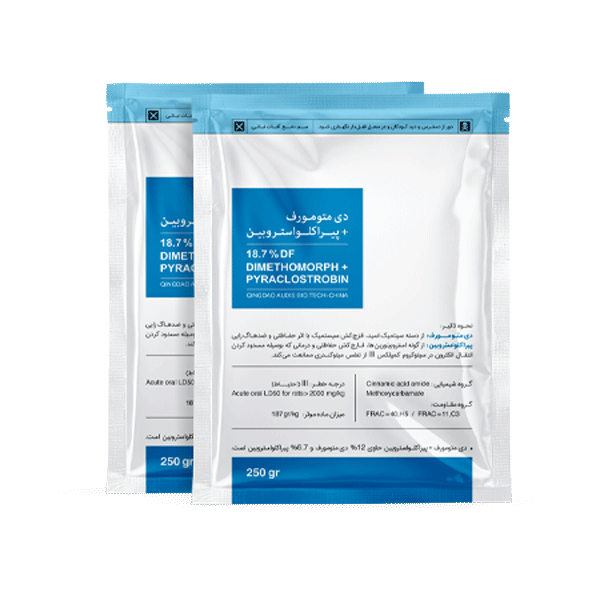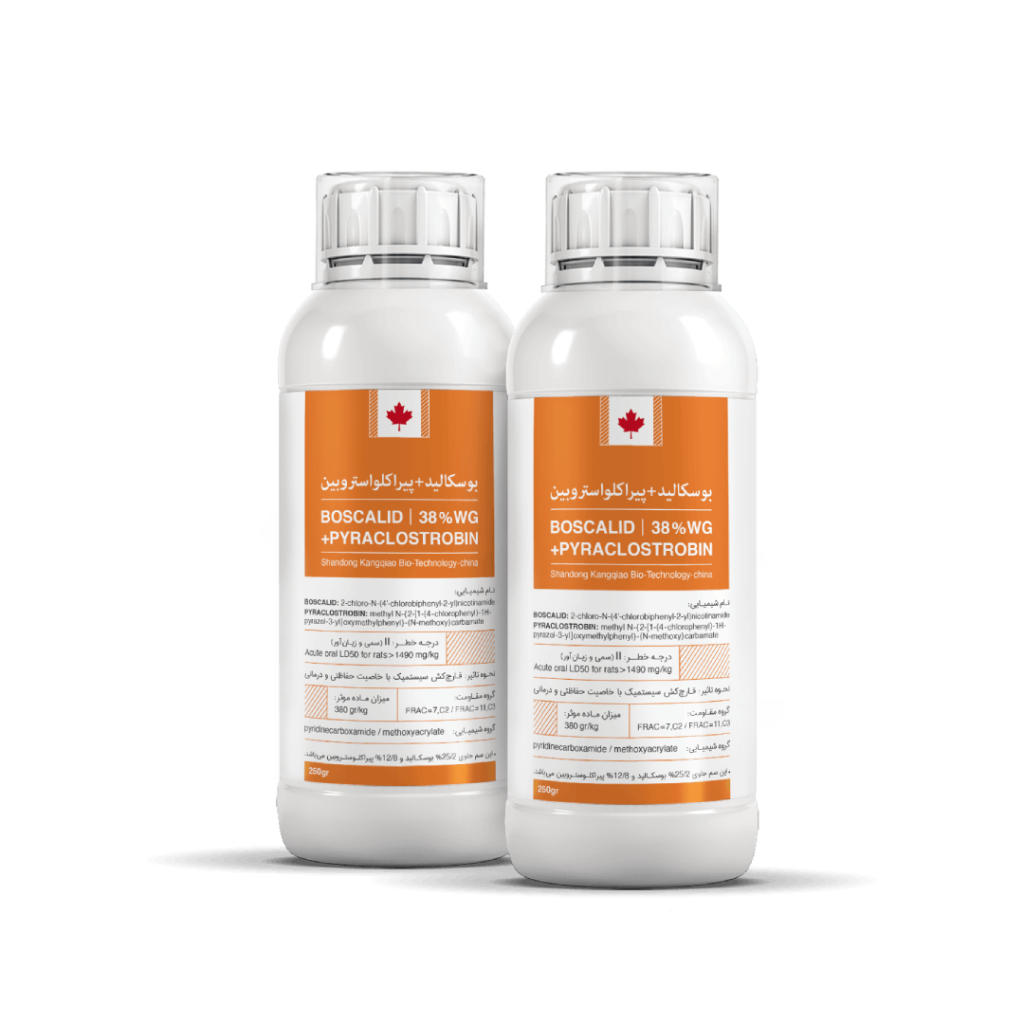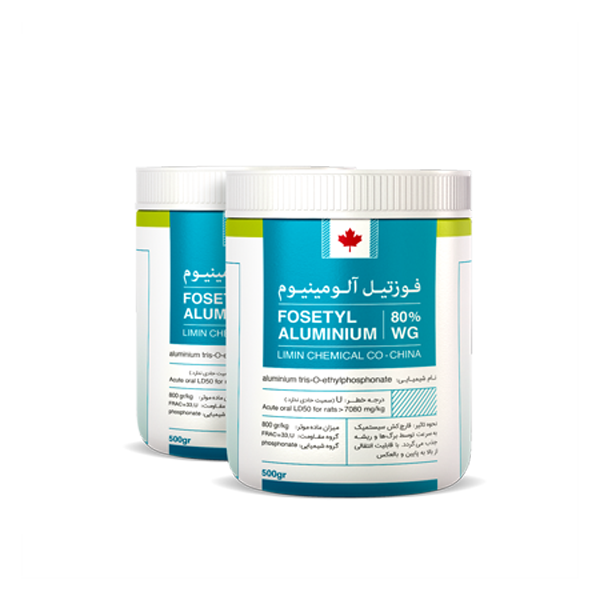
A powerful product with two different modes of action for controlling downy mildew, blight, and a wide range of fungal diseases. On this page, we review its mechanism of action, applications, safety tips, and environmental considerations.
Mechanism of Action
Dimethomorph is an inhibitor of cinnamic acid amide activity, which disrupts the synthesis of phospholipids in the fungal cell wall. This disruption stops mycelial growth and prevents spore and zoospore germination. Dimethomorph is highly effective against Oomycete fungi, including pathogens from the Peronosporaceae family and some Phytophthora species.
Pyraclostrobin, a member of the strobilurin family, blocks electron transport in mitochondrial Complex III (cytochrome bc1), preventing ATP production and halting fungal energy production. It has fungicidal, protective, and curative properties and is quickly absorbed and translocated within the plant.
Tomato, potato, and other vegetables: Alternaria leaf spot (early blight)
Cucurbits, wheat, and barley: Diseases caused by Oomycetes, such as downy mildew
Pistachio and stone fruits: Alternaria
Other crops: Fungal diseases of leaves, stems, and fruits in field and orchard crops
Application Guidelines:
Spray before symptoms appear or at early infection for optimal effectiveness.
Spraying interval is usually 10–14 days; do not exceed 3 applications per season.
Pre-harvest interval depends on the crop (3–14 days).
| Product | Diseases | Consumption rate |
|---|---|---|
| Cucumber | Downy mildew | 250 g per 1000 L of water |
| Packaging | 250gr |
|---|---|
| Formulation | DF18.7% |
| Resistance group | FRAC=11,C3,FRAC=40,H5 |
| Chemical group | Cinamic acid amides, Strobilurins |
| Amount of active ingredient | 187gr/Kg |