Weight

250gr

Behavaran

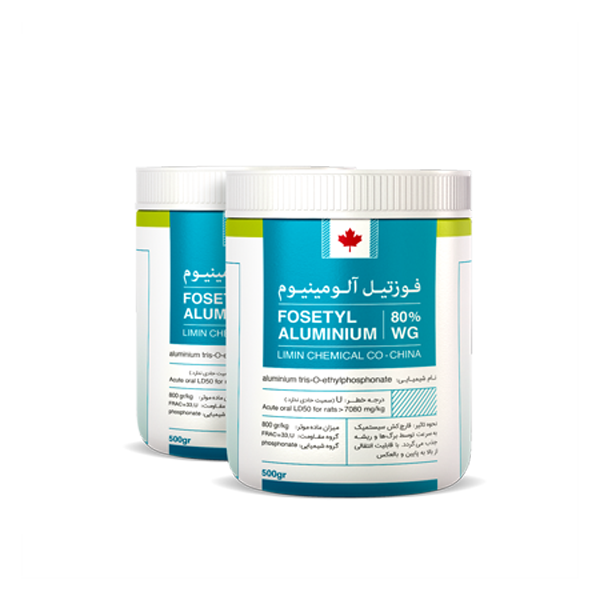
Resistance group: FRAC=33,U
WG80%

Fosetyl-Aluminium

WG80%

Zarrin Daneh Emertat

Fosetyl-Aluminum Zarrin Daneh is a systemic fungicide used to control downy mildews and diseases caused by oomycetes in agricultural and horticultural crops. This page provides a complete introduction, its mode of action, applications, and safety precautions.

Fosetyl-Aluminium
Producer: SHANDONG HAILIR CHEMICAL – China
Importer: Zarrin Daneh Amertat
Packaging: 250 g

  • Fosetyl-Aluminium is one of the most powerful systemic fungicides used in agriculture. It is supplied as a water-dispersible powder with a WDG (Water-Dispersible Granule) formulation, typically at an 80% concentration.
  • This fungicide is widely used to control diseases caused by oomycete fungi (Oomycetes) such as Phytophthora spp., Pythium spp., and Plasmopara spp.. It plays a key role in the prevention and treatment of woody diseases, root rot, downy mildew, collar rot, and other decay-related diseases.

Mode of Action

  • Fosetyl-Aluminium is a compound consisting of an aluminum ion combined with three molecules of
  • O-ethyl phosphonic acid. Due to its high solubility and polar structure, this ionic compound is readily absorbed through both leaves and roots and is systemically translocated throughout the plant.
  • After absorption, Fosetyl-Aluminium is converted within the plant into phosphorous acid, which has strong fungicidal activity.
  • This fungicide inhibits the fungal respiratory chain in the mitochondria and prevents spore germination and mycelial growth, thereby stopping the development of pathogenic fungi.
  • In addition, it stimulates the plant’s natural defense system by increasing the production of phytoalexins (natural antimicrobial compounds), enhancing plant resistance to diseases.
  • Fosetyl-Aluminium has bidirectional systemic movement (both upward to shoots and young leaves and downward to roots), providing complete and long-lasting protection for the plant.

Uses

  • Collar and root rot (gummosis) in citrus and pistachio
  • Downy mildew in grapes and vegetables
  • Potato and tomato rot
  • Fire blight in apple and pear
  • Bacterial and fungal cankers in fruit trees
  • Soil-borne fungal diseases and various rot diseases in agricultural and horticultural crops
  • A truly systemic fungicide with bidirectional movement within the plant, providing a combined effect through direct action on fungi and stimulation of the plant’s defense mechanisms.
  • Simultaneous control of fungi and bacteria that play a role in certain diseases.
  • Reduces the need for contact pesticides and increases the overall efficiency of disease control.
  • Easy application by foliar spraying or irrigation.
  • Common application rate for foliar spraying: 300–500 g per 1,000 liters of water.
  • Under severe conditions, soil drench/irrigation at an appropriate concentration is also used to control root diseases.
  • The best time of application is before disease onset or at the early stages of symptom appearance.
  • The interval between spraying cycles is usually 14 to 21 days.
  • The pre-harvest interval (PHI) varies by crop, typically 7 to 21 days.
Product Diseases Consumption rate
Pistachio Gummosis 2.5 per 1000 foliar application

Additional information

Weight

250gr

Formulation

WG80%

Resistance group

FRAC=33,U

Chemical group

Phosphonate

Amount of active ingredient

800gr/Kg

  • Use mask, gloves, goggles, and protective clothing during spraying.
  • Avoid contact with skin and eyes.
  • Do not spray in windy conditions to prevent off-target drift.
  • Protective equipment is mandatory during application.
  • Prevent the chemical from entering water sources to protect the environment.
  • Rotate fungicides to prevent resistance.
  • Low toxicity to mammals, birds, and beneficial insects.
  • Good stability in plants and the environment, with an appropriate half-life.
  • Use of full personal protective equipment (PPE) during spraying is essential.
  • Prevent contamination of water sources to avoid harm to aquatic organisms.
  • When mixing with other pesticides, chemical compatibility must be ensured.
  • Can be used as part of an Integrated Pest Management (IPM) and integrated disease control program.
  • Apply with caution during flowering periods and pollinator activity.

Related products