
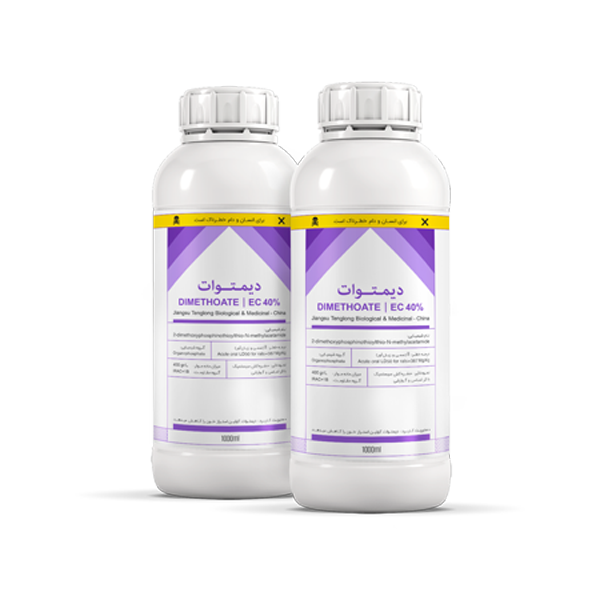
Weight

1000ml

Behavaran

Resistance group: IRAC=1B
EC40%

Dimethoate

EC40%

Zarrin Daneh Emertat

Dimethoate is one of the most effective organophosphate pesticides with wide application and high efficacy that rapidly affects the nervous system of sucking pests, leading to cessation of feeding and death of the pest. The speed and intensity of the effect of this pesticide have made it popular in integrated pest management programs.


  • Dimethoate EC40%
 
  • Manufactured by: Jiangsu Tenglong Biological & Medicinal-China
 
  • Importer: Zarrin Daneh Emertat
 
  • One liter package
 
  • Dimethoate is an effective and well-known insecticide from the organophosphate group that has been used in Iran and the world for more than half a century and is used to control a wide range of sucking and chewing pests. This insecticide is produced and supplied as an emulsifiable concentrate (EC) with a typical concentration of 40% and is known under various trade names such as Rugor and Rexion.
How Dimethoate works?
  • Dimethoate works by inhibiting the enzyme cholinesterase in the insect nervous system. Under normal conditions, acetylcholine is a neurotransmitter that, after transmitting a message in the synaptic space, is broken down by the enzyme cholinesterase to interrupt the nerve signal.
  • By inhibiting this enzyme, dimethoate causes excessive accumulation of acetylcholine and continuous stimulation of the postsynaptic nerve fiber, which leads to hyperexcitation, paralysis and ultimately death of the pest.
  • Dimethoate is a systemic and contact-digestive effect, after spraying, dimethoate is absorbed through the leaves and aerial organs and is transferred throughout the plant structure to the sap flow.
  Uses of Dimethoate
  • This poison is used to control a variety of aphids, thrips, whiteflies, thrips, mites, butterflies, beetles and many other pests in various crops including cereals, cotton, potatoes, tobacco, grapes, citrus fruits, vegetables and ornamental plants. In particular, dimethoate is very effective in controlling green and poisonous aphids of cereals and cotton, thrips of cold-hardy fruit trees, melon and honeydew flies and other sucking pests.
Advantages
  • Rapid impact with systemic absorption and transport throughout the plant Broad spectrum control of sucking and chewing pests Long-term protection (about two weeks) of plants against pests Compatible with many integrated pest management (IPM) programs Reduces the need for multiple sprayings

Crops Diseases Amount of use
Sugar beet Aphids and sucking pests 1 liter per hectare
Fava beans Aphids 1 to 1.5 liters per hectare
Wheat Russian aphids 1.5 liters per hectare
Soybeans and cotton Aphids and thrips 1 liter per hectare
Melon Melon fly and leafhopper 1 to 1.5 liters per hectare
Olive Olive moth 1 liter per thousand

Additional information

Weight

1000ml

Formulation

EC40%

Resistance group

IRAC=1B

Chemical group

Organophosphate

Amount of active ingredient

400gr/L

  • Usually, for the control of sucking pests such as aphids and thrips, a dosage of 1 in 1000 (one liter per thousand liters of water) is recommended. For the control of fruit flies and other pests, the dosage is 30 to 40 cc per thousand liters of water.
  • The maximum number of applications varies according to the type of crop; for example, up to 6 times in cabbages and a maximum of once in sugar beets and leafy vegetables.


  • The appropriate time for spraying is usually in the morning or evening to prolong the effect of the poison and minimize contact with beneficial insects such as honeybees.
  • The use of protective clothing and equipment is mandatory when spraying.
  • Avoid spraying on very hot days or in strong winds to avoid reducing the efficiency of spraying.
  • Biodegradable; safe for beneficial insects when dry.To prevent resistance, excessive use of poison is not recommended and it is better to use different poisons alternately.
  • The waiting period is usually between 14 and 21 days, depending on climatic conditions and the type of crop.

Related products